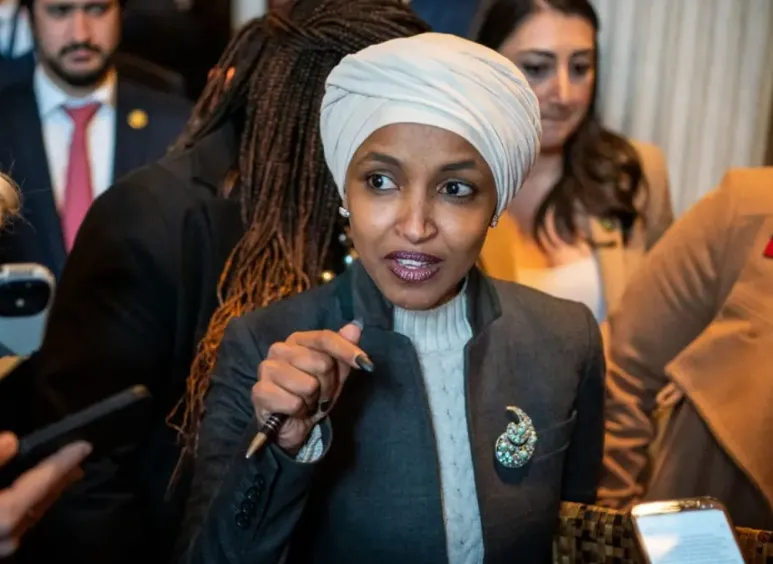
North Carolina’s Republican-led legislature approved a revised congressional district map designed to add at least one more GOP seat in the U.S. House, aligning with President Donald Trump’s push for mid-decade redistricting to help Republicans maintain their narrow majority in the chamber ahead of the 2026 midterm elections.
The new boundaries build on the state’s existing map, drawn by Republicans in 2023 following the 2020 census, which delivered 10 of North Carolina’s 14 House seats to the GOP in the 2024 elections—even as the swing state remains evenly split between Republican and Democratic voters.
Democratic Gov. Josh Stein lacks veto power over redistricting under state law, leaving the plan poised for implementation unless challenged in court.
This move marks the third instance this year of a Republican-controlled state legislature responding to Trump’s call for aggressive redistricting strategies, following similar actions in Texas and Missouri.
In Texas, where the push began in earnest, Republicans unveiled a proposed map on July 30, 2025, aiming to flip up to five Democratic-held seats through mid-decade adjustments.
The effort stems from a pair of long-running legal battles, including a 2024 ruling by the U.S. 5th Circuit Court of Appeals that overturned prior district configurations in areas like Baytown and Galveston, creating an opening for the redraw.
Texas Republicans have cited population shifts and compliance with voting rights laws as justifications, though critics argue it’s a partisan power grab encouraged by Trump. By September 2025, state officials had begun walking back some initial rationales amid scrutiny from the U.S. Department of Justice, but the plan remains on track for adoption.
Other GOP-led states, including Ohio, Kansas, and Indiana, are weighing or advancing comparable mid-cycle changes, capitalizing on their legislative majorities to redraw lines outside the traditional decennial census timeline. Such tactics have historical roots.
Texas itself pursued a similar mid-decade redistricting in 2003 under then-Gov. Rick Perry, who helped solidify Republican dominance in the state’s delegation.
Democrats have decried these efforts as unfair gerrymandering, but Republicans counter that many blue states have long employed similar strategies to entrench their own advantages.
For instance, Illinois Democrats have drawn maps that pack Republican voters into a handful of districts, allowing the party to hold a supermajority in the state’s congressional delegation despite competitive statewide races.
In Maryland, convoluted district shapes have helped Democrats secure seven of eight House seats in a state where Republicans routinely win about 40% of the vote.
New York Democrats attempted an aggressive gerrymander in 2022, only to have it struck down by courts, but the episode highlighted ongoing partisan map-drawing in left-wing strongholds.
Overall, both parties have a history of manipulating districts for gain, with gerrymandering often canceling out nationally but distorting representation at the state level.
In response to the Republican surge, California Democrats have placed Proposition 50 on the November 2025 ballot, a measure that would authorize temporary congressional map changes through 2030 to counter moves in Texas and other red states.
The proposition, backed by Gov. Gavin Newsom and the state Democratic Party, directs the independent Citizens Redistricting Commission to adopt legislatively influenced boundaries, potentially putting five Republican-held seats at risk in districts currently represented by figures like Reps. Kevin McCarthy and Mike Garcia.
With Republicans controlling more state legislatures than Democrats, the GOP appears positioned to net additional House seats through these maneuvers.
Democrats, who fell short in 2024, need to net just three seats to reclaim the House majority in 2026, making every district adjustment critical.
The Senate remains a tougher climb for Democrats, who must defend incumbents in red-leaning states while targeting GOP vulnerabilities.
U.S. Rep. Don Davis, a North Carolina Democrat, blasted the plan as “beyond the pale” in a statement, accusing Republicans of undermining fair elections as his 1st District faces elimination under the new map.
Trump, however, hailed the North Carolina map on social media, calling it a win for “putting America First.” State House Speaker Destin Hall echoed the sentiment by reposting Trump’s message, adding, “We’re putting America First in NC!”
As legal challenges mount and the redistricting arms race intensifies, the 2026 midterms could hinge on these behind-the-scenes battles over district lines, testing the resilience of America’s electoral system.
The Texas Supreme Court’s decision on Monday to postpone any ruling until after the current special legislative session represents a masterclass in judicial restraint that has left Governor Greg Abbott’s ambitious timeline in tatters. Rather than rushing to accommodate the governor’s extraordinary 48-hour demand for legislative removals, the nine-member Republican-dominated court established a methodical three-week schedule that effectively neutralizes the immediate political crisis.
This measured response from a court composed entirely of Republicans—with two-thirds of its members initially appointed by Abbott himself—speaks volumes about the tension between judicial independence and political pressure. The justices chose deliberation over speed, constitutional procedure over partisan expedience, in what may prove to be one of the most consequential judicial decisions in modern Texas history.
The court’s timeline is particularly striking when viewed against Abbott’s urgent rhetoric. The governor had petitioned for the immediate removal of House Democratic leaders, demanding action within 48 hours as his legislative agenda hung in the balance. Instead, the court established a schedule requiring legal briefs through September 4—more than two weeks after the current special session is scheduled to conclude.
“The ring leader of the derelict Democrats … closer to consequences,” Abbott proclaimed on social media, attempting to frame the court’s deliberative approach as vindication of his strategy. Yet legal observers immediately recognized the irony: Abbott was celebrating a timeline that virtually guaranteed his current legislative battle would conclude before any judicial resolution could affect its outcome.
The court’s decision to combine Abbott’s lawsuit against Houston Representative Gene Wu, chair of the House Democratic Caucus, with a parallel case brought by Attorney General Ken Paxton adds layers of legal complexity to an already unprecedented situation. Paxton’s broader action seeks to remove Wu along with 12 other Democratic members, potentially creating the largest legislative expulsion attempt in Texas history.
The collaboration between Abbott and Paxton in pursuing Democratic removals represents one of the most remarkable political evolutions in recent Texas history, particularly given their well-documented disagreements over jurisdictional authority and political territory. Austin’s political memory runs deep, and many observers remember when these two Republican powerhouses clashed over who possessed the legal standing to file such extraordinary lawsuits.
“I now look forward to working alongside Abbott to hold these cowards accountable,” Paxton declared Monday, his inflammatory rhetoric reflecting the deteriorated state of political discourse when constitutional norms collide with partisan objectives. The attorney general’s use of terms like “cowards” and Abbott’s references to “derelict Democrats” illustrate how quickly democratic dialogue can descend into personal attacks during institutional crises.
This alliance between the governor’s mansion and the attorney general’s office creates an unprecedented concentration of state power focused on removing elected opposition legislators. The combination of executive authority with prosecutorial resources represents a formidable legal front that few state political systems have ever witnessed, with implications extending far beyond Texas as other Republican-controlled states observe whether this strategy proves successful.
The strategic importance of this collaboration cannot be overstated. Abbott brings gubernatorial authority and political pressure, while Paxton contributes legal expertise and prosecutorial credibility. Together, they represent the most powerful one-two punch that Texas state government can deliver against legislative opposition.
Yet this very concentration of power raises fundamental questions about the separation of powers and checks and balances that form the foundation of American constitutional government. When executive and judicial functions align so closely against legislative minorities, the traditional safeguards designed to prevent tyranny of the majority face their ultimate test.
The Democratic walkout that precipitated this constitutional crisis began on August 3, when dozens of House Democrats departed Texas in a carefully coordinated effort to break quorum and paralyze legislative proceedings. Their target was far more significant than routine political maneuvering: a Republican-proposed congressional redistricting map designed to add five GOP seats ahead of the crucial 2026 midterm elections.
Arrest: The DOJ just announced the biggest health care fraud bust in American history.324 individuals — including doctors and nurses — have been charged in a sweeping operation that uncovered more than $2.5 billion in fraudulent claims targeting Medicare, Medicaid, and telemedicine.This takedown exposed kickbacks, fake prescriptions, and entire pill mill operations — all ripping off programs meant to serve seniors and the vulnerable.
It took the FBI, DEA, HHS, and state attorneys general working together to bring this to light.While Democrats keep demanding more government-run health care, this is what’s happening: corruption, waste, and no accountability.This is exactly why we fight for smaller government, tougher oversight, and real responsibility.
The Justice Department has charged a Pakistani national who allegedly orchestrated a $650 million fraud scheme that primarily targeted an Arizona Medicaid program offering addiction treatment and other services for Native Americans.
Court papers say the defendant, Farrukh Ali, conspired with at least 41 addiction clinics to bill the state for hundreds of millions of dollars for addiction services that were never provided, not provided as billed or were medically unnecessary. Many of the patients who were enrolled — but not given legitimate treatment — were recruited from the homeless population or Native American reservations, officials say.
The Ali indictment is one of nearly 200 federal cases that the department announced Monday as part of its 2025 national health care fraud takedown. The effort is part of the department’s long-running campaign to combat fraud in the health care sector, which officials estimate at around $300 billion per year.This year’s takedown involved $14.6 billion in intended losses, making it the largest health care fraud takedown in department history, officials said.
“Today marks a decisive moment in our fight to protect American taxpayers from fraudsters, and to defend the integrity of America’s health care system,” said Matthew Galeotti, the head of the department’s Criminal Division.
“These criminals didn’t just steal someone else’s money. They stole from you,” he added. “Every fraudulent claim, every fake billing, every kickback scheme represents money taken directly from the pockets of American taxpayers.”The actual losses in the charged cases total $2.9 billion, according to the department.The cases reflect the full spectrum of health care fraud, from an alleged $10.6 billion urinary catheter scheme by a transnational criminal organization to a purported $1 billion wound care scheme targeting hospice Medicare patients and Ali’s alleged fraud scheme in Arizona.
BREAKING: MASSIVE DOJ HEALTHCARE FRAUD
The Department of Justice just dropped the hammer on one of the biggest healthcare fraud schemes in U.S. history:
324 defendants charged – including 96 doctors, pharmacists, and other medical pros
Fraud spanned 50 federal districts + 12 state Attorneys
General offices
Over $14.6 BILLION in fraudulent claims targeted Nearly $3 billion in actual losses to taxpayers
• Assets seized: Cash, crypto, luxury cars, and more
This is the corruption nobody wants to talk about — licensed professionals abusing their positions to rip off the American people and bankrupt federal programs like Medicare and Medicaid.
This is why we need accountability.
This is why the DOJ must continue rooting out fraud.
This is YOUR money they’re stealing.
$14.6 BILLION in fake claims — let that sink in.