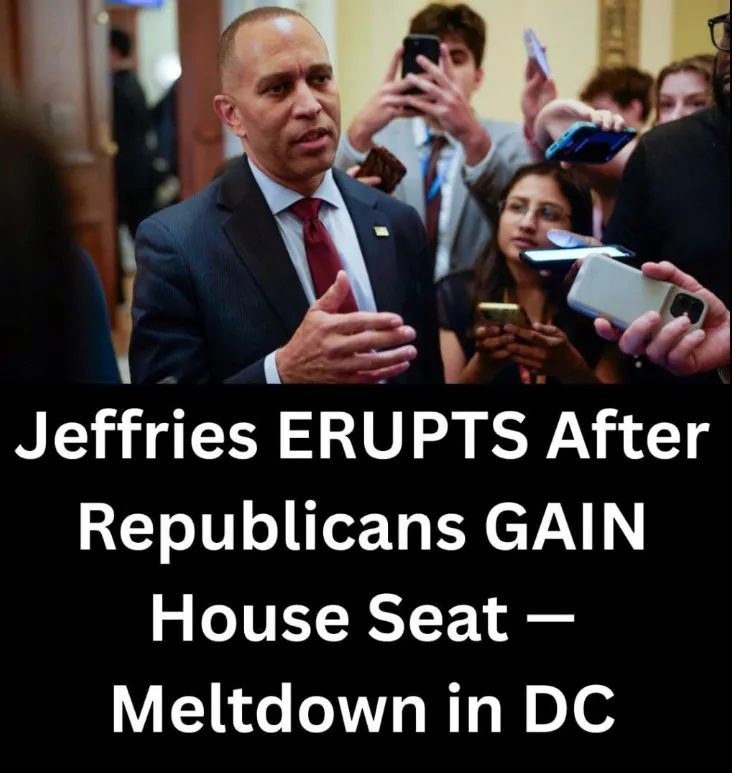
A nationwide redistricting battle is unfolding, largely encouraged by President Donald Trump, as Republican-led legislatures across several states face growing pressure from the former president and his allies to create additional GOP-leaning congressional districts and solidify the party’s House majority.
In North Carolina, Republican lawmakers advanced a new congressional map, joining a series of states—including Texas and Missouri—undertaking aggressive redistricting efforts ahead of next year’s midterm elections. The proposed map would target the district currently represented by Democratic Rep. Don Davis and give Republicans a likely advantage in 11 of the state’s 14 House seats, up from the current 10.
Once enacted, North Carolina’s new map would bring the number of newly drawn, Republican-favored districts nationwide this year to seven.
Meanwhile, in California, likely 2028 Democratic presidential contender and current Gov. Gavin Newsom is seeking to redistrict his state in a bid to counter the GOP-led effort throughout the country. A ballot issue set for a vote in November will determine whether the state assembly will be able to temporarily sideline California’s independent redistricting commission so that they can add five Democrat-leaning districts.
North Carolina has become the latest GOP-controlled state to launch a mid-decade redistricting effort — a process that has historically been uncommon, CNN reported.
North Carolina Sen. Ralph Hise, a Republican involved in overseeing the redistricting process, emphasized the high stakes of the effort in blunt terms.
“The motivation behind this redraw is simple and singular: draw a new map that will bring an additional Republican seat to the congressional delegation,” he said.
If Democrats take control of the House, they will “torpedo President Trump’s agenda,” Hise noted further, per CNN.
State lawmakers convened their first public meeting on the new congressional map Monday morning and approved the proposal in the state Senate the following day, despite strong opposition from Democrats and protesters who gathered at the Capitol in Raleigh.
The measure now heads to the state House for consideration.
Under North Carolina law, Democratic Gov. Josh Stein does not have the authority to veto redistricting plans, CNN said.
North Carolina remains a battleground state, with Democrats such as Stein and former Gov. Roy Cooper winning statewide elections in recent years. However, Republican leaders this week defended the newly drawn congressional map’s partisan tilt, arguing that it reflects Trump’s continued electoral successes there.
“This new map respects the will of the North Carolina voters who sent President Trump to the White House three times,” the state Sen. Phil Berger, the top Republican in the Senate, said in a statement, according to CNN.
Republican lawmakers in Texas initiated the latest round of redistricting earlier this year with a map designed to create five additional GOP-leaning congressional districts. In Missouri, Republicans approved new district boundaries aimed at adding one more Republican seat to the state’s delegation.
Both maps face ongoing legal challenges, and in Missouri, activists have launched a petition drive seeking to overturn the new plan.
Republicans currently hold a structural advantage in the redistricting process, controlling the governor’s office and both legislative chambers in 23 states, compared with 15 under full Democratic control.
Several other GOP-led states are also considering new congressional maps. In Kansas, lawmakers have allocated $460,000 to fund a potential special session aimed at redrawing district boundaries that could affect the state’s lone Democratic member of Congress, four-term Rep. Sharice Davids.
Calling such a session would require approval from two-thirds of both the state House and Senate.
In Indiana, where Republicans currently hold a 7–2 advantage in the U.S. House delegation, the White House has reportedly encouraged GOP lawmakers in the state legislature to pursue an additional seat held by Democrats. Vice President J.D. Vance has made two visits to the state to discuss the effort with legislators.
Meanwhile, Ohio and Utah—both under Republican control—remain engaged in ongoing redistricting disputes that began prior to Trump’s return to office.
In a stunning upset,– who had been a heavy favorite until recent weeks – conceded after it became clear the the 33-year-old democratic socialist had built a substantial lead over the more experienced but scandal-scarred former governor.
In a speech to supporters, Mamdani said: “Tonight, we made history,” adding: “I will be your Democratic nominee for the mayor of New York City.”
If his win is confirmed, Mamdani will be seen as the frontrunner for the 4 November mayoral election in New York, a city where
After 93% of votes were counted in the primary’s first round, Mamdani, a state representative, had 43.5% of the vote. Cuomo was on 36.4%.
Speaking at a campaign rally,
New York City uses a ranked-choice voting system, and as neither candidate is likely to reach 50%, the board of elections will now tally people’s second-choice candidates.
Mamdani, who cross-endorsed with Brad Lander, a progressive who came third with 11.4% of the vote, last week, is predicted to benefit more than Cuomo from the count. He thanked Lander in his speech, telling supporters: “Together we have shown the power of the politics of the future: one of partnership and sincerity.”
Mamdani’s rapid rise will serve as a rebuke to the Democratic establishment and give hope to other progressives hoping to run in elections around the US. Cuomo was backed by deep-pocketed donors and endorsed by a wave of centrist figures including Bill Clinton, but Mamdani benefited from a rise in grassroots support among young people in particular.
Cuomo said he had called Mamdani to congratulate him. “He put together a great campaign and he touched young people and inspired them and moved them and got them to come out and vote,” Cuomo said. “I applaud him sincerely for his effort.”
Cuomo told the New York Times he may still run in the November mayoral election as an independent. “I want to analyse and talk to some colleagues,” he said.
But given the heavily Democratic makeup of New York, and the unpopularity of the incumbent Eric Adams, Mamdani would be favorite to become New York’s 111th mayor.
The race for New York mayor has been closely watched across the US. In pitting two drastically different Democrats against each other, it offered a vision of what voters want from a party that has struggled to present a coherent alternative to Donald Trump.
Cuomo, a centrist, and Mamdani emerged as the frontrunners in the final weeks of the primary, Mamdani closing the gap on Cuomo through an abundance of enthusiasm from young New Yorkers.
Mamdani had hoped to benefit from the voting system that allows voters to rank five candidates in order of preference.
Cuomo, who was elected to three-terms as governor before resigning in disgrace amid accusations of sexual harassment, entered the race with the far superior name recognition, and at one point had a 30-point lead in polling. Mamdani ran on a progressive platform, promising to freeze rent and make buses free citywide, and his campaign was propelled by a social media following that dwarfs his rivals’. He was endorsed by Alexandria Ocasio-Cortez at an event attended by thousands of people in June, and has also won the backing of Bernie Sanders, the Vermont senator.Cuomo was much less visible, eschewing large rallies for tightly managed appearances at union offices and other small venues. As the race narrowed, his campaign and the organizations backing him – some of which were funded by billionaire Republican donors – focused almost exclusively on attacking Mamdani, spending millions of dollars on mailers and TV adverts.
“This has been a historically contentious race,” Mamdani said. “I hope now that this primary has come to an end, I can introduce myself once more, not as you’ve seen me in a 30-second ad or in a mailer in your mailbox, but as how I will lead as your mayor.
“I will be the mayor for every New Yorker, whether you voted for me, for Governor Cuomo, or felt too disillusioned by a long, broken political system to vote at all.”
Early voting started in New York on 14 June, and the city said more than 380,000 people had voted by Sunday, more than double the number that voted early in the 2021 primary. A heatwave on Tuesday – temperatures in New York reached 100F (38C) – appeared not to have suppressed turnout with more than 1 million people estimated to have voted, CBS New York
The winner of the primary is not guaranteed to become the 111th mayor of New York, but it is highly likely in a city where registered Democrats heavily outnumber Republicans.
Adams, who won the 2021 election as a Democrat but is running this year as an independent candidate, is deeply unpopular. He was charged last year with taking bribes and accepting foreign campaign contributions but the charges were dropped in April after the Trump administration intervened.