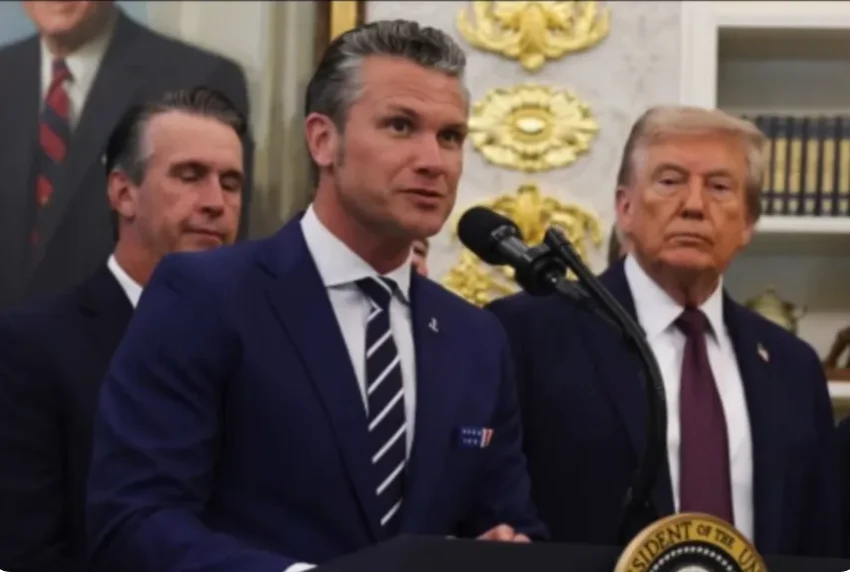
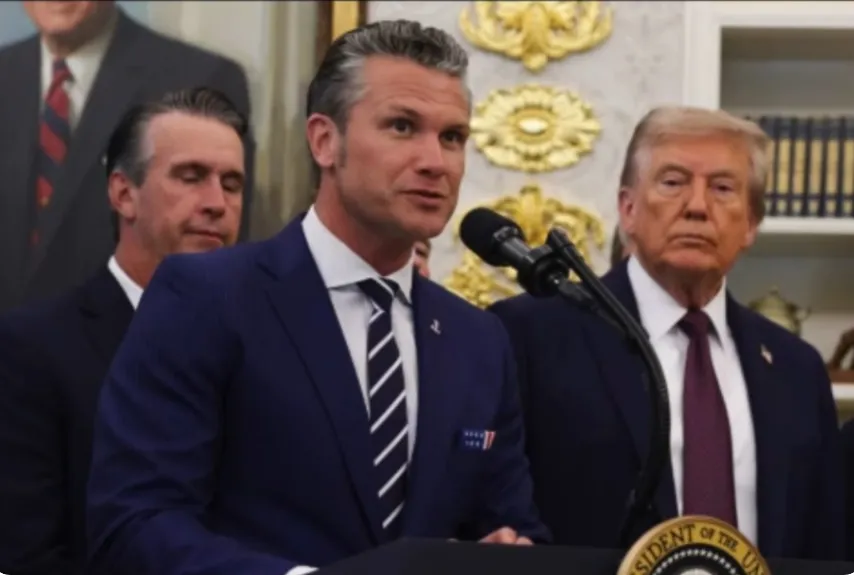
Defense Secretary Pete Hegseth has authorized the temporary deployment of up to 600 military lawyers to assist the Department of Justice by serving as immigration judges. According to an August 27 memo obtained by the Associated Press, the plan involves sending groups of 150 attorneys at a time, both military and civilian, with the first group to be selected and deployed imminently.
This decision aligns with the Trump administration’s broader use of military resources in its immigration crackdown. The military is already involved in various roles, including patrolling the U.S.-Mexico border, supporting immigration enforcement in cities, and using bases and aircraft for deportation operations. The deployment of lawyers aims to alleviate pressure on an immigration court system overwhelmed by a backlog of around 3.5 million cases.
The Justice Department made the formal request for help from the Pentagon. The memo notes that military attorneys may serve for up to 179 days, with the possibility of extension. However, this move has drawn significant criticism from immigration advocates and legal experts concerned about due process and legal qualifications.
Over 100 immigration judges have recently left their positions due to dismissals or resignations. With only about 600 judges remaining, the deployment would effectively double the current workforce. Critics argue that using military lawyers with little to no immigration law experience could lead to unfair rulings and undermine the judicial process.
Ben Johnson, head of the American Immigration Lawyers Association, criticized the move, comparing it to assigning a cardiologist to perform orthopedic surgery. Former supervising judge Jennifer Peyton also questioned whether military attorneys could handle the heavy caseloads and complex legal issues typical of immigration courts.
There are also legal concerns regarding the Posse Comitatus Act, which restricts military involvement in domestic law enforcement. Officials have not clarified how this large-scale reassignment might impact the military justice system or where the attorneys would be sourced from.
Daytime Star Jennifer Robyn Bernard Passes Away at 62
Jennifer Robyn Bernard, the actress who brought depth and heart to one of General Hospital’s most beloved characters, has sadly passed away in San Jacinto, California.
Best remembered for her portrayal of Terry Brock during the show’s golden era in the 1980s, Bernard leaves behind a legacy ththat continues to resonate with fans of daytime television.
A Face of Daytime Drama’s Golden Age
During her six-year run on General Hospital, Bernard helped define a generation of soap storytelling. At a time when the series captivated millions daily, she stood out—not for flashy dramatics, but for her honest, heartfelt performances.
Terry Brock, the character she played with quiet strength and vulnerability, became a favorite not just because of the scripts, but because of the soul Bernard poured into every scene.
Her presence on screen was magnetic yet understated, a rarity in a genre known for its over-the-top theatrics. She reminded audiences that even in a world of amnesia plots and love triangles, real emotion still mattered.
A Quiet Farewell
According to a report from TMZ, Bernard was found deceased in her California home earlier this week. As of now, the cause of her death has not been publicly disclosed. She was 62.
News of her passing has rippled through the soap opera community, prompting an outpouring of remembrance from fans, castmates, and industry colleagues who recall her professionalism, kindness, and the sincerity she brought both on and off screen.
More Than a Role
While Bernard stepped away from television after her time on General Hospital, her performances have endured through reruns, fan tributes, and decades of nostalgia. For many, she represents a time when soaps weren’t just entertainment—they were daily rituals, lifelines, and reflections of real emotional complexity.
Her contribution to that legacy is irreplaceable.
Gone, But Not Forgotten
Jennifer Robyn Bernard’s death marks the end of a quiet chapter in soap history—but her memory continues to live in the hearts of those who watched her grow Terry Brock from a supporting role into a character with lasting depth. She didn’t just act—she connected. She made people feel seen, understood, and moved.
In an industry that moves fast and forgets easily, Jennifer Robyn Bernard won’t be forgotten.
Her light, though gone, still flickers warmly in the memories of those she touched.
It was a quiet Tuesday afternoon at the Maplewood Police Department when the station doors swung open. Officers looked up from their paperwork, mildly curious. What they saw was Mrs. Eleanor Turner, the seventy-two-year-old widow who lived on Oak Street, holding the leash of her golden retriever, Sunny. Normally, Sunny was known in the neighborhood for his calm, almost sleepy demeanor. People often joked that he was the gentlest dog they had ever met, content to lie in the sun for hours. But today was different.
Sunny tugged excitedly at his leash, tail wagging furiously, eyes bright, tongue lolling happily out of his mouth. He barked once, twice, as if urging Eleanor to move faster. Eleanor, a frail but determined woman with silver hair neatly pinned back, cleared her throat and spoke softly to the officer at the front desk.
“Excuse me, Officer Parker… I know this must sound silly, but something’s not right. My Sunny has been acting… unusual. Too cheerful. Almost restless. It’s like he’s trying to tell me something.” Officer Parker raised an eyebrow, glancing from Eleanor to the golden retriever that seemed to radiate excitement. He had heard plenty of odd complaints during his years on duty, but there was something about Eleanor’s anxious sincerity that kept him from dismissing her outright.
“What do you mean by unusual?” he asked, leaning forward. Well,” Eleanor said, patting Sunny’s head, “he’s always been such a calm dog. But since this morning, he’s been jumping around, whining at the door, and pulling me down the street. I finally gave in and followed him, and he led me straight here. He wouldn’t stop until we arrived at the station.”
The officers in the room exchanged amused glances. Still, Parker knew better than to ignore instincts—whether human or animal. He stood and nodded. All right, Mrs. Turner. Why don’t we see where Sunny wants to go?” Within minutes, Parker and two other officers—Rodriguez and Kelly—were outside with Eleanor and Sunny. The golden retriever tugged at the leash, his body practically vibrating with purpose. “Lead the way, boy,” Parker said with a chuckle.
Sunny barked once and began trotting down Main Street. They followed him past the bakery, past the post office, and into the quieter residential area. People on the sidewalks turned their heads, curious to see a pair of uniformed officers trailing behind an elderly woman and her overexcited dog. Sunny made no stops. He moved with determination until they reached an old brick house at the end of Willow Lane. The house had been vacant for months, its shutters closed, paint peeling on the porch.
Sunny whined, pulling harder. He scratched at the gate and barked insistently. Officer Rodriguez frowned. “No one’s supposed to be living here. Place has been empty since the Petersons moved away last year.” Still, something about the dog’s behavior put them on alert. “Let’s check it out,” Parker said. The officers carefully pushed open the creaky gate. Sunny darted forward, his nose to the ground, sniffing eagerly. He ran straight to the back of the house and began pawing at a cellar door half-hidden under the porch. His tail wagged like a flag.
Kelly knelt down and pressed her ear to the old wooden door. Her eyes widened. “Do you hear that? … It sounds like crying.” Everyone froze. Parker quickly motioned for Rodriguez to call it in. Eleanor clutched her chest, whispering, “Oh my goodness.” With a crowbar borrowed from the patrol car, they pried the cellar door open. A waft of damp air escaped, followed by the unmistakable sound of a child sobbing.
Flashlights revealed a little girl, no older than six, sitting on an old blanket. Her eyes were wide, cheeks streaked with tears, but she looked up at them with a mixture of fear and relief. “Sweetheart, it’s okay,” Parker said gently, lowering himself to her level. “We’re the police. You’re safe now.” The girl trembled but didn’t resist when Kelly reached for her hand. Eleanor gasped. “Oh, that poor child…”
At the station later, wrapped in a blanket and sipping hot cocoa, the girl told her story in a small, shaky voice. Her name was Lily. She had been playing in the park the previous afternoon when she got lost. A stranger had found her and promised to help her get home. Instead, she was brought to the abandoned house and left in the cellar. “I was scared,” Lily whispered, hugging the stuffed bunny an officer had given her. “I cried all night. Then this morning I heard barking outside, and it gave me hope. I thought someone would find me.”
All eyes turned to Sunny, who wagged his tail happily, lying at Eleanor’s feet. “He must have heard her,” Eleanor said softly, stroking his head. “He knew she needed help.” News of Sunny’s discovery spread quickly through Maplewood. The local paper ran the headline: “Dog Leads Police to Missing Child.” Reporters wanted to interview Eleanor, and neighbors stopped by with treats for Sunny. But Eleanor remained humble. “I didn’t do anything,” she said. “It was all Sunny. He knew something was wrong, and he wouldn’t rest until we listened.”
The police, however, insisted she accept recognition alongside her dog. At a small ceremony the following week, Chief Reynolds presented Sunny with a bright blue ribbon that read “Hero Dog.” Eleanor’s eyes filled with tears as she clipped it to his collar. “Sometimes,” Reynolds said, addressing the crowd, “heroes come in unexpected forms. Today, a little girl is safe because one dog paid attention when no one else could.” Lily and her parents attended, too. The moment Lily saw Sunny, she broke into a smile and ran to hug him. Sunny licked her face, his tail wagging wildly.
“See?” Eleanor whispered to Parker. “That’s the cheerfulness I saw in him. He knew he had a purpose.” From that day on, Lily often visited Eleanor and Sunny. The little girl and the golden retriever became inseparable playmates. Eleanor, who had lived alone for years, found her quiet house filled with laughter again. And whenever people asked about the day Sunny became overly cheerful, Eleanor would smile and say, “Sometimes joy means more than we realize. Sometimes it means there’s someone out there who needs us.”
The release of Jeffrey Epstein’s infamous 50th birthday book has sent shockwaves through America.
A disturbing handwritten note from former President Bill Clinton has been uncovered, and it is raising new questions about how close Clinton really was to the disgraced financier.
The book, titled The First Fifty Years, was compiled in 2003 by Ghislaine Maxwell.
It contained messages and tributes from powerful figures across politics, business, and entertainment. The book was presented to Epstein during a lavish birthday celebration.
Clinton’s entry, now confirmed to be authentic, is one of the most striking pieces in the collection.
His words to Epstein were not casual remarks but a glowing personal tribute.
Clinton wrote, “I particularly value your childlike curiosity and drive to make a difference in the world. And I cherish the comfort of our friendship.”
The choice of words has stunned the public. The reference to Epstein’s “childlike curiosity” is being widely condemned, especially in light of Epstein’s predatory crimes against minors.
Conservatives argue this is not simply a poor turn of phrase. Instead, they say it reveals the disturbing way powerful elites overlooked or even excused Epstein’s behavior.
The book, spanning 238 pages, includes many contributors. But none are as politically explosive as Clinton’s entry.
His note reflects admiration and closeness that can no longer be denied.
The release of this scrapbook came through the House Oversight Committee, which has been investigating Epstein’s ties to the world’s elite.
The public now has access to a document that shows in Clinton’s own handwriting just how close he was to Epstein.
Clinton has long downplayed his association with Epstein. He has repeatedly claimed he barely knew the man. Yet this letter directly contradicts that narrative.
Flight logs already confirmed that Clinton flew on Epstein’s private jet multiple times. Photos placed him at Epstein’s properties.
Now his own words show he valued Epstein’s friendship.
For years, Democrats and their allies in the media tried to minimize Clinton’s connection to Epstein.
They portrayed him as just another name in a crowded social circle. This letter proves otherwise.
The irony is unavoidable. Clinton, once celebrated as a global statesman, is now exposed as praising a man who abused young girls and built his empire on exploitation.
House Oversight members say this discovery underscores why full transparency is necessary. Americans deserve to know who in positions of power enabled Epstein and protected him for decades.
Former federal prosecutor Francey Hakes reacted to the revelation by saying the words were “astonishing in hindsight.” She noted they show “a disturbing pattern of minimizing who Epstein really was.”
This reaction has fueled calls for further investigation. Many Americans now want to know what else has been hidden about Clinton’s ties to Epstein.
The silence from Clinton’s camp is also telling. No official denial or clarification has been issued since the note was made public. That silence is being read as an admission that there is no defense for what he wrote.
Republican lawmakers have seized on the issue, pointing out that Epstein’s victims have been denied justice for too long while powerful figures were shielded. Clinton’s entry is now evidence of that protection.
Epstein was first convicted in 2008, receiving a light sentence that outraged the public. Many believe he was protected by his network of influential friends. Clinton’s praise only confirms how entrenched those friendships were.
BREAKING: Joe Biden Admits to New York Times That…
Joe Biden admitted to The New York Times that he did not personally sign off on every pardon and commutation issued during his presidency, an acknowledgment that has sparked intense debate over how involved he truly was in carrying out one of the most consequential powers of the office.
“I made every decision on the categories and top-level individuals, but the mechanics were left to staff,” Biden told the Times. That sentence alone sent shockwaves through political and legal communities.
According to the New York Post, Biden’s White House Chief of Staff Jeff Zients authorized the use of the autopen to execute a sweeping set of clemency actions on January 19, 2025. This included about 2,500 pardons and 1,500 commutations.
The New York Post confirmed, “Biden admitted that he didn’t review every clemency case individually and that his chief of staff, Jeff Zients, authorized the use of the autopen.”
The same report added, “The autopen application, which Biden also used to sign some legislation, allowed staff to speed up paperwork processing.”
While Biden insisted, as quoted in ABC News, that he personally made “every decision,” he conceded that he did not individually sign off on each document, saying, “I approved each of the clemency decisions before they were issued.”
The Daily Beast quoted Biden dismissing Republican criticism: “That is utter BS,” he said, responding to allegations that he had no hand in the clemency spree.
Still, Biden’s comments confirmed the worst fears of critics who have questioned his cognitive fitness and decision-making capacity. As Time reported, the final flurry of clemency actions was conducted with Biden out of public view.
Time added context, noting, “Emails show Biden’s chief of staff, Jeff Zients, approved the use of the autopen to execute clemency documents on the president’s behalf.”
In the same article, the legal implications were underscored: “While it is legally permissible, it is extremely rare for a president to use an autopen to sign something as consequential as a clemency order.”
Republican leaders swiftly seized on the opportunity to highlight Biden’s detachment. House Oversight Chair James Comer was quoted as saying, “This isn’t just about a signature. It’s about transparency, accountability, and who really was making decisions in that White House.”
Comer continued, as cited in ABC News, “We are investigating whether this use of the autopen was a way to obscure Biden’s declining capacity and whether any of the beneficiaries had connections to the administration.”
The legal debate over autopen use isn’t new, but Biden’s large-scale application is unprecedented. According to Time, “It has never been used on this scale or for something with the constitutional gravity of a pardon.”
Even some Democrats were privately concerned. One DNC strategist, speaking anonymously to Politico, said, “It feeds the narrative that Biden isn’t all there.”
The same strategist added, “If he wasn’t fully engaged on something as serious as clemency, what else was he rubber-stamping?”
In response to concerns, the Daily Beast reported that Biden maintained, “Each recipient was vetted and met the established standards for clemency.”
But skepticism remains. As Time highlighted, “The Justice Department is now investigating whether any of the pardons were improperly influenced.”
This adds to a growing list of concerns among voters and lawmakers alike. ABC News reported that the clemency decisions were made with “speed and secrecy,” raising transparency questions.
Donald Trump, seizing the moment, weighed in: “He didn’t have the guts or the capacity to do his job,” he said during a recent rally, as quoted in The Daily Beast.
Trump added, “You don’t get to hide behind a machine when you’re playing with the law.”
In a fiery exchange on British television, Piers Morgan clashed with BBC presenter Fiona Bruce after she appeared to downplay the role of radical leftist ideology in the tragic murder of Charlie Kirk, a conservative activist and founder of Turning Point USA.The heated debate unfolded as Morgan reiterated statements from authorities suggesting that the young man responsible for Kirk’s murder may have been radicalized by leftist ideology, a claim that Bruce seemed reluctant to acknowledge without further clarification.The discussion, which aired live on BBC, highlighted the deepening ideological divide between the right-wing and left-wing media, with Morgan boldly standing by the authorities’ early statements and accusing BBC figures of trying to downplay the potential political motives behind the crime.Piers Morgan, known for his unapologetic style, began by referencing the investigation into Charlie Kirk’s murder, which remains a subject of national attention.According to Morgan, the authorities investigating the case had made it clear that the suspect in the killing had been radicalized by leftist views. He quoted sources close to the investigation, stating that the authorities were working to uncover more details but had already pointed to the suspect’s radicalization as a likely factor.“This young guy (who murdered Charlie Kirk), according to the authorities, we still need to find out more, but they believe he was radicalized by a leftist ideology,” Morgan said confidently on air.However, Fiona Bruce, who had been moderating the conversation, immediately interjected. “Hang on, let’s be clear, we just don’t know that,” she replied, attempting to temper the assertion Morgan had just made.But Morgan wasn’t backing down. “I just said that,” he responded, insisting that he was merely repeating what the authorities had publicly indicated about the investigation.
Bruce, seemingly uncomfortable with Morgan’s firm stance, quickly tried to counter his remarks. “It could be true, it could be absolute nonsense,” she retorted, appearing to dismiss the claim as speculative without supporting evidence.Morgan responded firmly, “I’m saying what the authorities have publicly said, which their investigations so far have led them to believe that was the case.”He went on to argue that, while the full details of the investigation were still unfolding, there was enough public evidence to suggest that the suspect had been influenced by radical leftist views.Charlie Kirk’s murder sent shockwaves through the conservative community, sparking widespread outrage and deepening the divide between political ideologies in the United States.Kirk, known for his outspoken conservative views, was gunned down in what was initially believed to be a politically motivated attack. The circumstances surrounding his death have drawn attention to the growing political violence that some argue has been fueled by extreme left-wing ideologies.Investigators have been working tirelessly to piece together the events leading up to the murder. According to early reports, the suspect, a young man who has not yet been publicly named, was reportedly influenced by left-wing radicalism, though the authorities have made it clear that they are still gathering more evidence to confirm the exact motivations behind the crime.However, the narrative that the suspect’s motivations could be linked to left-wing radicalism has caused a stir in the media. Piers Morgan’s comments on the subject have sparked widespread debate, with some accusing him of jumping to conclusions, while others argue that he was simply reporting what the authorities had publicly stated.
The suggestion that the suspect in Kirk’s murder may have been radicalized by left-wing ideology has reignited discussions about the increasing polarization of American politics.In recent years, there has been growing concern about the rise of political extremism, with some warning that both the far-right and far-left have become breeding grounds for radicalization.On the left, critics of conservative figures like Charlie Kirk have accused them of promoting harmful rhetoric that stokes division and violence.However, many on the right argue that the left has been equally culpable in fostering an environment of hostility, with certain activists and media personalities using inflammatory language to demonize conservatives.In the case of Charlie Kirk’s murder, Morgan and others have pointed to the broader trend of political violence, arguing that left-wing radicals have become increasingly emboldened by the rise of progressive movements, such as Antifa, and the radicalization of social justice warriors on college campuses. The idea that the suspect could have been motivated by leftist ideology is seen by some as part of this broader trend.However, there are also those who argue that this line of thinking is dangerous and premature. They caution against making sweeping generalizations about the suspect’s motivations without a full investigation.Fiona Bruce’s comments on the BBC, attempting to downplay the connection between left-wing ideology and the crime, reflect this more cautious stance.
The media’s role in shaping public perception of political violence is critical, especially when the facts are still unclear. The exchange between Piers Morgan and Fiona Bruce highlights the tension between journalistic integrity and the desire to shape a narrative.Morgan, as a prominent conservative figure, has often been outspoken about what he perceives as left-wing bias in the media. His comments about the murder of Charlie Kirk reflect his belief that the media is too quick to ignore or downplay left-wing violence, while amplifying the threat posed by the far-right.“Why is it that when a left-wing individual commits an act of political violence, it’s brushed aside, but when a right-wing extremist commits an act of violence, it’s framed as a national crisis?” Morgan said in a follow-up statement.Bruce, on the other hand, represents a more moderate viewpoint, emphasizing the need for caution in drawing conclusions before the facts are fully established.While she acknowledged that the investigation could point to left-wing radicalization, she also pushed back against the idea that it was an open-and-shut case.“I’m just saying that we can’t make definitive statements based on limited information,” Bruce explained during the segment.The debate over the murder of Charlie Kirk and the role of left-wing ideology in the attack is emblematic of the deepening political divisions in the United States.
The increasing polarization of American politics has led to a heightened sense of distrust between the two major political parties, with each side accusing the other of fostering extremism and violence.For many on the left, the suggestion that the murder of Charlie Kirk was the result of leftist radicalization is an inflammatory claim that is being used to attack the entire progressive movement.They argue that the right-wing media is using the tragedy to push a divisive narrative that paints all left-wing activists as violent extremists.For many on the right, however, the murder represents the latest in a series of attacks by left-wing radicals against conservative figures. They argue that the left has created a culture of political violence by promoting a rhetoric of hatred and division, and that the mainstream media is complicit in downplaying the threat posed by these extremists.Piers Morgan’s comments have been widely praised by conservatives, who see him as one of the few mainstream media figures willing to call out left-wing violence.
However, his remarks have also drawn sharp criticism from those on the left, who accuse him of exploiting the tragedy for political gain.As the investigation into the murder of Charlie Kirk continues, authorities are working to piece together the full story. While the suspect’s motivations remain unclear, the controversy surrounding the case has sparked renewed debates about political violence and the role of media in shaping the narrative.For Piers Morgan, the situation has become a battleground in his ongoing fight against what he sees as left-wing bias in the media. His insistence that the authorities’ investigation into the suspect’s radicalization should not be dismissed as “absolute nonsense” has made him a lightning rod for criticism and praise alike.Meanwhile, Fiona Bruce’s more cautious stance highlights the complexity of the situation. While she did not dismiss the possibility that left-wing ideology could have played a role in the crime, she called for a more thorough examination of the evidence before drawing any conclusions.Ultimately, the case will likely continue to fuel political debates about the causes of violence in America and the role that ideology plays in shaping individuals’ actions.In a highly polarized society, where every political act is seen through a partisan lens, finding common ground on issues of political violence may prove to be more challenging than ever.The murder of Charlie Kirk has become a flashpoint in the ongoing debate over political violence and the role of ideology in motivating violent acts.Piers Morgan’s fiery exchange with Fiona Bruce underscores the deep divisions between left and right in the U.S., with each side accusing the other of fostering extremism and violence.Morgan’s insistence that the authorities have linked the suspect’s actions to left-wing radicalization has raised serious questions about the media’s role in shaping the narrative.Meanwhile, Bruce’s caution in drawing conclusions reflects the broader concern about jumping to conclusions before the full facts are known.As the investigation continues, the tragedy of Charlie Kirk’s murder remains a potent symbol of the dangers of political extremism. Whether the murder was motivated by left-wing radicalization, as Morgan suggests, or another factor entirely, the incident has reignited the debate over the causes of violence and the role of media in shaping the public’s understanding of these events.
Quiet whispers began to ripple through social media—enigmatic posts, a rare absence from public events, and a chorus of concerned fans asking one question: “Is Blake Shelton okay?”
Though details remain private, one truth shines through unmistakably—the country music icon is navigating a deeply personal struggle. And as the world holds its breath, an outpouring of love and support is swelling around him.
For over two decades, Blake Shelton has been a pillar of country music, captivating hearts with his distinctive voice and songs that resonate with raw emotion. Hits like “God Gave Me You” and “Honey Bee” have become soundtracks to countless lives, offering
comfort and connection across generations.
But Blake’s impact reaches far beyond the music charts. As a beloved coach on The Voice, he’s won fans not just with his musical talent, but with his genuine warmth, quick wit, and generous spirit. His mentorship has touched the lives of many aspiring artists and endeared him to millions of viewers worldwide.
Now, facing a private and difficult chapter, the devotion of his fanbase shines brighter than ever. Across platforms, hashtags like #PrayersForBlake and #StayStrongShelton flood with messages of encouragement, respect, and love. Fellow artists and longtime friends have also voiced their support, standing in solidarity with the country legend.
While curiosity is natural, the most compassionate response is honoring Blake’s privacy and giving him the space to heal away from the spotlight. Fame doesn’t make anyone immune to life’s hardships, and Blake deserves kindness and understanding during this time.
In Closing
Blake Shelton has spent years lifting others with his music, humor, and heart. Now, as he faces his own challenges, that same love is coming back to him in waves. Whether through a thoughtful message, revisiting his songs, or simply holding him in your thoughts, fans and friends alike are rallying behind Blake. After all, someone who’s given so much to the world deserves that warmth—especially when they need it most.