
Air India Flight AI171 Crash: Nation Grieves as Investigators Probe Tragic Mid-Air Emergency
Just before the deadly crash, the pilot issued a rare and urgent Mayday distress call—raising serious concerns about what might have unfolded in the final moments of the flight. Was this a catastrophic technical failure, or are there deeper, more unsettling issues at play? As authorities race to uncover the truth, grief and anxiety hang heavy across the country.
Disaster Strikes Moments After Takeoff
The ill-fated Boeing 787-8 Dreamliner departed Ahmedabad on Thursday afternoon, bound for London Gatwick, carrying 230 passengers and 12 crew members. At approximately 1:10 PM, just minutes after liftoff, the aircraft went down in a densely populated area near Ghoda Camp, not far from the airport.
Eyewitnesses described the terrifying scene—loud blasts, plumes of dark smoke, and a sudden burst of fire. The aircraft’s emergency signal, a Mayday issued by the pilot, was transmitted to air traffic control just before the crash. The nature of the emergency remains unclear.
Air India Acknowledges “Devastating Incident”
Air India issued a formal statement confirming the crash: “Flight AI171, scheduled from Ahmedabad to London Gatwick, encountered a serious incident shortly after departure on 12 June 2025. We are working urgently to gather complete details and will provide updates as available.”
Leadership Reacts With Deep Sympathy
Air India Chairman N. Chandrasekaran expressed heartfelt sorrow over the event, stating: “We are deeply grieved by the tragic loss of Air India flight AI171. Our thoughts are with the families of everyone onboard. We are working closely with authorities and emergency services to provide support where it is most needed.”
Emergency Crews Race Against Time
Firefighters, police, and medical responders were swiftly dispatched to the crash site, which lies between Meghaninagar and the Ahmedabad Cantonment zone. Thick smoke hampered visibility, and reports from the ground indicated extensive damage. Rescue operations are
ongoing, although early reports from officials suggest all 242 people onboard may have perished.
Local residents and first responders described the impact as catastrophic, with some likening it to an explosion. The aircraft reportedly lost altitude rapidly before impact, but the exact cause has yet to be determined.
Mayday Call Raises Alarming Questions
The pilot’s distress signal has become a focal point in the investigation. A Mayday is only issued in situations of extreme danger—typically involving imminent mechanical failure or loss of control. Aviation experts suggest that the presence of such a signal may provide crucial insights once the flight recorder and black box are recovered.
Both national and international aviation safety bodies are expected to participate in the investigation, given the nature of the aircraft and the flight’s international route.
Nation Mourns: 242 Feared Dead
As the scale of the disaster becomes clearer, the heartbreak intensifies. With 242 souls onboard—families, business travelers, and crew—it is feared that none survived. The area surrounding the crash site has been cordoned off as teams work tirelessly to recover remains
and examine wreckage.
Conclusion: A Tragedy That Demands Answers
The tragic crash of Air India flight AI171 has cast a dark shadow over the nation. In the midst of grief and shock, investigators now face the daunting task of piecing together what went wrong in the moments following takeoff. The pilot’s Mayday call offers a critical clue, but much remains unknown.
As families await answers and the world watches with heavy hearts, one thing is certain: this disaster has left a deep scar on India’s aviation history. Authorities are urging patience as the investigation unfolds, and Air India has pledged full transparency in the days ahead.
Please SHARE this article with your family and friends on Facebook.
Bored Daddy
Love and Peace
The tragic assassination of Charlie Kirk, the 31-year-old founder of Turning Point USA, has left America shaken. In the midst of this national grief, a powerful and emotional gesture came from the NFL world.
Mahomes, who is widely admired not just for his talent but also for his leadership and character, explained his decision with heartfelt sincerity. “I’m also a father, and I understand the loss his family feels at this moment. No child should ever face the future wondering if they will be taken care of. If I can ease that pain and help secure their
future, I feel it is my responsibility to step in,”
Within minutes of his announcement, social media erupted. Hashtags like #MahomesStrong
, #SupportForKirk, and #ChiefsCare began trending on X, with fans praising Mahomes for his compassion and leadership off the field. Many users noted that while his achievements on the gridiron are historic, it is acts like these that define his true legacy. One comment read,
Reports confirm that Mahomes’s pledge will cover the children’s education through college, in addition to daily living needs. By making this commitment, he ensured that the family can focus on mourning and healing rather than financial uncertainty. For many, this act represents the best of American sports culture — using fame and resources to uplift others in times of tragedy.
Charlie Kirk’s family issued a statement filled with gratitude. “We are humbled by Patrick Mahomes’s generosity. In our darkest hour, he has brought us light and comfort. Charlie always believed in the American spirit of community, and Mahomes’s support shows that spirit lives on,” the family said.
Inside the Chiefs organization, teammates and staff applauded Mahomes’s decision. Many expressed pride in their quarterback for setting an example of compassion and civic duty. His gesture also inspired discussions across the NFL about creating a league-wide initiative to support families of public figures and community leaders lost to tragedy.
Mahomes’s words — “I’m also a father, I understand the loss of his family at this time” — resonated deeply, not only with parents but with all Americans moved by the tragedy. His actions underline the belief that leadership is not just about winning games but about making a difference in people’s lives when it matters most.
As America continues to mourn Charlie Kirk, Patrick Mahomes’s pledge will be remembered as a defining moment — one that transcends sports and highlights the power of empathy. In grief, he provided hope. In tragedy, he brought unity. And in doing so, he reminded the nation that heroes are not only found on the field, but also in the compassion they show when the world needs it most.
The House Admonishes: The Political Reckoning of Representative Ilhan OmarIlhan Omar Breaks Down as Congress Erupts in Laughter After Her RemovalThe House Admonishes: The Political Reckoning of Representative Ilhan Omar
Allegations of Anti-American Rhetoric and Divided Loyalty Culminate in Historic Censure and Committee Removal
The U.S. House of Representatives recently became the epicenter of a fierce ideological battle, culminating in the highly contested censure and removal of Representative
Ilhan Omar (D-MN) from key committee posts. This action, driven by a long list of controversial remarks and culminating in allegations of divided loyalty, transcended typical partisan warfare, forcing Congress and the nation to grapple with fundamental questions of allegiance, national memory, and the integrity of the Congressional oath.From the opening moments of the floor debate, the atmosphere was charged. Republicans framed the necessity of Omar’s removal not as mere party politics, but as a matter of national integrity
—a test of who is fit to speak for the nation on the world stage. Democrats, meanwhile, fiercely defended their colleague, arguing the move was pure political vengeance fueled by Islamophobia and racism.
The Unforgivable: Minimizing a National TragedyThe foundation of the Republican case often rested on the memory of the September 11th attacks. Representative Nicole Malliotakis (R-NY), delivering one of the most powerful and emotional speeches of the day, stressed the impact of Omar’s infamous comment describing 9/11 as merely “
some people did something.”
Malliotakis, representing New York—the state that suffered the heaviest losses on that tragic day—called the comment deeply offensive, arguing it belittled and diminished the worst terrorist attack in American history.
Malliotakis’s argument gained undeniable moral weight when she highlighted her own commitment to consistency: she had previously voted to remove a Republican lawmaker for similarly insensitive remarks about 9/11. This move effectively silenced critics who might have accused her solely of partisanship, positioning her stance as one rooted in principle and respect for the national memory.
The core argument put forth by Omar’s opponents was that a pattern of controversial statements questioned core U.S. values and alliances, making her unfit to represent America’s interests abroad. This included persistent criticisms of U.S. foreign policy that critics claimed revealed a troubling anti-American bias.
Anti-American Rhetoric and Troubling Comparisons
Beyond the 9/11 comment, Omar’s critics cited a long record of rhetoric that they argued was fundamentally disqualifying for a member of the Foreign Affairs Committee.
Representative Malliotakis specifically recalled moments in the committee room where Omar allegedly equated the United States and Israel to terrorist organizations like Hamas and the Taliban. Such a comparison, Malliotakis argued, was absolutely unacceptable, highly offensive, and inherently disqualifying. Critics argued that the Foreign Affairs Committee should be led by those who defend America’s values and allies, not those who demean them by drawing equivalencies with designated terror groups.
Furthermore, the record was expanded to include Omar’s statements concerning humanitarian crises, which critics claimed demonstrated a biased worldview. Malliotakis pointed to comments where Omar implied that the humanitarian crisis in
Venezuela was largely America’s fault, overlooking the devastating effects of the oppressive socialist dictatorships under Hugo Chavez and Nicolás Maduro.
This was argued to be more than a minor policy disagreement; it revealed a consistent pattern of shifting blame away from corrupt, authoritarian regimes and onto the United States. Such a mindset, her opponents warned, could severely erode America’s moral authority when engaging with international allies and adversaries.
The Treasonous Tendencies: An Affront to the Oath
The tension reached its absolute peak when a resolution was introduced not only to remove Omar from committees but also to formally
censure her, accusing her of behaving like a foreign agent due to remarks made at the January 2024 Minneapolis event.
The resolution detailed comments where Omar allegedly told Somali Americans that the U.S. government would ultimately defer to their demands: “
The US government will only do what Somalians in the US tell them to do. They will do what we want and nothing else. They must follow our orders and that is how we will safeguard the interest of Somalia.
”
The resolution cited further, more explicit statements: “For as long as I am in US Congress, Somalia will never be in danger. Its waters will not be stolen by Ethiopia or others. Sleep in comfort knowing I am here to protect the interest of Somalia from inside the US system.
”
To her critics, these remarks represented a categorical violation of the oath of office. They argued that by “openly admitting her efforts to advance Somalia’s interest using her position,” Representative Omar had revealed herself to be an agent of a foreign government. The dispute transcended policy and became a matter of national security and fundamental allegiance.
In this context, the resolution invoked the historical gravity of George Washington’s Farewell Address of 1796, which cautioned against the “impostures of pretended patriotism” and stressed that the “name of American” must “always exalt the just pride of patriotism more than any appellation derived from local discrimination.” The core message was that Omar, by this measure, stood on the wrong side of the founders’ vision for singular allegiance.
The Final Stroke: Committee Removal
The allegations culminated in the ultimate procedural consequence. When the gavel finally struck, the decision was sealed: Representative Ilhan Omar was formally removed from the Committee of the Budget and the Committee on Education and the Workforce, effectively stripping her of her influence and her defining role on the Foreign Affairs Committee.
The final resolution stated that Omar had “clearly violate[d] the oath she took as an elected member of Congress” and exhibited “treasonous tendencies George Washington warned about.” The move was both symbolic and powerful, a severe public reprimand insisted upon by opponents determined to enforce an uncompromising standard of loyalty.
Republicans insisted the decision was necessary to restore common sense and respect for America’s global image, arguing that the privilege of shaping U.S. foreign policy belongs only to those who firmly defend the nation’s values.
Democrats, however, condemned the action as pure political vengeance, warning that punishing lawmakers for their policy views could set a dangerous precedent. Omar’s supporters argued she was unfairly targeted due to her Somali heritage and Muslim faith, claiming that criticizing U.S. policy should not be equated with disloyalty. They saw the removal as a spectacle of retaliation cloaked in formality.
Regardless of perspective, the moment became a defining reminder that words spoken from a position of power carry monumental consequences. While Omar maintained her seat in Congress, the loss of her committee posts was a powerful, symbolic reprimand. The debate cemented her position as a figure at the very center of America’s deepest ideological divide, forcing a reckoning over the fragile balance between representation, conviction, and uncompromising accountability.
John Kennedy HUMILIATES ‘Morning Joe’—Exposes Media Lies, Crushes Anti-ICE Hysteria on Live TV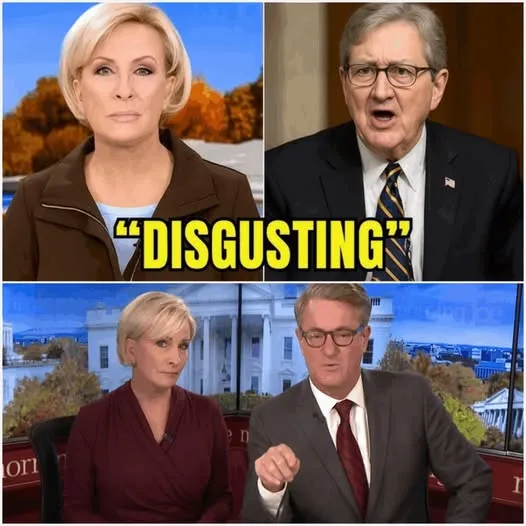 John Kennedy HUMILIATES ‘Morning Joe’—Exposes Media Lies, Crushes Anti-ICE Hysteria on Live TV
If you tuned in to MSNBC’s Morning Joe expecting another smug, left-leaning takedown of law enforcement, you got something else entirely—a total bloodbath. Senator John Kennedy, armed with his southern charm and razor-sharp intellect, walked into the lion’s den and left the hosts reeling, their narratives in tatters. In a segment that will go down in cable news history, Kennedy didn’t just win the debate—he torched the studio, shredded the anti-ICE talking points, and exposed the hypocrisy of media elites who’d rather fear-monger than face facts.
The Stage Is Set—And The Elites Are Shaking
The Morning Joe set buzzed with anticipation, the hosts poised to grill Kennedy on immigration enforcement. They thought they’d catch him off guard, paint ICE agents as monsters, and wring out some viral soundbites. Instead, Kennedy sat back, folksy and unflappable, ready to slice through the nonsense with a wit sharper than a bayou blade.
The first volley of questions was textbook media spin: “Senator, what do ICE agents really consider a criminal? Are they just rounding up hardworking dads?” The implication was clear—ICE is the villain, and anyone defending them is complicit in some imagined reign of terror.
Kennedy’s Opening Salvo: Law Is Law
Kennedy didn’t flinch. He leaned forward, eyes blazing, and fired back: “Let’s get one thing straight. If someone’s in the country illegally, that’s a violation of the law. Plain and simple. ICE isn’t out here playing games; they’re targeting public safety threats—the kind of dangerous individuals who make our streets less safe for hard-working families.”
He dismantled the hosts’ hand-wringing over “community fear,” flipping the script: “How about the fear from criminals roaming free because some folks want to tie ICE’s hands?” The studio fell silent as Kennedy laid out the facts—recent arrests in Boston, including Victor Gomez Harris, a Guatemalan charged with aggravated rape and assault on a child. “A real monster ICE yanked off the streets before he could do more harm,” Kennedy declared, making it clear these operations aren’t random witch hunts but precise strikes against real threats.
Exposing Media Spin—Kennedy’s Relentless Logic
The hosts tried to drag Kennedy into emotional territory, bringing up the “father of three Marines” allegedly swept up for trimming bushes. Kennedy refused to take the bait: “Every case is different. Without the file, the criminal history, the final deportation order, I can’t make snap judgments. But being in the country illegally isn’t something to brush off like a minor traffic ticket. It’s a foundational issue that undermines the rule of law.”
He didn’t stop there. Kennedy hammered home that ICE agents aren’t out to ruin lives—they’re out to prevent tragedies. He cited the arrest of K. Espinosa, a Colombian charged with assaulting a pregnant woman. “If local leaders are so worked up about an ICE vehicle parked legally on a public street, maybe they ought to thank those agents for making their city safer instead of stirring up unfounded panic.”
Destroying The “Disappearing People” Lie
The hosts, desperate to salvage their narrative, floated the tired rhetoric about “disappearing people.” Kennedy’s response was brutal: “That’s not just ridiculous, it’s dangerous. It puts our brave ICE agents and their families at risk every day. US citizens get arrested daily by local police for breaking the law without anyone crying foul about ‘vanishings.’ ICE is conducting targeted, necessary enforcement—the kind that’s been standard for decades until recent policies handcuffed the agency and let threats fester.”
He made it clear: If you don’t like how ICE operates, take it up with Congress, not the men and women risking their lives to keep communities safe.
Kennedy’s Masterclass—Facts, Wit, And Relentless Clarity
Kennedy’s command of the facts was absolute. He cited arrest statistics, painted vivid pictures of operations that removed predators from neighborhoods, and called out the hypocrisy of politicians who demonize ICE while ignoring the carnage wrought by unchecked illegal immigration.
His folksy humor landed with devastating effect: “It’s like complaining about the fire department parking near your house while they’re putting out a blaze next door, folks. They’re there to help, not haunt.”
Even when pressed about “hardworking immigrants,” Kennedy refused to generalize: “Without the specifics, the intel, the background checks, it’s irresponsible to make blanket judgments. Transparency is key. Let’s build trust, not tear it down with inflammatory language.”
Turning The Tables—Media Elites On The Defensive
As the segment wore on, it was clear Kennedy was steering the conversation. He challenged the hosts to focus on real victims—the families shattered by violence from unchecked illegal immigration—instead of fixating on isolated incidents blown out of proportion.
He called for more data transparency, positioning himself as a bridge-builder rather than a divider. His blend of logic, empathy, and wit transformed the debate from a gotcha interview into a platform for truth.
From Studio Lights To The Streets—Kennedy’s Ground Game
Shifting gears, Kennedy took his advocacy to the gritty streets of Boston, embedding with ICE agents on a routine patrol. He listened to their stories, absorbed the realities of their work, and saw firsthand the dangers they faced—not just from criminals but from relentless vilification by media and politicians.
He witnessed operations that targeted real threats—child predators, violent assailants—not the “hardworking dads” the media loves to parade as victims. Kennedy’s empathy shone through as he heard about the toll on agents’ families, the threats they endured, and the burnout from constant criticism.
Exposing The Lies—ICE As Guardians, Not Villains
Kennedy’s immersion in ICE operations revealed the truth: These agents aren’t fear-mongers. They’re guardians, weaving a safety net for the most vulnerable. He saw how they prioritized safety over spectacle, avoided sensitive locations, and operated with precision to minimize community impact.
He called out the myth of “indiscriminate sweeps,” sharing stories of targeted precision that saved lives quietly, without fanfare. Kennedy’s respect for ICE was palpable, and he vowed to fight for better resources and fair treatment for those on the front lines.
The Roots Of Resolve—Kennedy’s Journey
Kennedy’s stance on immigration wasn’t born from headlines—it was forged in the fires of real-world consequences. He recalled meeting victims of violent offenders who’d slipped through the cracks, hearing stories of families shattered by bureaucratic failures and lax enforcement.
He faced down critics in Washington, countering their dogma with hard evidence. “I’m not here to win a popularity contest,” he quipped. “I’m here to make sure the bad apples don’t spoil the whole orchard.” His commitment to tough, fair enforcement was shaped by years of listening to those most affected by policy failures.
Kennedy’s Final Salvo—A Beacon Of Truth In A Sea Of Lies
Back in the Morning Joe studio, Kennedy wrapped up his appearance with a commanding presence. He didn’t just defend ICE—he elevated the conversation, blending conviction and clarity in a final salvo that left the hosts speechless.
“ICE agents aren’t the villains in this story. They’re the guardians keeping our streets safe. If we want a society where everyone can thrive, we’ve got to stop demonizing those enforcing the law and start grappling with the facts.”
He acknowledged the complexity of cases like the “bush-trimming father” but insisted that without specifics, it’s reckless to paint every enforcement action as heartless. He urged viewers to demand transparency and look at the data—most ICE arrests target serious offenders, not everyday workers striving for a better life.
His closing words were a master stroke: “Folks, if we’re serious about fairness, we don’t throw mud at the folks cleaning up the mess. We roll up our sleeves and fix the system together, starting with the truth.”
The Aftermath—Media Elites Left In Shambles
As the segment ended, the studio buzzed with the impact of Kennedy’s words. The hosts, visibly rattled, could only nod as Kennedy’s logic and humanity shone through. The viewers were left with a powerful takeaway: A safe and just society demands we prioritize truth over rhetoric, ensuring laws serve everyone, citizens and immigrants alike, by keeping threats at bay without losing sight of fairness.
Kennedy’s performance wasn’t just a win in the debate—it was a demolition of the lies and hysteria that have poisoned public discourse on immigration. He exposed the media’s hypocrisy, shredded their anti-ICE propaganda, and reminded America that progress comes from honest dial