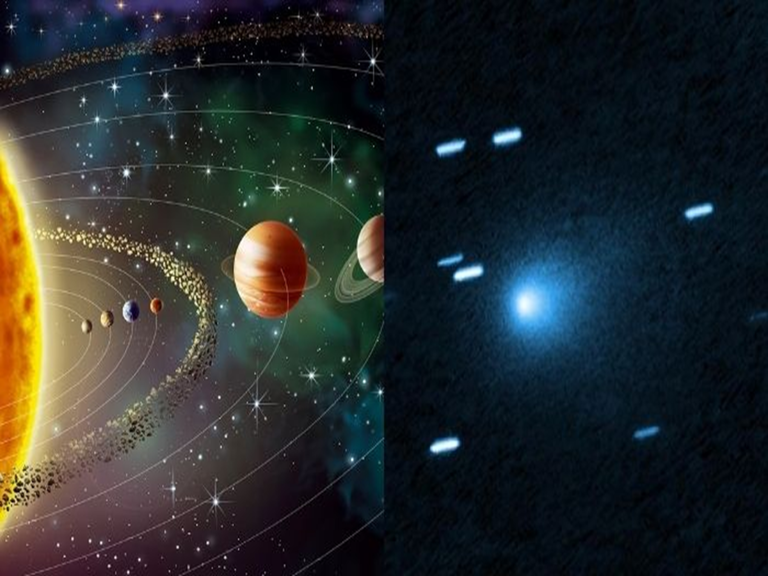
In one of the most baffling astronomical events of the decade, the interstellar object 3I/ATLAS — a mysterious green-glowing visitor that had fascinated scientists for months — suddenly went dark after passing near Mars on October 27, 2025.
What began as a routine observation quickly turned into a global mystery when the object’s distinctive emerald light abruptly vanished without warning.
For weeks, 3I/ATLAS had captivated astronomers with its unusual brightness and unpredictable behavior.
Discovered earlier this year by the ATLAS survey in Hawaii, it was confirmed to be the third known interstellar object to enter our Solar System, following the famous ʻOumuamua in 2017 and 2I/Borisov in 2019.
Unlike its predecessors, however, 3I/ATLAS glowed a brilliant green hue, believed to be caused by diatomic carbon emissions, giving it an eerie, comet-like appearance that set it apart from anything seen before.
As the object approached Mars, telescopes worldwide — from Chile’s Atacama Desert to the Canary Islands — captured its passage with growing anticipation.
Then, in a moment that stunned scientists, the glowing body simply disappeared.
“There was no gradual dimming, no signal degradation,” said Dr.
Leah Romero, an astrophysicist at the Mauna Kea Observatory in Hawaii.
“It was as if someone had flipped a cosmic switch.
One minute it was there, and the next, nothing.”
For a short but critical period, every major observatory on Earth, as well as several space-based telescopes including Hubble and JWST, lost sight of the object.
The reason, at least on paper, seemed ordinary: 3I/ATLAS had moved into solar conjunction, passing behind the Sun from Earth’s perspective, where solar radiation makes tracking nearly impossible.

But what transformed this routine astronomical event into a global enigma was the timing.
Just as the object slipped behind the Sun, NASA fell silent — literally.
The U.S.government’s budget impasse had triggered a nationwide shutdown, forcing NASA to suspend public communications and data updates from the Jet Propulsion Laboratory (JPL).
For nearly a week, there were no new images, no trajectory data, and no official word on 3I/ATLAS.
That silence did not go unnoticed.
Across social media, forums, and even within parts of the scientific community, speculation erupted.
“It’s a strange coincidence,” admitted Dr.Hassan Al-Karim of the European Space Agency.
“An interstellar object disappears from view just as the primary space agency monitoring it stops talking.
Naturally, people are going to ask questions.”
Online, theories multiplied.
Some suggested the object had broken apart after encountering solar radiation near Mars.
Others speculated more wildly — that it had altered its trajectory unnaturally or even responded to solar energy in a way unknown to physics.
One viral post claimed that an “energy spike” had been detected by a deep-space array in Spain shortly before the object went dark, though officials have not confirmed this.
NASA scientists, despite the communication freeze, have since attempted to temper public speculation.
“There’s no reason to think 3I/ATLAS behaved abnormally,” said Dr.Erin Malone, a planetary scientist at JPL, speaking to local media after limited operations resumed on November 2.
“It’s behind the Sun — a place where our sensors simply can’t see.
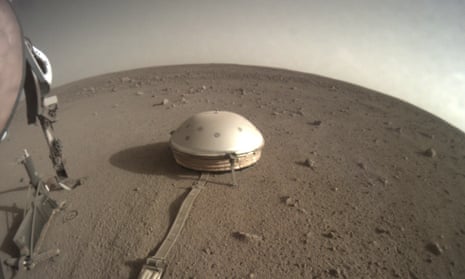
Once we regain visual range, we’ll know more.”
Still, even among experts, unease remains.
Unlike previous interstellar objects, 3I/ATLAS exhibited fluctuations in both brightness and speed that no current model fully explains.
Some researchers privately worry that if its position or trajectory has changed when it reappears, it could mean something about its physical composition — or even its origin — defies existing theories.
The next opportunity for observation will come when the object emerges from conjunction in mid-November 2025.
Ground-based observatories in Japan, Chile, and Hawaii are already preparing for reacquisition attempts, hoping to be the first to detect its light again.
“Either it’s still there and we’ll see it right where the math says it should be,” said Dr.
Romero, “or it’s gone — and then we’ll have to ask much bigger questions.”
For now, 3I/ATLAS remains unseen, lost in the Sun’s glare — a cold, silent traveler whose brief disappearance has reignited both scientific wonder and human imagination.
Whether the object simply hid behind the Sun or changed in ways we cannot yet understand, one thing is certain: when 3I/ATLAS reappears, the world will be watching.
In one of the most baffling astronomical events of the decade, the interstellar object 3I/ATLAS — a mysterious green-glowing visitor that had fascinated scientists for months — suddenly went dark after passing near Mars on October 27, 2025.
What began as a routine observation quickly turned into a global mystery when the object’s distinctive emerald light abruptly vanished without warning.
For weeks, 3I/ATLAS had captivated astronomers with its unusual brightness and unpredictable behavior.
Discovered earlier this year by the ATLAS survey in Hawaii, it was confirmed to be the third known interstellar object to enter our Solar System, following the famous ʻOumuamua in 2017 and 2I/Borisov in 2019.
Unlike its predecessors, however, 3I/ATLAS glowed a brilliant green hue, believed to be caused by diatomic carbon emissions, giving it an eerie, comet-like appearance that set it apart from anything seen before.
As the object approached Mars, telescopes worldwide — from Chile’s Atacama Desert to the Canary Islands — captured its passage with growing anticipation.
Then, in a moment that stunned scientists, the glowing body simply disappeared.
“There was no gradual dimming, no signal degradation,” said Dr.
Leah Romero, an astrophysicist at the Mauna Kea Observatory in Hawaii.
“It was as if someone had flipped a cosmic switch.
One minute it was there, and the next, nothing.”
For a short but critical period, every major observatory on Earth, as well as several space-based telescopes including Hubble and JWST, lost sight of the object.
The reason, at least on paper, seemed ordinary: 3I/ATLAS had moved into solar conjunction, passing behind the Sun from Earth’s perspective, where solar radiation makes tracking nearly impossible.
But what transformed this routine astronomical event into a global enigma was the timing.
Just as the object slipped behind the Sun, NASA fell silent — literally.
The U.S.government’s budget impasse had triggered a nationwide shutdown, forcing NASA to suspend public communications and data updates from the Jet Propulsion Laboratory (JPL).
For nearly a week, there were no new images, no trajectory data, and no official word on 3I/ATLAS.
That silence did not go unnoticed.
Across social media, forums, and even within parts of the scientific community, speculation erupted.
“It’s a strange coincidence,” admitted Dr.Hassan Al-Karim of the European Space Agency.
“An interstellar object disappears from view just as the primary space agency monitoring it stops talking.
Naturally, people are going to ask questions.”
Online, theories multiplied.
Some suggested the object had broken apart after encountering solar radiation near Mars.
Others speculated more wildly — that it had altered its trajectory unnaturally or even responded to solar energy in a way unknown to physics.
One viral post claimed that an “energy spike” had been detected by a deep-space array in Spain shortly before the object went dark, though officials have not confirmed this.
NASA scientists, despite the communication freeze, have since attempted to temper public speculation.
“There’s no reason to think 3I/ATLAS behaved abnormally,” said Dr.Erin Malone, a planetary scientist at JPL, speaking to local media after limited operations resumed on November 2.
“It’s behind the Sun — a place where our sensors simply can’t see.
Once we regain visual range, we’ll know more.”
Still, even among experts, unease remains.
Unlike previous interstellar objects, 3I/ATLAS exhibited fluctuations in both brightness and speed that no current model fully explains.
Some researchers privately worry that if its position or trajectory has changed when it reappears, it could mean something about its physical composition — or even its origin — defies existing theories.
The next opportunity for observation will come when the object emerges from conjunction in mid-November 2025.
Ground-based observatories in Japan, Chile, and Hawaii are already preparing for reacquisition attempts, hoping to be the first to detect its light again.
“Either it’s still there and we’ll see it right where the math says it should be,” said Dr.
Romero, “or it’s gone — and then we’ll have to ask much bigger questions.”
For now, 3I/ATLAS remains unseen, lost in the Sun’s glare — a cold, silent traveler whose brief disappearance has reignited both scientific wonder and human imagination.
Whether the object simply hid behind the Sun or changed in ways we cannot yet understand, one thing is certain: when 3I/ATLAS reappears, the world will be watching.
NASA scientists are stunned after the interstellar object 3I/ATLAS mysteriously stopped moving in space for hours before changing course directly…
NASA scientists were left speechless after the mysterious interstellar object 3i Atlas suddenly stopped moving in deep space before inexplicably…
After NASA confirmed that interstellar object 3I/ATLAS mysteriously split in half and one fragment vanished, a chilling signal began pulsing…
NASA confirms the interstellar object 3I/ATLAS has mysteriously split in half, with one fragment vanishing and a strange repeating signal…
The final report on Air India Flight 171’s deadly crash reveals that both engines were manually shut off mid-air, leaving…
After Air India Flight 171 crashed just seconds after takeoff on June 21, 2025, killing 260 people, investigators discovered both…
End of content
No more pages to load
Next page