In the ebb and flow of American politics, few institutions stand as tall—or as contested—as the United States Supreme Court. Over the years, it has been both a guardian of constitutional rights and a lightning rod for political controversy. Its rulings have reshaped social norms, redrawn the boundaries of federal power, and defined the limits of presidential authority. But in recent months, the Court has found itself thrust into a new storm of criticism, this time not from the usual chorus of partisan pundits, but from the highest levels of Democratic Party leadership.
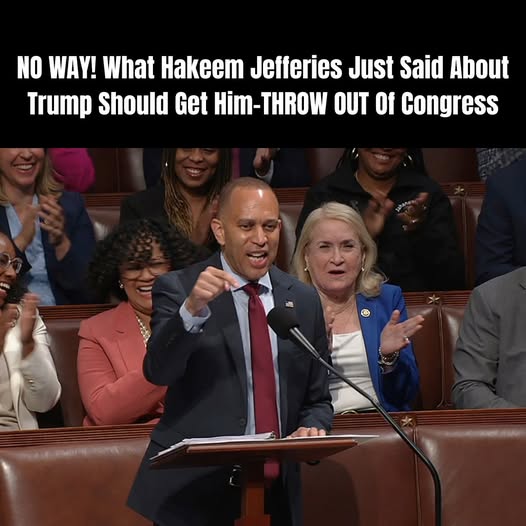
On Monday evening, during a live interview on CNN’s The Situation Room, House Minority Leader Hakeem Jeffries (D-N.Y.) delivered one of his sharpest rebukes yet of the Court’s conservative majority. His words reflected not only his personal frustration but also a growing unease within the Democratic caucus about what they see as a judiciary increasingly aligned with former President Donald Trump.
Jeffries accused the Supreme Court of having “enabled” Trump to behave like a monarch, granting him broad immunities that, in Jeffries’ view, stand in stark contradiction to the vision of the nation’s founders. His remarks sparked a flurry of reactions, highlighting once again how the nation’s political and judicial branches are locked in a tense and consequential struggle.
Jeffries’ Explosive Remarks
Speaking with CNN host Wolf Blitzer, Jeffries did not mince words. He argued that the Supreme Court’s recent decisions had effectively given Trump what the framers of the Constitution most feared: unchecked power.
“You know, one thing to understand,” Jeffries said, “is that for those who are flirting with the Trump administration, or doing its bidding, or engaging in its pay-to-play schemes, the statute of limitations is five years. Donald Trump and this toxic administration will eventually be gone. But accountability will remain. That process begins now but will not be complete until there is truly independent oversight, whether through the Department of Justice or a Democratic-controlled House of Representatives.”
The statement was not merely an attack on Trump. It was also a critique of the system that, in Jeffries’ view, has shielded him. Jeffries specifically pointed to the Supreme Court’s decision granting Trump partial presidential immunity, a ruling that has divided legal scholars and fueled political debate.
“The Department of Justice has historically stood as one of the great institutions of law enforcement in our country,” Jeffries continued. “But Donald Trump and his extremist allies have worked to erode its credibility. And let’s be clear: we must also hold the conservative justices of the Supreme Court accountable. They gave this president blanket presidential immunity in a nation where our founders explicitly rejected kingship. They’ve allowed Donald Trump to act like a king. Shame on them for what they’ve done to this country.”
The Context: Presidential Immunity and the Court’s Role
To understand the weight of Jeffries’ comments, it is important to revisit the recent history of the Supreme Court’s engagement with Trump-era legal questions.
The most controversial decision in this area came earlier this year, when the Court ruled in a landmark case that former presidents are entitled to a degree of presidential immunity for official acts taken while in office. While the ruling did not grant absolute immunity, critics—including Jeffries—argue that it created a shield broad enough to embolden Trump and discourage accountability.
The Court’s majority opinion stressed the need to preserve the independence of the executive branch, warning that subjecting presidents to endless lawsuits after leaving office could paralyze the institution. But dissenting voices, including Justice Sonia Sotomayor, warned that the decision risked turning presidents into “kings above the law.”
Jeffries seized on this dissent to underscore his point. For him and many Democrats, the Court has not simply interpreted the law—it has restructured the balance of power in Trump’s favor.
The Historical Tension Between Presidents and Kingship
Jeffries’ reference to America’s founders rejecting kingship is more than a rhetorical flourish. The framers of the Constitution were deeply concerned with the dangers of concentrated power. Having broken away from Britain’s monarchy, they sought to create a system of checks and balances that would prevent any single branch of government from dominating.
The presidency was designed to be powerful but accountable, constrained by Congress and the courts. For Jeffries, the Supreme Court’s decisions in recent years have eroded this balance, tilting power toward the executive in ways that echo the monarchy America once rejected.
A Broader Pattern of Criticism
Jeffries’ critique is not an isolated moment. It fits into a broader Democratic narrative that has taken shape since Trump’s return to the political stage. Many Democrats argue that the Court’s conservative majority—anchored by justices appointed by Trump himself—has too often sided with executive authority, voter suppression laws, or corporate interests at the expense of democratic accountability.
Consider the Court’s decisions on:
Election Law: Rulings that upheld restrictive voting measures in several states, which Democrats say disproportionately impact minority communities.
Campaign Finance: The expansion of corporate influence in politics through decisions like Citizens United v. FEC.
Abortion Rights: The overturning of Roe v. Wade, which Democrats cite as evidence of judicial activism aligned with conservative political goals.
For Jeffries, these rulings form a pattern—one in which the Court, rather than standing above politics, has become entangled in them.
Trump, the DOJ, and Allegations of Corruption
Jeffries also used the CNN interview to emphasize his belief that accountability for Trump will come, even if delayed. His comments about the “five-year statute of limitations” were a direct signal to those who may have cooperated with Trump’s administration in what Democrats describe as corrupt or self-serving schemes.
The Minority Leader suggested that once political winds shift—whether through a Democratic House majority or a change at the Department of Justice—those individuals could face consequences.
This is not an empty threat. History has shown that political accountability often lags behind the events themselves. Investigations can take years, and statutes of limitations create a ticking clock. By highlighting this timeline, Jeffries was reminding both Trump’s allies and the public that the story is far from over.
Conservative Pushback
Predictably, Jeffries’ comments drew immediate criticism from Republicans and conservative commentators. Many pointed out that even liberal justices have occasionally sided with the Trump administration on legal questions, complicating the narrative that the Court is uniformly pro-Trump.
Others argued that Jeffries’ rhetoric risks undermining public confidence in the judiciary at a time when trust in democratic institutions is already fragile. To conservatives, the accusation that the Court is enabling authoritarianism smacks of partisan sour grapes, particularly given the Court’s occasional rulings against Trump’s interests during his presidency.
Still, Jeffries’ remarks resonate with a Democratic base that views the Court as deeply compromised.
Public Reaction and the Larger Debate
The broader public reaction has mirrored the nation’s political divisions. On social media, clips of Jeffries’ interview spread rapidly, with Democrats applauding his candor and Republicans denouncing his attack on the Court. Legal scholars offered more nuanced takes, debating the long-term implications of the immunity ruling and whether it truly represented a dangerous expansion of executive power.
For many ordinary Americans, however, the issue boils down to a simpler question: Should presidents be held accountable like everyone else, or does the office require special protections? Jeffries’ forceful critique brings that question into sharp relief.
A Fight Over the Future of Democracy
At its core, Jeffries’ attack on the Supreme Court reflects a larger struggle over how democracy itself is defined in the 21st century. Is democracy simply the will of the voters expressed through elections, or does it require ongoing checks on power, even after a president leaves office?
For Jeffries and his Democratic colleagues, the latter view is essential. They argue that without robust oversight, presidents—especially one as polarizing as Trump—can exploit their office to the detriment of the republic. For Republicans, by contrast, the Court’s rulings are seen as necessary to prevent endless legal harassment of presidents, which could deter future leaders from making bold decisions.
Conclusion: A Warning and a Challenge
Hakeem Jeffries’ comments on CNN were not merely an outburst of frustration. They were a warning—that unchecked power, enabled by judicial decisions, could push the United States closer to the kind of authoritarianism its founders fought to escape.
Whether one agrees with Jeffries or not, his remarks highlight the stakes of the current political moment. The debate over Trump, presidential immunity, and the role of the Supreme Court is not just about one man or one administration. It is about the future balance of power in America and whether the nation can sustain its commitment to the principle that no one—not even a president—is above the law.
As Jeffries put it, “Shame on them for what they’ve done to this country.” His words may divide opinion, but they also ensure that the conversation about the Court, Trump, and accountability is far from over.
A U.S. appeals court has handed down a significant victory for election integrity, upholding Texas’s voter ID requirements for mail-in ballots and dealing a harsh blow to Democrats like Congresswoman Jasmine Crockett, who admitted the law has already hurt her party’s vote totals.The 5th Circuit Court of Appeals’ decision affirms what President Donald Trump and Republicans have argued for years: requiring voter identification is common-sense, constitutional, and essential to ensuring that only legal votes are counted.The ruling is not only a defeat for Democrats who have railed against Texas’s Senate Bill 1 (SB1) since its passage in 2021, but also a validation of Trump’s broader push for laws like the SAVE Act, which would require proof of citizenship for voter registration nationwide.The law at issue, SB1, requires voters to provide identifying information when requesting and submitting mail-in ballots. Specifically, Texans must include their driver’s license number or the last four digits of their Social Security number on ballot applications.
This simple safeguard was designed to confirm that every mail-in voter is who they claim to be, closing loopholes that made the system vulnerable to fraud.A three-judge panel of the 5th Circuit rejected claims that these requirements were unconstitutional. Writing for the panel, Judge James Ho, a Trump appointee, made clear that the law was both reasonable and necessary.“The number-matching requirements are obviously designed to confirm that every mail-in voter is who he claims he is,” Ho explained. “And that is plainly material to determining whether an individual is qualified to vote.”Judge Ho emphasized that the requirements restate information already publicly available, noting that anyone can request voter registration data. Without safeguards, bad actors could use this information to fraudulently obtain mail-in ballots. By demanding ID, Texas simply ensures that ballots reflect legitimate voters.
Judge Ho’s opinion was joined by Judge Don Willett, another Trump appointee, and Judge Patrick Higginbotham, appointed by President Reagan. Together, the panel unanimously concluded that SB1 does not violate federal law.Representative Jasmine Crockett, one of Texas’s most vocal Democrats, reacted with fury on MSNBC after the decision. She admitted the law has cost Democrats votes and damaged their electoral chances.“Unfortunately, we’ve seen our numbers fall now that they’ve had these voter restrictions in place,” Crockett said. She described SB1 as a partisan measure passed “in the dark” by Republicans and claimed it disenfranchised voters.
But Crockett’s own words reveal the true reason for Democrats’ outrage: not that eligible voters are being silenced, but that Democrats’ margins are shrinking.In essence, she admitted the law works—it prevents ballots of questionable validity from entering the system, thereby narrowing Democrats’ traditional advantage in exploiting mail-in loopholes.The court’s ruling is a direct vindication of President Trump’s years-long push for stronger election integrity measures. From the moment he entered politics,Trump warned that lax voting laws, especially around mail-in ballots, created opportunities for fraud. His critics dismissed these warnings as paranoia. Yet rulings like this prove his concerns were justified.Requiring voter ID is not voter suppression. It is common sense. Just as Americans show ID to board airplanes, purchase alcohol, or even attend government events, they should be expected to provide identification to exercise one of the most sacred responsibilities of citizenship—voting.
By upholding Texas’s law, the courts affirmed Trump’s core message: every legal vote must count, and every illegal vote must be rejected.The timing of this ruling could not be more significant. In Congress, House Republicans have passed the SAVE Act, which would require proof of citizenship for voter registration nationwide.Although the bill now sits in the Senate facing opposition from Democrats and hesitation from a handful of moderates, the Texas ruling underscores the importance of pushing forward.If the courts recognize that voter ID for mail-in ballots is “plainly material” to ensuring qualified voters, then proof of citizenship at registration is an equally logical and necessary safeguard.President Trump and his allies have consistently argued that without citizenship verification, foreign nationals could exploit America’s lax registration systems, diluting the votes of lawful citizens.House Speaker Mike Johnson (R-La.) has framed the SAVE Act as critical to restoring faith in elections, and the Texas decision adds fresh momentum. By confirming that voter ID laws are constitutional, the court has effectively dismantled Democrats’ main argument against similar federal protections.
Democrats like Crockett claim voter ID laws disenfranchise minorities, the elderly, and rural voters. But study after study shows that overwhelming majorities of Americans, including minority voters, support ID requirements. A Gallup poll found nearly 80 percent of Americans back voter ID laws.So why do Democrats oppose them? The answer is political advantage. By opposing safeguards, Democrats create conditions where ballots of questionable validity—ballots without proper verification, ballots harvested in bulk, or ballots cast without identity checks—can inflate turnout in their favor. Voter ID laws close these loopholes, forcing elections to reflect only legitimate ballots.
That is why Crockett lamented that “our numbers fell.” Democrats’ frustration is not about democracy—it’s about losing a rigged advantage.Texas’s decision to pass SB1 in 2021 was an act of leadership. Governor Greg Abbott and the Republican legislature faced intense backlash from Democrats, media outlets, and activist groups, all of whom predicted chaos and mass disenfranchisement.Yet, elections in Texas have proceeded smoothly under SB1. Voter turnout remains robust, and confidence in mail-in ballot integrity has grown.The courts have now affirmed that Texas acted well within its rights to secure its elections. This ruling sends a powerful signal to other states: do not be intimidated by Democratic lawsuits. Voter ID laws are constitutional, effective, and essential to election integrity.The decision has clear implications for the upcoming 2026 midterm elections. With Democrats openly acknowledging that voter ID laws reduce their margins, Republicans see an opportunity to expand similar measures across the country. The courts have provided the legal backing. The political moment is ripe.For Trump, the ruling validates his consistent emphasis on election security as a pillar of his platform. For Democrats, it is a harsh reminder that their strategy of opposing ID laws is crumbling under legal scrutiny.Crockett’s public admission that the law cost Democrats votes may haunt her party in 2026 as Republicans highlight her words to show that Democrats oppose election integrity not out of principle but out of self-interest.At its core, this decision is about protecting the rights of American citizens. Voter ID laws do not suppress votes—they safeguard them. They ensure that every citizen’s ballot is counted and that illegal or fraudulent ballots are excluded.
udge Ho put it plainly: without ID requirements, “any person can request and receive [voter] information, use that information to apply for a mail-in ballot, and then cast the ballot, with minimal risk of detection.” That is not democracy; that is chaos. Texas has chosen order, accountability, and trust.The 5th Circuit Court’s ruling upholding Texas’s voter ID law is a landmark victory for election integrity and a direct vindication of President Trump’s vision.Democrats like Jasmine Crockett may rage against the decision, but their own admissions reveal the truth: voter ID laws work, and they work precisely because they prevent the kinds of questionable ballots Democrats have relied on to pad their numbers.This is not suppression—it is protection. It is the guarantee that every legitimate vote cast by a U.S. citizen is counted and every fraudulent vote is discarded. It is the bedrock of free and fair elections.For Trump and Republicans, the ruling provides fresh momentum for the SAVE Act and other national reforms. For Democrats, it exposes their hypocrisy and desperation.And for the American people, it offers reassurance that despite the noise, the Constitution still protects their right to vote in elections that are fair, secure, and beyond manipulation.The message is unmistakable: election integrity wins, and America is stronger for it
A devastating investigation has rocked the halls of Congress this week, exposing what sources describe as a pattern of toxic workplace behavior and professional negligence that threatens to derail the career of one of the Democratic Party’s most prominent rising stars. The explosive report, filled with damning testimonials from current and former staff members, has sent shockwaves through the political establishment and raised serious questions about the gap between public persona and private conduct among today’s media-savvy politicians.
The allegations paint a disturbing picture of a lawmaker more concerned with social media fame and television appearances than with the fundamental responsibilities of congressional service. Multiple sources have come forward with accounts of workplace intimidation, professional indifference, and behavior that stands in stark contrast to the progressive values publicly championed by the representative in question.
The timing of these revelations could not be more politically damaging, coming at a moment when the subject of the investigation has been positioning herself as a champion of working people and marginalized communities. The stark contradiction between her public advocacy and alleged private conduct has already sparked intense debate about authenticity and accountability in modern American politics.
A Pattern of Workplace Dysfunction
According to a comprehensive investigation published by the New York Post, Democratic Representative Jasmine Crockett of Texas has created what multiple sources describe as a “toxic staff environment” characterized by verbal abuse, professional neglect, and behavior that several former aides characterized as completely inappropriate for a member of Congress.
The 44-year-old lawmaker, who has served in Congress since 2023 and quickly gained national attention for her fiery rhetoric against former President Trump, now finds herself at the center of allegations that could fundamentally damage her political career and credibility as a progressive champion.
“She is laying around her apartment, won’t come into the office, and is really just indifferent to staff and will scream at them,” one former aide told the New York Post, providing a stark contrast to Crockett’s public image as a dedicated public servant fighting for her constituents.
The source’s account suggests a pattern of behavior that extends far beyond occasional workplace tensions, describing instead a systematic disregard for the basic professional responsibilities that come with congressional service. “Never in the office” and “very disengaged” were phrases used to describe Crockett’s approach to her official duties, painting a picture of a representative who has essentially abandoned the traditional aspects of congressional work in favor of media appearances and social media activism.
Perhaps most troubling, the same source indicated that Crockett “freaks out over the most random things,” suggesting an unpredictable and potentially volatile work environment that would make it difficult for staff members to perform their duties effectively. This description raises serious questions about the congresswoman’s temperament and her ability to manage the responsibilities that come with elected office.
The Diva Behavior and Luxury Demands
Additional sources cited in the New York Post investigation describe Crockett as behaving like a “diva” who is “focused almost exclusively on being an influencer” rather than on the substantive work of representing her Texas district. This characterization suggests that Crockett may view her congressional position primarily as a platform for personal brand building rather than as an opportunity to serve her constituents effectively.
The investigation revealed several specific examples of what sources describe as unreasonable and extravagant demands that Crockett allegedly makes of her staff. According to the report, Crockett frequently works from a fancy office building rather than her official congressional office, a practice that distances her from the day-to-day operations of constituent services and legislative work that form the core of congressional responsibilities.
Even more telling are the allegations about Crockett’s transportation demands. Sources told the New York Post that she routinely requires colleagues to transport her short distances in rented cars rather than using personal vehicles, which would be the typical cost-saving approach employed by most congressional offices operating on tight budgets.
The specific details of these transportation demands paint a particularly unflattering picture of Crockett’s priorities and values. According to the investigation, when staff members arrange these short-distance trips, Crockett allegedly demands that “the rented car has to be an Escalade” or something similar, and she expects staff members to open the door for her as if she were a celebrity or corporate executive rather than an elected public servant.
These demands for luxury treatment stand in stark contrast to the image that many progressive politicians try to cultivate of being in touch with working-class constituents and mindful of taxpayer resources. The insistence on expensive vehicles and personal service suggests a sense of entitlement that could be politically damaging if verified and widely publicized.
Neglecting Constituent Services for Media Fame
Perhaps the most politically damaging aspect of the allegations against Crockett involves her alleged complete disregard for the local issues and concerns of her Texas district. According to sources quoted in the New York Post investigation, Crockett has essentially abandoned the traditional congressional responsibility of addressing constituent needs in favor of pursuing national media opportunities.
“The staff is really just an island unto itself, because she doesn’t care about the local issues happening in her district,” one source told the publication, providing a damning assessment of Crockett’s priorities and focus. “She’s more focused on, ‘Get me on “The View,” ‘Get me on this late-night talk show.\’”
This allegation strikes at the heart of what many Americans expect from their elected representatives: that they will prioritize the needs and concerns of their constituents over personal advancement and national media attention. If accurate, these claims suggest that Crockett has fundamentally misunderstood the nature of congressional service and has chosen to treat her position as a stepping stone to media celebrity rather than as an opportunity to serve the people who elected her.
The focus on securing appearances on national television shows like “The View” and late-night talk shows suggests that Crockett may be more interested in building a national brand than in addressing the specific challenges facing her Texas district. This approach to congressional service represents a troubling trend in modern politics, where some lawmakers appear to view their positions primarily as platforms for personal advancement rather than as opportunities for public service.
The allegation that staff members operate as “an island unto themselves” because of Crockett’s disengagement suggests that constituent services—traditionally one of the most important functions of congressional offices—may be suffering as a result of her media-focused priorities.
High Staff Turnover and Workplace Toxicity
The New York Post investigation revealed what sources describe as an extremely high rate of staff turnover in Crockett’s office, a pattern that multiple sources attribute to the “toxic staff environment” created by the congresswoman’s behavior and management style. High staff turnover in congressional offices is often a red flag indicating serious problems with leadership and workplace culture.
Particularly troubling are allegations that Black female staff members have felt a “lack of empowerment” while working for Crockett, a claim that is especially damaging given the congresswoman’s public positioning as a champion of Black women and marginalized communities. The apparent contradiction between her public advocacy and alleged private treatment of Black female employees could seriously undermine her credibility as a progressive leader.
The investigation included a specific example of Crockett’s alleged workplace behavior that illustrates the toxic environment described by sources. According to the report, Crockett made a staff member cry after confronting them with the question, “Do you really want to be here? And if not, you can leave!” This type of workplace intimidation and emotional abuse would be considered unacceptable in most professional environments and raises serious questions about Crockett’s fitness for leadership.
The fact that multiple sources were willing to speak to reporters about these incidents, despite the potential professional risks involved, suggests that the problems in Crockett’s office may be severe and widespread. Congressional staff members typically maintain strict loyalty to their employers, and the willingness of multiple individuals to break that silence indicates that the situation may have reached a breaking point.
Political Consequences and Republican Response
The explosive nature of these allegations has already drawn sharp criticism from Republican leaders, who see an opportunity to highlight what they view as hypocrisy and dysfunction within the Democratic Party. Former House Speaker Kevin McCarthy appeared on Fox News to discuss the investigation and offered a particularly harsh assessment of Crockett’s conduct and political future.
“I don’t want to hear Jasmine Crockett talk about helping black women when she just fired one for no reason. This is exactly how she really acts. Those were exact quotes. Not from the opposition, not from Republicans and not from just any Democrats, those were from her staff,” McCarthy said during his appearance on Jesse Watters’ show.
McCarthy’s comments highlight the political potency of these allegations, particularly the claim that Crockett mistreats the very demographic groups she claims to champion. The former Speaker’s emphasis that the damaging quotes came from Crockett’s own staff rather than from political opponents adds credibility to the allegations and makes them more difficult for Crockett to dismiss as partisan attacks.
Perhaps most ominously for Crockett’s political future, McCarthy predicted that these revelations could lead to her electoral defeat in 2026. “She hasn’t been in Congress very long. They say she does not show up, she lays around her apartment, she cares more about press then representing people and she’s known to yell and lose her mind over small random items. We always in Congress have one or two people like this and everybody knows who they are. She’s the one in this cycle who may very well be escorted out of office by voters,” McCarthy declared.
This prediction reflects the serious nature of the allegations and their potential impact on Crockett’s political viability. If voters in her Texas district come to believe that she is more interested in national media attention than in serving their needs, it could indeed lead to a primary challenge or general election defeat in 2026.
The Broader Pattern of Media-Focused Politicians
McCarthy also used his Fox News appearance to highlight what he sees as a broader problem in contemporary politics: lawmakers who prioritize media appearances and fundraising over the traditional work of governing and constituent service.
“They do this because in today’s politics — it’s true, if you look at her staff, exact same argument. But what happens is, by going on television is how they raise their money. I want the people across this country to look at who shows up to work, who represents you, who’s there working the hardest for you and showing up. That’s an important part. If you just look at how people treat their staff, that will tell you a lot about how they treat their constituents,” McCarthy explained.
This observation touches on a significant concern about the incentive structures in modern American politics, where the ability to generate media attention and social media engagement can be more immediately rewarding than the slower, less visible work of crafting legislation and serving constituents. McCarthy’s suggestion that politicians’ treatment of their staff reflects their approach to constituent service provides a framework for evaluating the allegations against Crockett.
The former Speaker’s comments also highlight the role that television appearances play in political fundraising, suggesting that Crockett’s alleged focus on media bookings may be driven by financial considerations rather than genuine policy interests or constituent service.
Crockett’s Rise to National Prominence
Jasmine Crockett entered Congress in 2023 and quickly gained national attention for her aggressive rhetoric against former President Trump and her viral social media presence. She has become known for calling Trump a “piece of s***” and describing him as an “enemy to the United States,” language that has made her a favorite among progressive activists and anti-Trump Democrats.
Crockett’s approach to congressional service has been characterized by frequent appearances at committee hearings where she delivers speeches that are specifically designed to go viral on social media platforms. This strategy has been successful in building her national profile and social media following, but the current allegations suggest that it may have come at the expense of more traditional congressional responsibilities.
The congresswoman’s rapid rise to national prominence has been built largely on her willingness to engage in confrontational rhetoric and her skill at creating moments that generate social media engagement. However, the allegations contained in the New York Post investigation suggest that this media-focused approach may have led her to neglect the fundamental responsibilities of congressional service.
Implications for Progressive Politics
The allegations against Crockett come at a particularly sensitive time for progressive Democrats, who have been working to build credibility as effective leaders capable of governing responsibly while advancing their policy agenda. If the charges of workplace toxicity and constituent neglect are substantiated, they could undermine broader progressive messaging about fighting for working people and marginalized communities.
The specific allegation that Black female staff members have felt disempowered while working for Crockett is particularly damaging, given the progressive movement’s emphasis on racial and gender equity. This contradiction between public advocacy and alleged private conduct could provide ammunition for critics who argue that some progressive politicians are more interested in performative activism than in genuine social change.
The focus on luxury transportation and expensive office arrangements also conflicts with progressive messaging about economic inequality and responsible use of public resources. These allegations could make it more difficult for Crockett and other progressive politicians to criticize corporate executives or wealthy individuals for excessive spending and disconnection from ordinary Americans.
The Role of Social Media and Modern Political Incentives
The allegations against Crockett highlight broader questions about how social media and modern political incentives may be changing the nature of congressional service. The ability to build large social media followings and secure frequent television appearances can provide immediate political benefits that may outweigh the slower, less visible rewards of effective constituent service and legislative work.
Crockett’s alleged approach to congressional service—prioritizing viral moments and media appearances over traditional responsibilities—reflects a broader trend in American politics where politicians increasingly view their positions as platforms for building personal brands rather than as opportunities for public service.
This shift in priorities has been enabled by social media platforms that reward sensational content and confrontational rhetoric over substantive policy work. The allegations suggest that Crockett may have fully embraced this new model of political engagement at the expense of her fundamental responsibilities to her constituents.
Looking Forward: Political and Legal Implications
As these allegations continue to reverberate through the political world, Crockett faces several immediate challenges to her political career and reputation. The high-profile nature of the accusations and the credibility provided by multiple staff sources makes it difficult for her to simply dismiss the charges as partisan attacks or media bias.
The congresswoman will likely need to address these allegations directly and provide evidence that she is fulfilling her congressional responsibilities effectively. This may require significant changes to her approach to congressional service, including spending more time in her official office, focusing more attention on constituent services, and improving her management of staff.
From a legal perspective, while the allegations described in the New York Post investigation may not rise to the level of criminal conduct, they could potentially trigger ethics investigations or other forms of congressional oversight. The treatment of staff members and the use of official resources for personal convenience could potentially violate congressional ethics rules.
The Electoral Implications for 2026
Perhaps most importantly for Crockett’s political future, these allegations will likely become a major issue in her 2026 reelection campaign. Primary challengers and general election opponents will undoubtedly use these charges to argue that Crockett has been more interested in building her personal brand than in serving her constituents effectively.
The specific nature of the allegations—neglecting local issues, demanding luxury transportation, creating a toxic work environment—provides opposition researchers with concrete examples that can be used in campaign advertisements and debates. The fact that these charges come from her own staff rather than from political opponents makes them particularly credible and difficult to refute.
If the allegations prove to have staying power and continue to generate negative media coverage, they could indeed lead to the electoral defeat that former Speaker McCarthy predicted. Texas voters may ultimately decide that they prefer a representative who focuses on their needs rather than on building a national media profile.
Conclusion: A Cautionary Tale for Modern Politics
The explosive allegations against Jasmine Crockett serve as a cautionary tale about the dangers of prioritizing media attention and personal brand building over the fundamental responsibilities of elected office. Whether these charges prove to be entirely accurate or not, they highlight important questions about what voters should expect from their representatives and how modern political incentives may be undermining effective governance.
The investigation also demonstrates the importance of treating staff members with respect and professionalism, regardless of one’s political positions or public profile. The allegations of workplace toxicity and abuse serve as a reminder that how politicians treat the people who work for them often reflects how they view their broader responsibilities to the public they serve.
As this story continues to develop, it will likely serve as a test case for how the political system responds to allegations of misconduct and neglect of duty by elected officials. The ultimate outcome may help determine whether voters are willing to hold politicians accountable for their conduct behind the scenes, or whether media savvy and social media engagement will continue to be rewarded regardless of other professional failings.
The Crockett controversy represents a watershed moment for progressive politics and congressional accountability, with implications that extend far beyond one member’s political career. How this situation is resolved may help shape expectations for political leadership and professional conduct for years to come