Tragedy in the Skies: Two Pilots Lost in Paramillo Airport Crash
It was meant to be a routine morning flight — calm skies, clear runway, and nothing unusual on the radar. But within seconds of takeoff, everything changed. Witnesses at Venezuela’s Paramillo Airport stood frozen as a twin-engine aircraft struggled to gain altitude, its engines sputtering before plunging back toward the ground. Moments later, a deafening crash tore through the air, followed by a rising column of black smoke.
A devastating accident has claimed the lives of two pilots after their Piper PA-31T1 Cheyenne, registered as YV1443, went down shortly after takeoff on Wednesday morning. Bystanders watched in disbelief as the plane clipped low over the runway, lost lift, and erupted in flames upon impact.
According to the National Institute of Civil Aeronautics (INAC), the aircraft departed around 9:52 a.m. and experienced a critical malfunction during its initial ascent. Airport rescue teams and firefighters responded within seconds, battling intense flames and cordoning off the crash area. Despite their swift efforts, both pilots were pronounced dead at the scene. Their names have not yet been released, pending notification of their families.
INAC issued a statement expressing condolences to the victims’ loved ones and confirmed that the Civil Aviation Accident Investigation Board (JIAAC) has opened a full inquiry into the cause.
Preliminary reports indicate that weather conditions were stable and that the aircraft had recently completed its routine maintenance checks. Investigators are now analyzing flight data, engine components, and communications with air traffic control to determine whether mechanical failure, fuel irregularities, or human error may have played a role.
Residents near the airport described hearing the engines fluctuate moments before impact. “It sounded like it was struggling to climb,” one witness said. “Then there was silence — and the explosion.” Emergency vehicles arrived within moments, containing the fire before it could spread to nearby structures or fuel storage areas.
The tragedy has reignited discussion around aviation safety standards and oversight at regional airports across Venezuela. Aviation experts have praised the immediate response of first responders, noting that their quick coordination prevented a larger catastrophe.
Conclusion
As the investigation unfolds, the nation mourns the loss of two aviators whose final flight ended in heartbreak. Their deaths are a sobering reminder of the risks faced by those who take to the skies — and of the relentless need for vigilance, training, and transparency in aviation safety.
Authorities hope that uncovering the cause of this crash will not only provide answers to grieving families, but also strengthen protocols to prevent future tragedies. For now, the wreckage at Paramillo stands as both a scene of sorrow and a call to protect the skies in which these pilots once proudly flew.
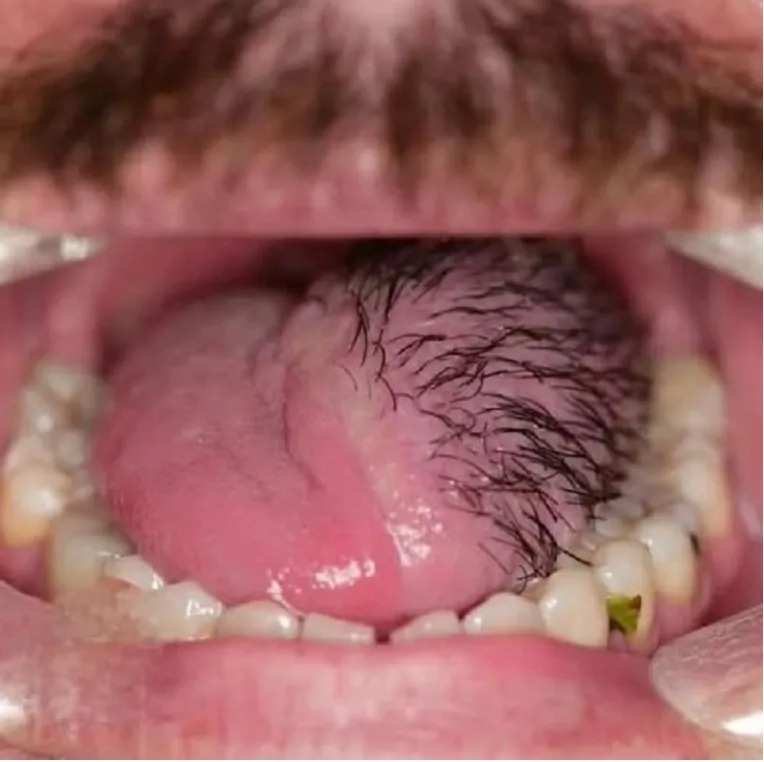
Tongue-related fungal infections, particularly those caused by an overgrowth of Candida fungus, can develop due to various underlying factors. Common causes include poor oral hygiene, recent or prolonged use of antibiotics, and weakened immune system function. These conditions disrupt the balance of natural microorganisms in the mouth, allowing
Symptoms – Red Glossy Tongue:
One noticeable symptom is a smooth, red, and glossy appearance of the tongue, often accompanied by a burning sensation. This discomfort can intensify when consuming spicy or acidic foods. In some cases, this condition may also be linked to systemic issues like iron-deficiency anemia, leading to fatigue and other related symptoms.
Symptoms – White or Yellow Coating:
Another common manifestation is a thick white or yellowish coating on the tongue, often referred to as oral thrush. It may be paired with a mild burning sensation or discomfort, and sufferers frequently report bad breath or a persistent metallic taste in the mouth.
Burning and Taste Disturbance:
Both forms of tongue involvement—red and coated—can result in altered taste sensations. Affected individuals may find that food tastes dull, bitter, or even metallic. This can reduce appetite and negatively impact nutrition, especially in more severe or chronic cases.
Home Remedies:
To manage and prevent this fungal overgrowth, simple home remedies can be effective. Gently brushing the tongue twice a day using a soft toothbrush helps remove buildup. Additionally, rinsing the mouth with saltwater or a baking soda solution can create an environment less favorable for fungal growth.
Prevention Tips:
Maintaining consistent oral hygiene, staying hydrated, and avoiding excessive sugar or yeast-rich foods can reduce recurrence. For those using antibiotics, probiotics may help restore healthy oral flora. Individuals with weakened immune systems should consult a healthcare provider for personalized care.
The wilderness often humbles even the most experienced explorers.
Its beauty lures us in, but its unpredictability reminds us we are “merely visitors in a world ruled by nature.”
During a mountain expedition, a hiker entered a cave and noticed movement in the shadows. Suddenly,
“two faintly glowing eyes were reflecting back at him,” revealing the outline of a massive bear.
His instincts screamed to run, but he remembered safety rules: stay calm, avoid sudden moves, and retreat slowly.
“The bear lifted its head and inhaled deeply,” but instead of charging, it turned and walked deeper into the darkness.
The hiker remained still, questioning why the animal spared him. Whatever the reason, the outcome was clear:
“the hiker lived to tell his story,” stepping back into sunlight with a newfound respect for the wild.
The Dark Side of Affection: When a Pet Python’s “Love” Turned Into a Deadly Warning
At first, it seemed like a charming and unusual bond — a woman and her massive yellow python, Saffron, who had been part of her life for over three years. Friends and family expressed concern about the dangers of keeping such a powerful reptile, but she brushed off their worries, convinced the snake was gentle and even affectionate.
But as time passed, Saffron’s behavior shifted in unsettling ways. The once content python stopped eating, began crawling out of its enclosure at night, and started exhibiting behaviors that left the woman both puzzled and uneasy.
Saffron would lie alongside her in bed, stretching its long body from her shoulders to her ankles, its forked tongue flicking softly across her skin. At times, it would loosely coil around her waist, almost like an embrace. She laughed it off as the snake’s way of showing “hugs” and “kisses,” refusing to see the warning signs.
However, the unusual behavior became harder to ignore. The python would spend hours motionless on the bedroom floor, seemingly focused on her every breath. More alarmingly, she began waking up to find Saffron coiled heavily across her body, its hiss jolting her fully awake. Something didn’t feel right.
Seeking clarity, she took Saffron to a reptile veterinarian. After a thorough examination and detailed questioning about the snake’s actions, the vet delivered a chilling assessment.
“This is not affection,” he explained gravely. “Pythons use these behaviors to gauge if their prey is small enough to swallow. The coiling is practice for constriction. You are dealing with a large, mature female snake — one strong enough to suffocate you. What you’re witnessing is a rehearsal for an attack.”
The vet advised immediate changes: isolate the python from direct contact, correct its feeding schedule, and ultimately, relocate it to a professional reptile facility.
That night, with new understanding and caution, the woman observed Saffron once more as it slithered onto her bed, coiling around her in the now terrifying embrace. But this time, she was fully alert. With calm resolve, she gently lifted Saffron and returned her to the secured terrarium, locking it carefully.
By the next day, she had arranged for Saffron to be transferred to a specialized reptile center where trained handlers could care for the snake safely and provide an appropriate diet.
Conclusion
What began as a seemingly innocent, even affectionate relationship between a woman and her pet python turned into a harrowing lesson about the raw instincts of wild animals. The snake’s “affection” was, in reality, a predatory behavior signaling danger — a stark reminder that even the most familiar wild creatures retain their natural instincts.
Thankfully, by recognizing the warning signs and acting decisively, both woman and python avoided a tragic outcome. Her story serves as a powerful caution to all exotic pet owners: no matter how tame a wild animalmay seem, respect for its nature and limits can be the difference between companionship and catastrophe.
James never imagined an ordinary afternoon would uncover a secret that changed his family’s life.
It began when he heard his son Liam crying in the attic, a moment that led to an unexpected discovery buried in their backyard.
Back in 2018, James and his wife Emma noticed their row of arborvitae trees had been destroyed by deer.
While inspecting the damage, James spotted a small, weathered metal box hidden between the branches.
Assuming it was an old electrical unit left behind by former owners, he ignored it. But when landscapers
later arrived to remove the damaged trees, they unearthed something far more unusual — the top of a buried structure.
Clearing away the soil, James realized it wasn’t a utility box at all but the roof of a small
underground room with metal walls and a sealed door. A strange buzzing echoed from within, heightening the mystery.
Authorities were called to investigate. When the door was finally opened, they revealed a
hidden storm shelter built in the 1950s, filled with supplies, canned food, and handwritten journals.
For James, Emma, and Liam, the find became more than history — it was a reminder
that even the most ordinary homes can hide extraordinary secrets.