Barack Obama Makes Big Move Hours Before Polls Close in Key Race
Zohran Mamdani, a proud socialist and Democratic nominee, tried to dismiss former President Barack Obama’s refusal to endorse him over the weekend, only one day before one of the most-watched contests in the country.“I appreciated the call with President Obama and his support for the movement that we have created. I appreciated his words. I appreciated his time, and I appreciate this movement for putting us on the brink of delivering us a new city in this place,” Mamdani told reporters in City Hall Park.
The former president was campaigning for Mikie Sherrill, the Democratic candidate for governor of New Jersey, over the weekend, but he didn’t go to New York City to stand next to Mamdani.
Obama and Mamdani talked on the phone instead, but not much has come out about what they talked about.
The Mamdani campaign tried to imply that the former president shouldn’t have endorsed anyone in the mayoral race, but Obama has done it before, including when he backed Bill de Blasio in 2013.
Mamdani has had a hard time getting people from the moderate wing of the party to work together since he won the Democratic primary in June.
It took months for Kathy Hochul, the governor, and Hakeem Jeffries, the House Minority Leader, to support his run for City Hall.
Jeffries even remarked over the weekend that he didn’t think Mamdani and far-left politics were the future of the Democratic Party.
Mamdani also sought to make his opponent, independent candidate Andrew Cuomo, look like President Trump’s choice for mayor on Monday. He erroneously claimed that the president had backed the former governor.
“We have long known that Andrew Cuomo is Donald Trump’s puppet in this race,” Mamdani said, just hours before his campaign blasted out a release decrying the “endorsement.”
Trump hasn’t endorsed anyone, but said he’d pick Cuomo over a “Communist.”
“I’m not a fan of Cuomo one way or another, but if it’s going to be between a bad Democrat and a Communist,” the president said on “60 Minutes” on Sunday, adding, “I’m going to pick the bad Democrat all the time, to be honest with you.”
The Department of Justice announced that it will send election monitors to polling places in six jurisdictions ahead of Tuesday’s general elections.
The initiative is intended to help ensure transparency, ballot security, and compliance with federal election laws, the department said in a press release.
Through its Civil Rights Division, the Department of Justice enforces federal voting rights laws designed to protect every eligible citizen’s access to the ballot.
The Department routinely deploys personnel to monitor elections across the country to ensure compliance with federal civil rights statutes, the release said.
“Transparency at the polls translates into faith in the electoral process, and this Department of Justice is committed to upholding the highest standards of election integrity,” said Attorney General Pamela Bondi. “We will commit the resources necessary to ensure the American people get the fair, free, and transparent elections they deserve.”
According to the release, the DOJ will be sending poll monitors to the following locations:
Passaic County, New Jersey
Kern County, California
Riverside County, California
Fresno County, California
Orange County, California
Los Angeles County, California
Under the direction of Bondi, the initiative will be led by the Department of Justice’s Civil Rights Division, headed by Assistant Attorney General Harmeet K. Dhillon.
Needless to say, Calif. Democratic Gov. Gavin Newsom is opposed to the idea.
“Donald Trump’s puppet DOJ has no business screwing around with next month’s election. Sending the feds into California polling places is a deliberate attempt to scare off voters and undermine a fair election. We will not back down. Californians decide our future — no one else,” he said on X.
However, critics have long accused Democrats like Newsom of bending or ignoring federal statutes to ensure that illegal aliens, of whom there are millions in California, were able to vote.
The initiative is intended to promote transparency and facilitate clear communication between poll observers and federal election monitors, helping to ensure that elections are conducted securely and in accordance with federal standards.
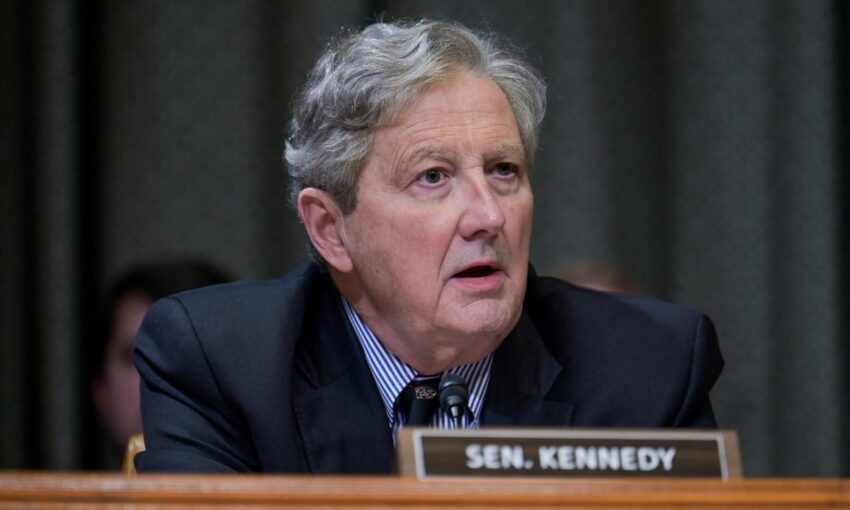
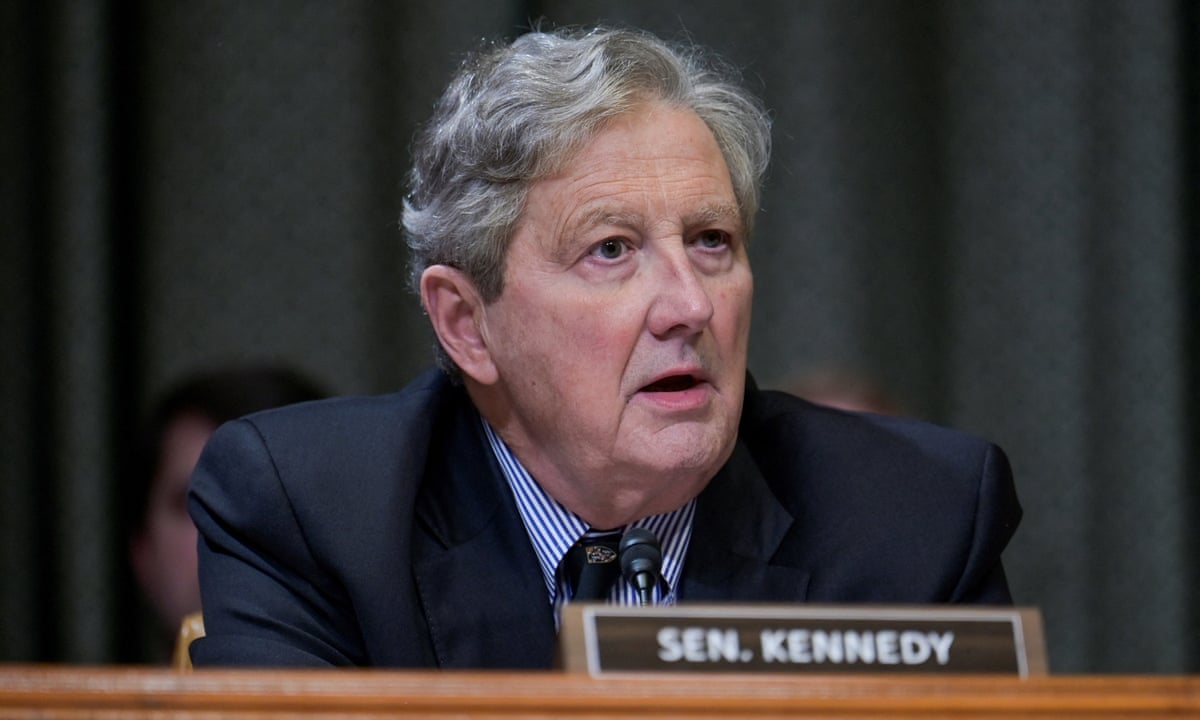
Washington was sent into a tailspin this morning when Senator John Kennedy (R-LA) dropped a stunning allegation on the Senate floor — accusing the Obama Foundation of massive financial irregularities, misappropriation of donor funds, and what he referred to as “a high-gloss operation running on shady bookkeeping.”
But the bigger headline came moments later, when former President Barack Obama, in an unplanned appearance at a leadership forum nearby, erupted in fury after hearing the news — and his reaction was
Speaking during a Senate Oversight Committee session titled “Accountability in Public Foundations”, Senator Kennedy unveiled what he claimed were
According to Kennedy, the Obama Foundation had:
Misreported nearly $12.8 million in consulting fees over a five-year period.
Shifted funds from its educational programs to a series of “phantom outreach initiatives” with no clear beneficiaries.
Maintained offshore donor accounts that were “not disclosed properly under IRS nonprofit regulations.”
“This isn’t just a little fuzz in the corners,” Kennedy said, holding up a thick stack of documents. “This is a whole carpet full of red flags. The American people didn’t donate their hard-earned dollars for this.”
News of the accusation reached Obama as he was speaking at the Civic Futures Summit in Washington D.C., just two blocks from the Capitol. In footage captured by attendees, a staffer whispers something into the former president’s ear mid-panel. What happened next shocked the entire room.
Obama reportedly paused, clenched his jaw, and then muttered into his mic:
“Oh, you’ve got to be kidding me with this clown show.”
The moment was met with awkward laughter — until Obama stood up, removed his mic, and said,
Within the hour, the Obama Foundation released an official statement denying all wrongdoing:
“These accusations are categorically false and politically motivated. Every dollar received has been tracked, audited, and publicly disclosed in accordance with nonprofit law. Senator Kennedy’s claims are not just misleading — they’re reckless.”
Foundation representatives noted that their most recent audits, conducted by an independent third party, found “no evidence of misappropriation.”
They also claimed that Kennedy’s “phantom initiatives” were in fact part of
Political analysts are already speculating that Kennedy’s move may be part of a broader GOP strategy to discredit prominent Democratic legacies ahead of the 2026 midterm elections.
Dr. Fiona Marks, a professor of political ethics at Georgetown, commented:
“What we’re seeing is a war for public trust. Foundations like Obama’s carry symbolic weight. If you can cast doubt on their integrity, it shakes the ground under a party’s entire brand.”
But others point out that Kennedy’s team has reportedly been investigating several high-profile nonprofits for months — suggesting this may be just the first of many shoes to drop.
Within minutes of the footage of Obama’s reaction going live, hashtags like #ObamaMeltdown, #KennedyFiles, and #FoundationGate were trending worldwide.
One user on X (formerly Twitter) wrote:
“When Obama slams the mic down and storms off… that’s not a denial. That’s panic.”
Another countered:
“Kennedy throws around papers like it’s theater. Show us actual proof, not dramatic finger-pointing.”
The Senate Oversight Committee has confirmed it will open a formal inquiry into the Obama Foundation’s finances, including subpoenaing past financial officers and former board members.
Meanwhile, Obama’s team is reportedly preparing to pursue legal action if the accusations are not retracted or substantiated.
A political storm is brewing, and as one analyst bluntly put it:
“If either side is bluffing, we’re about to find out who folds first.”
Last Updated on September 21, 2025 by Grayson Elwood
Weddings are supposed to be joyous celebrations, but sometimes they reveal more about people’s hearts than anyone expects. On a quiet Saturday afternoon in Kingston, inside an old banquet hall with rustic wooden beams and modest decorations, a love story unfolded that left an entire room stunned.
Angela Johnson, 28, stood glowing in a simple white gown. She was the pride of her community—educated, successful, and admired. And yet, on this day, many of her family and friends couldn’t hide their disbelief. She was marrying Malick Thompson, a man they whispered was “homeless,” a man they thought was beneath her.
But what began as a wedding filled with mocking glances and suppressed laughter soon turned into one of the most unforgettable revelations of their lives.
Angela had always been a woman who carried herself with grace. With her degree, her steady job in marketing, and a warm smile that lit up any room, she was someone her family often boasted about. Friends admired her success, yet they also pitied her when love seemed to pass her by.
She went on dates, yes, but most ended in disappointment. Either the men were chasing her career status, or they were intimidated by her independence. Angela wanted something deeper—something genuine.
And she found it in the most unexpected of places.
It was at a soup kitchen where Angela volunteered that she first noticed him. Malick was in his late thirties, with a scruffy beard, worn-out clothing, and shoes that looked like they’d walked a thousand miles. He carried himself with a limp, and his appearance gave the impression of a man beaten down by life.
But Angela saw something no one else did.
When she handed him a tray of food, he looked up with eyes filled with kindness. He cracked a small joke that made her laugh despite herself. Over the weeks, as she saw him more often, she realized he wasn’t just another face in the line. He was thoughtful, quick-witted, and gentle in ways that tugged at her heart.
Conversations turned into walks. Walks turned into friendship. And before long, friendship blossomed into love.
Her family didn’t understand.
“Angela,” her best friend Kendra said one evening, “he’s homeless. You have a future, a career, everything to lose. He has nothing to give you.”
Her mother, Gloria, was even harsher. “Honey, don’t throw away your life for a man who can’t even buy a clean shirt.”
Angela listened, but her heart was steady. “You don’t see what I see,” she replied softly.
Because Angela believed in Malick. She believed in the man he was—not the man others assumed him to be.
The old banquet hall was decorated simply—budget flowers, hand-me-down linens, nothing extravagant. Angela didn’t care. For her, this wasn’t about impressing anyone.
But as Malick entered the hall, the whispers began. His oversized suit looked as though it had been pulled from a donation bin. His shoes were scuffed and worn. Guests exchanged smirks and rolled their eyes. Some even stifled laughter behind their hands.
Angela kept her gaze steady, her eyes locked on his. She didn’t care about the laughter. She only cared about the man walking toward her.
When the time came for vows, Malick took the microphone. His hands trembled slightly, his voice low but clear.
“I know many of you wonder why a man like me stands here with Angela,” he began. “You see me as a homeless drifter. You think I have nothing to give her. But you’re wrong.”
The room fell silent. Even Angela’s smile faltered as she turned toward him in confusion.
“The truth is,” Malick continued, “for the past ten years, I’ve been living in disguise. The beard, the clothes, even the limp—they were all part of a test. I needed to know if someone could love me for who I truly am, not for what I have. The truth is… I’m not homeless. I’m a millionaire.”
Gasps rippled through the room. Angela’s jaw dropped. She hadn’t known.
“I met Angela at the soup kitchen,” Malick said, his voice breaking with emotion. “And for the first time, I saw someone who didn’t care about appearances or status. She saw me—the man inside. That’s why I love her. That’s why I’m standing here today.”
Then, with a snap of his fingers, the hall transformed.
Behind the scenes, his staff had been waiting. Gold drapes unfurled along the walls. Chandeliers descended, glittering in light. Fresh flowers filled every corner. Attendants whisked Angela away, dressing her in a gown of shimmering fabric fit for royalty. When she returned, she looked like a queen.
And Malick? Gone was the ragged suit. In its place, he wore an immaculate tailored tuxedo, polished shoes gleaming beneath the chandeliers.
He took Angela’s hand and whispered, “You loved me when I had nothing. Now I want to give you everything.”
The guests who had mocked him sat frozen, faces red with shame. Every judgmental glance, every whispered insult—they had all been wrong. They had measured his worth by his shoes and his beard, and in doing so, they had missed the truth.
Angela, meanwhile, wept openly, overwhelmed not by his wealth but by the depth of his love.
That night, as they danced beneath sparkling lights, the laughter was gone. In its place was awe—and the realization that true love cannot be mocked, cannot be diminished, and cannot be defined by appearances.
For everyone in that hall, the wedding became more than a union of two hearts. It became a reminder.
That what we see on the surface is not the whole story. That wealth, status, and clothing don’t define a person’s value. That love is about seeing someone’s heart, not their pocket.
Angela had chosen Malick when she thought he had nothing. And in return, she gained a love—and a truth—that left an entire community humbled.
We live in a world quick to judge by appearances. Too often, people laugh at the man with worn shoes, dismiss the woman who dresses simply, or assume that wealth equals worth. But Angela and Malick’s story stands as a timeless reminder:
True love sees past the surface. True love values the heart. And sometimes, the people we judge the harshest carry stories that can leave us in awe.
As Angela and Malick swayed together in the glow of their transformed hall, the whispers of doubt had vanished. All that remained was silence, wonder, and the undeniable truth: love, when it’s real, will always triumph over judgment.
Kierkegaard’s Fire: Why We Laugh While the World Burns
Imagine sitting in a crowded theater, surrounded by laughter and applause. Suddenly, a man rushes onto the stage, shouting a warning: there’s a fire backstage. But instead of panicking, the audience erupts in laughter—they think it’s part of the act.
This isn’t just a dark joke. It’s a powerful metaphor from the 19th-century Danish philosopher Søren Kierkegaard, who used this image to illustrate one of humanity’s most dangerous traits: our ability to ignore real danger—especially when it’s delivered by an unexpected messenger.
The Deeper Meaning
In Kierkegaard’s parable, the clown is telling the truth. But because he’s a clown—meant to entertain, not warn—his message is dismissed as a performance. The audience doesn’t believe him until it’s too late.
Kierkegaard concluded with haunting clarity: “The world will end not with a scream, but with applause.”
This metaphor critiques not only how we treat messengers, but also our addiction to comfort, distraction, and disbelief. It reflects how people tend to laugh off warnings, especially when they disrupt the illusion of normalcy.
Why It Still Matters
Kierkegaard’s metaphor is timeless—and more relevant now than ever:
Climate Change: Scientists have sounded the alarm for decades, yet action remains sluggish. Like the theater audience, we’re distracted, entertained, and largely passive.
Public Health: From pandemics to chronic disease, experts issue warnings, but often they’re ignored until consequences become personal—and irreversible.
Mental Health, Technology, Political Instability: Warning signs are everywhere, yet we scroll past them, assuming someone else will deal with it.
Key Lessons
Heed the message—even if the messenger seems unlikely. Truth doesn’t always wear a suit or come with credentials.
Don’t confuse comfort with safety. Just because a room is full of laughter doesn’t mean there’s no fire behind the curtain.
Act early. Once the flames are visible, it may already be too late.
Resist the pull of distraction. Entertainment is not a shield against reality.
Final Thought
Kierkegaard wasn’t warning us about theaters. He was warning us about ourselves.
In a world that drowns in noise, it’s easy to dismiss uncomfortable truths—especially when they’re wrapped in humor, unconventional voices, or inconvenient timing. But real danger doesn’t wait for belief. It just keeps burning.
So the next time someone shouts “fire” in a world too busy clapping, pause and look. The future may depend on it.