At Windsor Castle, where morning light glances across marble corridors, something remarkable unfolded without ceremony. No trumpets, no broadcast—just a single line in the
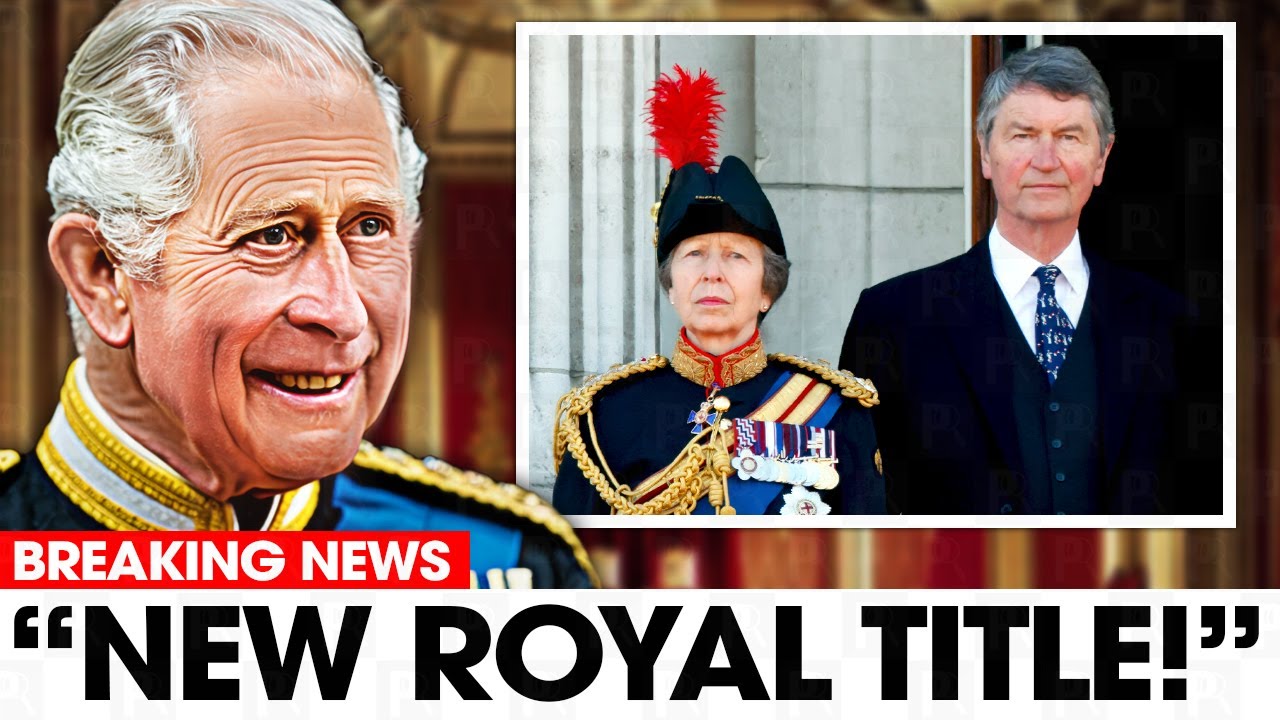
“Vice Admiral Sir Timothy Lawrence has been appointed Knight Grand Cross of the Royal Victorian Order.”
To the casual reader, it sounded routine.
To royal historians, it was electric.
Because this was not simply a medal—it was a message.
Sir Timothy Lawrence has spent three decades living in the monarchy’s quiet margins.
He met Princess Anne while serving as equerry to Queen Elizabeth II, a post requiring silence, precision, and absolute discretion. Out of that professionalism grew an affection so steady it survived scandal, divorce, and relentless tabloid glare.
When they married in 1992, there were no carriages or cathedral bells—just two people pledging loyalty to one another without spectacle. And for thirty-three years, he has walked a half step behind the Queen’s only daughter, carrying himself with the kind of composure that makes noise unnecessary.
In an age of royal podcasts and glossy tell-alls, his refusal to speak has become his signature. He has never sought influence, never courted fame. Yet within palace walls, everyone knows: when the air trembles with crisis, it is Sir Timothy who steadies it.
King Charles’s promotion of his brother-in-law from Knight Commander to Knight Grand Cross was not a bureaucratic act—it was personal.
The Royal Victorian Order is the monarch’s own instrument of gratitude, untouched by government hands. Every rank within it is chosen solely by the sovereign.
By bestowing its highest honor on Sir Timothy, the King was doing more than rewarding service—he was revealing his philosophy.
At a time when illness, scandal, and shrinking numbers have thinned the working royals, this was Charles’s way of drawing strength from the dependable few. It was a salute to the quiet virtues that modern royalty too often forgets: steadiness, restraint, and the courage to remain invisible when others chase attention.
The sash and silver star now resting across Sir Timothy’s uniform are not decorations for the crowd. They are acknowledgements of endurance—a king’s private thank-you to the man who has never let his sister falter.
Why now?
Observers see several layers in the timing.
Some believe it’s gratitude before time runs short—a monarch mindful of his health ensuring that loyalty is honored by his own hand. Others see it as strategy, a way to fortify the crown’s inner circle with those who embody its unshakeable calm.
Either way, the symbolism is clear. The monarchy, often accused of chasing modern relevance, still knows how to value the virtues that built it.
Sir Timothy’s new rank places him symbolically beside figures such as Queen Camilla, the Princess of Wales, and the Duchess of Edinburgh. Yet unlike them, he holds no throne, no title by birth. His power is quieter—and perhaps more enduring.
Because in the royal world, influence is not always measured by lineage. Sometimes it is measured by silence.
The insignia itself tells its story:
Soon the world may see it glint beneath the chandeliers of Windsor during an upcoming state visit. Cameras will capture the shine but not the sentiment. Only those who read between the gestures will understand that this ribbon represents more than ceremony—it represents trust.
Trust earned in decades of walking one step behind.
Trust forged in moments when the monarchy wavered and needed ballast.
In honoring Sir Timothy, King Charles has revealed something of himself.
This was not pomp. It was poetry.
A monarch, weary yet resolute, recognizing in his brother-in-law the virtues he hopes will define his reign.
Loyalty over ambition.
Duty over drama.
Silence over spectacle.
As the public scrolls past headlines of royal scandal, one quiet man has reminded Britain what true service looks like.
Sir Timothy Lawrence may never command headlines, but his new ribbon gleams with a truth the crown still needs to remember:
sometimes the strongest voice in the room is the one that never speaks at all.
Royal ceremonies are choreographed down to the smallest detail. Every bow, every word, every glance is meant to embody centuries of tradition. Yet sometimes, within all the pageantry, one simple action can change everything — and reveal the true power dynamic inside the House of Windsor.
That was exactly what happened during the coronation of King Charles III. What should have been Queen Camilla’s triumph — her long-awaited moment at Charles’s side — turned into an unforgettable humiliation at the hands of Prince William.
In the months leading up to the coronation, Camilla tried to assert herself as more than just the King’s wife. She pushed for her grandchildren to play prominent roles, elevating them to equal standing with Charles’s heirs. Her most audacious move was to insist that Prince George, William’s eldest son and second in line to the throne, serve as one of her pages.
For Camilla, it was a symbolic victory: the future king’s son helping crown her. But William quietly, firmly, rejected the idea. George would not serve Camilla. For William, it wasn’t just about protocol — it was about principle. He had not forgotten the years of pain his mother Diana endured because of Camilla’s presence in the royal story.
Then came the coronation day itself — an event broadcast around the globe, watched by millions. Prince William, now the Prince of Wales, stepped forward to kneel before his father. He placed his hands between Charles’s and swore loyalty, his voice steady, his gaze unwavering.
When he rose, the hall echoed with history. Camilla, seated just beside the King, fixed her eyes on William. She had long expected — even demanded — that he kneel before her as well. Tradition, after all, dictated that the heir should honor both King and Queen.
But William did not turn. He did not bow. He walked past her as though she were invisible.
In that single moment, centuries of etiquette were shattered. Camilla’s face, caught on camera, tightened. Behind her forced composure, fury and humiliation rippled through. The Queen Consort had been denied the recognition she craved — and it was William who had delivered the slight, cold and deliberate.
Camilla, never one to accept defeat quietly, tried to strike back the very same day. When the royal family appeared on the balcony of Buckingham Palace, she arranged for her own grandchildren to stand front and center, shoulder to shoulder with William, Kate, and their children.
It was a bold move — a way of showing the world that her family mattered just as much as the future heirs of the crown. But to the watching public, the gesture felt hollow. The sight of Camilla’s grandchildren pressed into prominence could not erase the snub everyone had just witnessed. William had already made his point.
If Camilla hoped to balance the scales behind the scenes, she miscalculated. For William, the coronation was not just his father’s crowning — it was his chance to quietly reshape the monarchy’s future. Soon after, he moved swiftly to curtail Camilla’s growing influence.
Her sister Annabel, who had enjoyed a comfortable role within the royal household, was dismissed from her position. Her son, Tom Parker Bowles, was quietly told he would no longer perform royal duties. The message was clear: William would not allow Camilla to build her own court within the monarchy.
And Camilla, for all her jewels and titles, could do nothing.
For decades, Camilla had believed she had won. She had endured scandal, criticism, and public hatred to sit beside Charles as Queen. She had outlasted Diana, the “People’s Princess,” who once seemed untouchable in the public’s heart.
But the coronation revealed a truth she could not escape. Camilla may wear the crown, but William carries Diana’s memory — and with it, the authority to remind the world where true loyalty lies.
When William refused to kneel before her, it wasn’t just a son honoring his father over his stepmother. It was Diana’s son drawing a line in the sand. A quiet, devastating act of defiance.
In the weeks that followed, commentators and royal watchers agreed: Camilla had been diminished, not elevated, by the coronation. The image of William ignoring her stood in stark contrast to the years she spent fighting for legitimacy.
She thought she had conquered Diana’s ghost. But on that historic day, the ghost of Diana — embodied in William’s every gesture — proved stronger than any crown.
Camilla may sit on the throne. She may walk beside the King. But the monarchy, and the people, have already chosen their symbol of loyalty and continuity. It is not her. It is William — and through him, Diana.
And in that truth lies Camilla’s greatest humiliation.