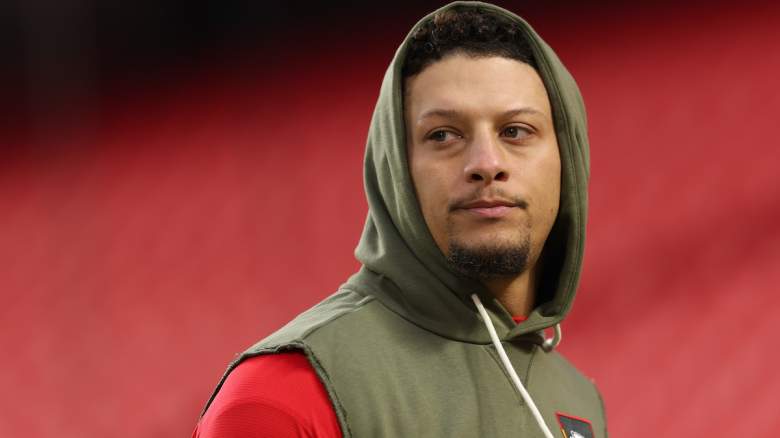
The Kansas City Chiefs face what may be their most important regular season game since Patrick Mahomes took over as full-time starting quarterback in 2017. Since then, Mahomes has led the Chiefs to a 95-30 regular season record, winning the AFC West division every season, and advancing to the conference championship game every year as well.
But Mahomes and the Chiefs’ incredible string of success stands in peril on Sunday when the Chiefs come out of their bye week — though still nursing the wounds of a devastating 28-21 defeat at the hands of the Buffalo Bills in their final game before the weeklong break — to face the new West division leaders, the Denver Broncos.
Bills rookie cornerback Maxwell Hairston who collected his first NFL interception in the game off a Mahomes throw, couldn’t resist adding a little insult to injury in his postgame comments.
At the podium for the first time since the aftermath of the Buffalo game on Wednesday, Mahomes delivered a pointed, four-word response to the rookie.
In fact, Mahomes said that Hairston’s remarks might help the Chiefs deal with their immediate problem — the Broncos.
Behind sophomore quarterback Bo Nix, Denver’s first-round pick, 12th overall, out of Oregon in 2024, the Broncos have powered their way to what, at least so far, looks like their best season since 2015 when Denver won its third Super Bowl in franchise history.
More importantly, at 8-2, the Broncos stand 2 1/2 game ahead of Kansas City in the divisional standings. The Chiefs not only are looking a steep comeback to win the division, but they are currently out of a playoff position altogether, occupying the eighth seed in the conference.
A loss to the Broncos could effectively put an end to the Chiefs’ hopes of winning an eigth consecutive division title — and could put them in danger of not making the playoffs at all. According to a mathematical formula created by
Clearly, the Bills need to address some flaws in their performance if they want to prevent that scenario, and one of those flaws was identified by Hairston. In the aftermath of the Bills’ win over Kansas City, Hairston — who was playing in only his second NFL game — said that he had identified certain body language “tells” in wide receiver Xavier Worthy that enabled him to lock down the Chiefs’ second-year pass catcher.
“Finding a difference in his posture and his effort for real — when he knows he’s not getting it, when it’s a run,” Hairston said, as quoted by journalist Tyler Dunne. “So just applying what I saw from the film room and taking it out to the field. There are tells that everybody gives. It’s just about finding it.”
Told of Hairston’s remarks on Wednesday, by reporters at Mahomes’ media appearance, the Chiefs’ two-time NFL MVP signal-caller had four words to say.
“I appreciate the info,” Mahomes remarked.
The three-time Super Bowl winning QB went on to say that the information provided by Hairston would help the Chiefs in their crucial game against the Broncos on Sunday, in a game that will be televised to almost the entire country by CBS in the 4:25 Eastern time slot.
Serena Williams has found herself at the center of a heated debate after recently revealing she lost 31 pounds with the help of the GLP-1 drug Zepbound. While some praised the 23-time Grand Slam champion for her transformation, others criticized her for promoting a medication that has been linked to potentially dangerous side effects.
Critics argue that Williams, with her massive global following, has a responsibility not to endorse products that may pose risks to unsuspecting fans. Concerns were further amplified by the fact that her husband, Alexis Ohanian, is reportedly a major investor in the drug. Crtics questioned whether her public support was influenced by financial interests.
Amid the backlash, former Australian tennis star Jelena Dokic came to Williams’ defense. In a recent interview, the former World No. 4 — who has openly shared her own struggles with abuse, trauma, and body shaming — stressed that people should not be so quick to judge others for their health choices.
“You mentioned Serena as well, and the news that’s come out about her and using the GOP, is that? What it’s called GLP one?”, said Dokic. “Yeah, and again, I think that she’s—some people are praising her, and there’s still a lot of judgment as well, which, again, that’s where we get to say—look if something works for someone, and it’s really changed their life, and especially if it’s transformed their health, and they feel like it’s something for them, I don’t—yeah, I don’t think that people should be judgmental about that,” Dokic added.
For Williams, the revelation was framed as a personal journey toward better health, but the conversation has quickly expanded into a broader debate over celebrity influence, medical responsibility, and the fine line between advocacy and promotion.