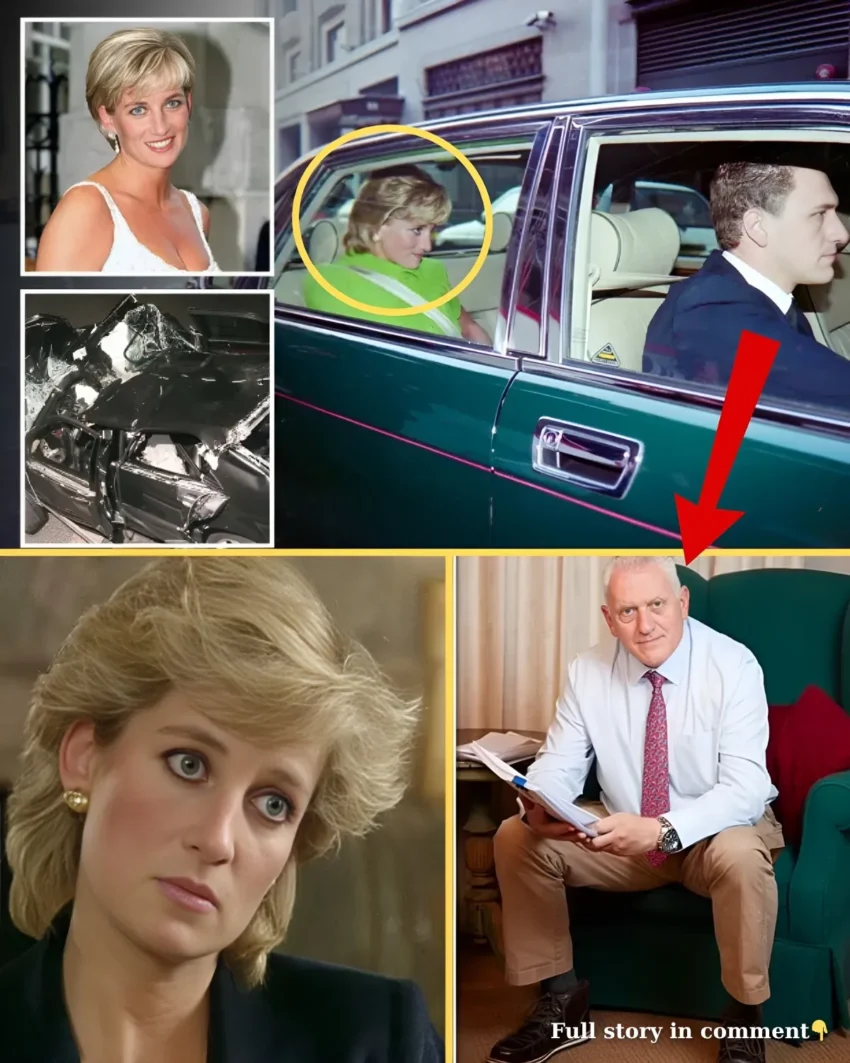
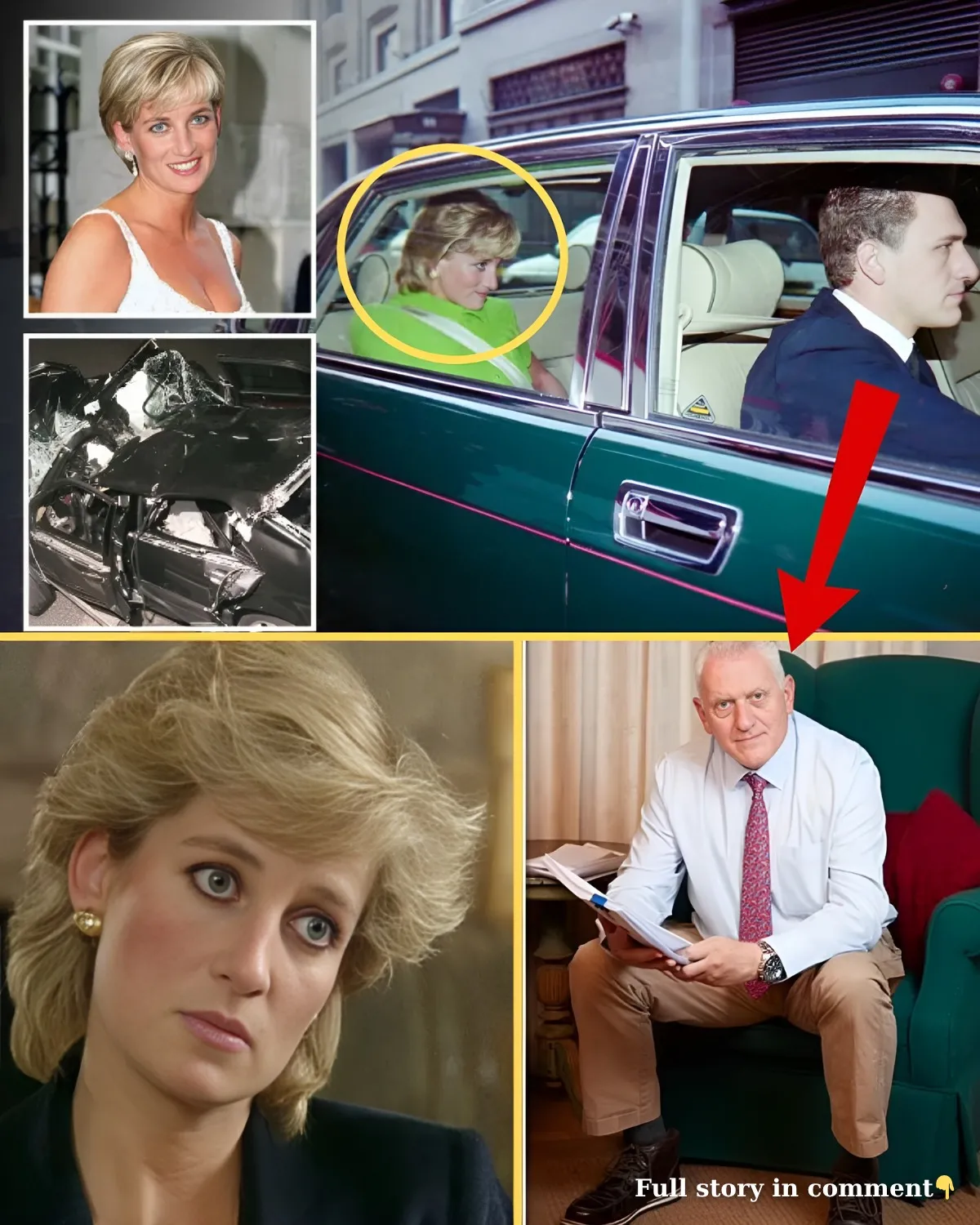
For nearly three decades, Steve Davies has carried a silent wound. Once one of the most trusted chauffeurs in the Royal Household—four years as Princess Diana’s personal driver—he was abruptly dismissed in 1996 with no explanation. What he didn’t know then was that his dismissal wasn’t the result of any wrongdoing, but of lies—lies spun by BBC reporter Martin Bashir to secure the now-infamous
Now, after thirty years of silence, Davies is finally telling his story—a story of loyalty, betrayal, and quiet heartbreak that still echoes through the corridors of Kensington Palace.
In the late 1980s, Steve Davies joined the Royal Household as a chauffeur. A former soldier, he carried himself with the precision, discretion, and duty that royal service demanded. By 1992, he had become Princess Diana’s personal driver—responsible not only for her safety but often her peace of mind.
“She could be spontaneous,” Davies recalls. “She’d want to drive through Hyde Park at midnight just to feel the wind. Or surprise the boys at school. My job was to make that happen—safely, quietly, without fuss.”
His professionalism earned him the Princess’s trust. He drove her to charity events, to private dinners, even to that unforgettable June night in 1994 when she stepped out in a black cocktail dress that would go down in history as
In September 1995, Martin Bashir met with Diana and her brother, Earl Spencer. Eager to secure an exclusive interview, Bashir fabricated a web of deceit: forged bank statements, false stories of royal espionage, and one devastating claim—that Steve Davies, Diana’s own driver, was leaking information to the press.
The story worked. Diana, already wary of betrayal, believed it. Within months, Davies was quietly made redundant after eight years of spotless service. No reason given. No hearing. Just a severed tie with the woman he had once vowed to protect.
“I went from having the dream job to having nothing,” Davies says. “No explanation, no goodbye. I thought maybe I’d failed her somehow. But I hadn’t. Bashir had lied.”
For decades, Davies lived in the shadow of that lie. He rebuilt his life as best he could, taking jobs far from the royal world. “Your name is everything in that circle,” he explains. “When you lose your reputation, you lose your future.”
He only learned the truth two years ago—while watching an episode of The Crown on Netflix. “They mentioned Bashir’s forged documents,” Davies says. “And suddenly, it all made sense. Everything. Why I was dismissed, why she stopped trusting me.”
His voice breaks slightly. “She died believing I’d betrayed her. That’s something I can’t ever forget—or forgive.”
Despite the pain, Davies speaks of Diana with unmistakable affection. “She had this way of making you feel seen,” he says. “Once, we stopped by a hospice unannounced. She went in without cameras, just sat with the patients. She didn’t care about publicity—she cared about people.”
He remembers the laughter of young Princes William and Harry as they played in a field behind Kensington Palace. “They sat on my lap while I did handbrake turns on the grass,” he laughs. “They screamed with joy. Diana watched from the sidelines, smiling. That’s how I like to remember her—happy, carefree, a mother first.”
And there were surreal moments too: “Elton John invited her to his home. She sang with him and George Michael—it was spontaneous, pure joy. Another time, she insisted I meet Mother Teresa. She said, ‘Steve, she’ll like you.’ And she did.”
Perhaps the most haunting part of Davies’s testimony comes when he reflects on Diana’s final night in Paris. “If I’d been driving that car,” he says quietly, “she’d still be here today.”
It’s not arrogance—it’s grief. “I knew her moods, her instincts. I knew when to slow down, when to protect her from the crowd. I’d have taken a bullet for her. That’s not something you say lightly.”
In 2024, after years of silence, the BBC finally acknowledged its role. The High Court heard how Davies had been “tormented” for years by rumors and confusion surrounding his dismissal. The Corporation issued an apology and paid damages.
“The apology means something,” Davies concedes, “but it doesn’t give me back the years I lost—or the trust I’ll never regain. They knew what Bashir had done. They could have told me sooner. Instead, they protected him.”
The BBC’s statement was brief: “When Mr Davies approached us, we resolved his complaint promptly by apologizing via a statement in court and paying him damages.”
But for Davies, the wounds remain raw. “They should have spoken up long before. Maybe then, I’d have had a chance to tell her the truth.”
When asked what he’d say to Princess Diana if he could speak to her today, Davies pauses for a long moment. His eyes glisten.
“I’d tell her I never betrayed her,” he says finally. “That I was loyal, always. That I’m sorry she believed otherwise. And that the world misses her more than she could ever have imagined.”
He takes a deep breath. “She made people believe in kindness again. And I’ll always be proud that, for a time, I was part of her story.”
For thirty years, Steve Davies carried a burden not of his making—a victim of deceit that cost him his career, his reputation, and the trust of a woman he deeply admired. His story is not just one of betrayal; it’s one of devotion and loss, of the quiet casualties that history forgets.
“I don’t waste time on anger,” he says. “But I can’t forgive the lie that took her trust away from me.”
For those who once watched Diana step into the light—her smile unguarded, her grace unmatched—his story offers a painful reminder: even the brightest lives are shaped by unseen shadows.
And as Davies finally breaks his silence, one truth rings louder than ever—
It wasn’t an accident.
It was meant to be a simple visit. A young duchess traveling to Africa, smiling for the cameras, and offering gestures of goodwill. Yet, for those who watched closely, the moments captured in Rwanda told another story—one of distance, discomfort, and a series of gestures that left locals quietly humiliated rather than uplifted.
What could have been an act of compassion became, in the eyes of many, a display of performance over sincerity.
The first moment seemed small, almost invisible. A young Rwandan girl, wide-eyed and innocent, reached out to touch Meghan’s scarf. It was the kind of gesture that children often make—simple curiosity, a longing to connect.
But instead of welcoming the touch, Meghan brushed the girl’s hand away. To onlookers, the movement was sharp, almost instinctive. A brief hesitation passed across her face before the cameras appeared, and in that instant, everything changed.
Suddenly, Meghan pulled the girl close, offering the kind of staged embrace that photographers love. The flashbulbs went off. A royal hug, preserved in pixels. Yet as quickly as the photo was taken, the moment shattered. Meghan withdrew, pulling the child’s hand apart from hers, stepping back with laughter that felt rehearsed.
The girl stood in silence, her eyes heavy, as though she had been taught the difference between warmth and performance in a single breath.
The second moment came not in a palace, but by a river. A young Rwandan girl carried a heavy bucket of water balanced on her head—a daily reality for millions across Africa, and a task performed with quiet strength. She had gone to fetch water for the duchess, a gesture of service and respect.
Meghan took the water, poured it into her own bottle… and spilled much of it onto the ground. For those watching, the act might have seemed careless enough. But it was the expression on her face that cut deepest.
Witnesses recall a look of disgust, as though the water—so precious to those who carried it—was something unworthy. The girl who had brought it stood still, frowning, her silence louder than words. What for her was sacrifice was, in that moment, wasted without thought.
In a land where every drop matters, where children walk miles for what others take for granted, the symbolism of that spill struck painfully.
The third moment revealed itself in subtler ways. Meghan had joined a World Vision project, where wells were being dug to bring clean water to communities. On paper, it was a noble cause—one that deserved admiration.
But those present noticed something else: a distance, a refusal to fully connect with the women around her. She smiled, she posed, she gestured. Yet there was no genuine touch, no lingering presence. When black mothers reached toward her, she stepped back. When the chance came to share in their dignity, she chose instead the safety of staged appearances.
Many quietly concluded that the visit was never about them. It was about the photographs. About the image of charity without the weight of compassion.
Not long after, comparisons inevitably arose. When Catherine, Princess of Wales, visited communities in Africa, she was photographed embracing a black mother and daughter with open arms—no hesitation, no stiffness, no pulling away once the cameras flashed.
The contrast was stark, and for many, it told a deeper truth. One woman reached out and embraced humanity as it was, with all its vulnerability. The other seemed to retreat behind a wall of self-consciousness and performance.
There is an old African proverb: “A dung beetle can never turn into a butterfly.” For those who remembered Meghan’s visit, the words took on a painful relevance. A true transformation requires sincerity, a shedding of self for the sake of others. But what was witnessed in Rwanda felt, to many, like the opposite: a clinging to performance, a protection of self-image at the expense of genuine connection.
In the end, no official complaint was made. No headlines screamed outrage at the time. But within the quiet glances of the children, the frowns of the mothers, and the silence of those who carried buckets of water for her, the judgment was written.
The story of that visit is not one of generosity remembered. It is one of small humiliations—a hand brushed away, water wasted, embraces that never came.
And for those who watched, it was a reminder of something deeper: that true compassion cannot be staged. It cannot be captured in a photograph and forgotten once the cameras are gone.
Real compassion lingers. It humbles. It holds the hand of a child and does not let go.