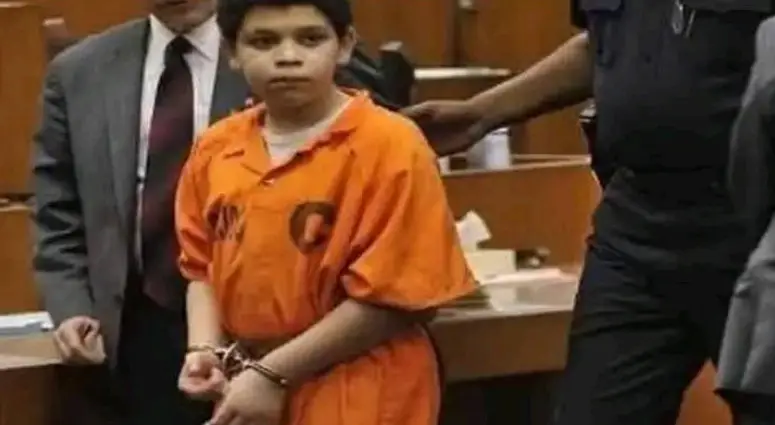
She sits behind cold, unyielding metal bars — barely a teenager, with a future stolen before it began. Her only crime? Being in the wrong place at the wrong time, in a country where even children can be condemned to die behind prison walls.
The United States, often hailed as a beacon of liberty, harbors a disturbing secret: dozens of minors, some as young as 12, serve life sentences without any possibility of parole.
Childhood Lost Behind Bars
These numbers have ignited a fierce debate about juvenile justice, human rights, and the ethical limits of punishment. Beneath the cold statistics lie stories of heartbreak and complexity.
Many of these young offenders come from backgrounds marred by poverty, domestic abuse, racial discrimination, and neglect. Some committed violent crimes; others were bystanders or accomplices in tragic events they neither planned nor fully understood.
A Case That Changed the Conversation
One case that captured national attention was that of Lionel Tate. At just 12 years old, he was convicted of killing a 6-year-old girl during what he described as a “wrestling game gone wrong.”
His sentence was later reduced, but his story sparked a nationwide reckoning: Should children ever be tried as adults?
Voices of Reason and Reform
“Sentencing a child to life in prison violates the most basic principles of justice and humanity,” says Juan Méndez, former UN Special Rapporteur on Torture. “Children are still developing — emotionally, mentally, and morally. To condemn them to die in prison is to deny the possibility of growth, redemption, and change.”
Still, many states argue that some crimes demand the harshest penalties — no matter the offender’s age. Florida, Michigan, and Pennsylvania lead in the number of minors serving life terms.
The U.S. Supreme Court has made progress. In 2012, it ruled mandatory life sentences for juveniles unconstitutional, and in 2016, mandated that this ruling be applied retroactively. Yet, hundreds of cases remain unreviewed, and many children sentenced before these rulings are still awaiting justice.
A Call for Change
Civil rights advocates push for restorative justice, sentence reviews, and reintegration programs — aiming to replace permanent punishment with opportunities for rehabilitation.
“Childhood should be a time for learning and redemption, not a life sentence,” says Bryan Stevenson, renowned civil rights attorney. “When we decide a child can never change, we abandon both science and compassion.”
A Nation’s Moral Reckoning
The plight of these 79 children forces America to face a harsh truth: the measure of a society’s humanity is not how it punishes its strongest, but how it treats its most vulnerable.
Conclusion
These young lives are more than legal cases — they are a reflection of a collective moral failure. When a justice system chooses permanent punishment over potential, it betrays the very idea of justice itself.
The stories of these children locked away in darkness challenge America to ask itself a painful question: If a society cannot forgive its children, can it truly call itself free?
Please SHARE this article with your family and friends on Facebook.
The woman thought her snake was very cute, but an ultrasound reveals otherwise.
Cassandra felt her heart race in disbelief as she stared at the ultrasound screen. What she witnessed shattered her perception of her beloved pet snake, Reggie. Taking him to the vet with suspicions of illness or strange behavior, the reality turned out to be far more devastating than she had imagined.
A sense of foolishness washed over her as she realized she hadn’t recognized the signs. The way Reggie curled around her, the way he watched her with his piercing eyes—all of these she interpreted as displays of affection and loyalty.
However, unfortunately, the truth was far from comforting. The comforting notion that her snake protected her at night now turned into a terrifying feeling. What had she done?!
Cassandra used to keep her python in an enclosure with a heat lamp, as is common for pet reptiles. However, as she began to feel increasingly lonely, she decided to deepen their bond and take their relationship to a new level.
She genuinely believed they could strengthen their bond. Observing how her neighbor kept his dog outside every night, seemingly having a fragile bond with the animal, Cassandra had an inspiring idea.
As the weeks passed, Cassandra began to notice an alarming change in Reggie’s behavior. He no longer showed interest in her carefully prepared meals, whether it was fresh chicken or the rabbit he so adored. One morning, his behavior became extremely concerning to her. What could be happening?
During the day, Reggie remained confined to her bed, refusing to eat and showing more restlessness than usual, especially when Cassandra tried to take her back to the vivarium.
Cassandra wondered if Reggie was simply in a bad mood or feeling unwell. Noticing something peculiar about his appearance, she wondered if it was just her imagination or if Reggie had changed size overnight. Concerned for her pet’s well-being and fearing something might be seriously wrong, Cassandra decided to take him to the local veterinarian, Dr. Hanson.
Upon entering the veterinary clinic, Dr. Hanson clearly expressed his surprise at Reggie’s size and the evident emotional connection between the snake and Cassandra.
After listening to Cassandra’s explanation of the situation, Dr. Hanson agreed to examine Reggie. He suggested that the most appropriate approach would be to perform an abdominal ultrasound on the snake to determine if it had ingested any unusual objects.
The vet began a series of questions about the snake, covering topics such as its eating and sleeping habits. During this conversation, Cassandra shared her nightly bonding ritual. Concerned, the vet tried to maintain his composure as he revealed the disturbing news to her, opting to show her the ultrasound results.
When presented with the examination data, Cassandra was puzzled to see the python’s empty stomach. This discovery intrigued her. The vet asked if the snake usually stretched out along her body and curled up when she was lying on the bed. Cassandra nodded, confirming: “Well, yes.”
“Observe,” the veterinarian continued, “Reggie’s stomach is completely empty, which is extremely unusual for a python of its size. I believe it is preparing for a large meal, which would explain its lack of appetite.” Snakes have the incredible ability to swallow prey considerably larger than themselves, thanks to the remarkable flexibility of their jaws.
Cassandra was incredulous. “But what could she be preparing to devour? I tried offering her various types of food, and she refused them all,” she exclaimed anxiously.
Dr. Hanson hesitated, staring at the massive python before turning his gaze to Cassandra. His voice was filled with concern as he stated, “Miss Turner, I’m afraid Reggie is considering you as his prey.”
As the python curled up next to Cassandra, it was actually assessing her proportions.
Cassandra’s heart sank, and she found herself unable to believe what she was hearing. Her voice trembling, she said, “This is unbelievable! Reggie would never hurt me. We have a special connection! She’s my companion, my friend!”
Dr. Hanson sighed before replying, “I understand your point, but Reggie is still a wild animal, and his instincts are powerful. I urge you to take the sleeping arrangements seriously, with his own safety in mind.”
Although Cassandra protested, she couldn’t ignore the facts presented. Dr. Hanson explained that pythons were known to be opportune hunters, and Reggie’s behavior clearly indicated he was preparing for a big meal. He encouraged her to reconsider her current situation with Reggie, suggesting she find a more suitable home for the animal.
Cassandra faced a heartbreaking choice, knowing she had to make an extremely difficult decision. Although her love for Reggie was deep, she understood that prioritizing her own safety was paramount. With deep sadness in her heart, she took the initiative to contact a rescue center specializing in exotic animals, seeking to ensure that Reggie found a new home suited to his needs.
Cassandra then petted the animal and said goodbye.