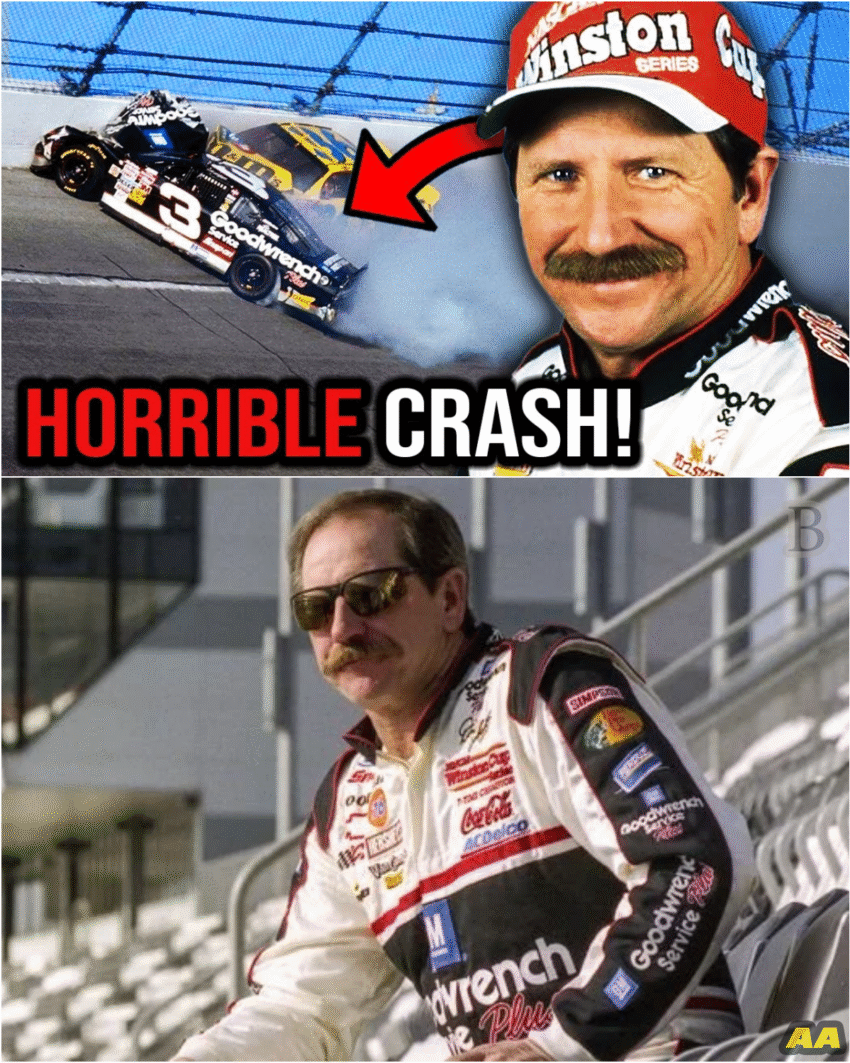
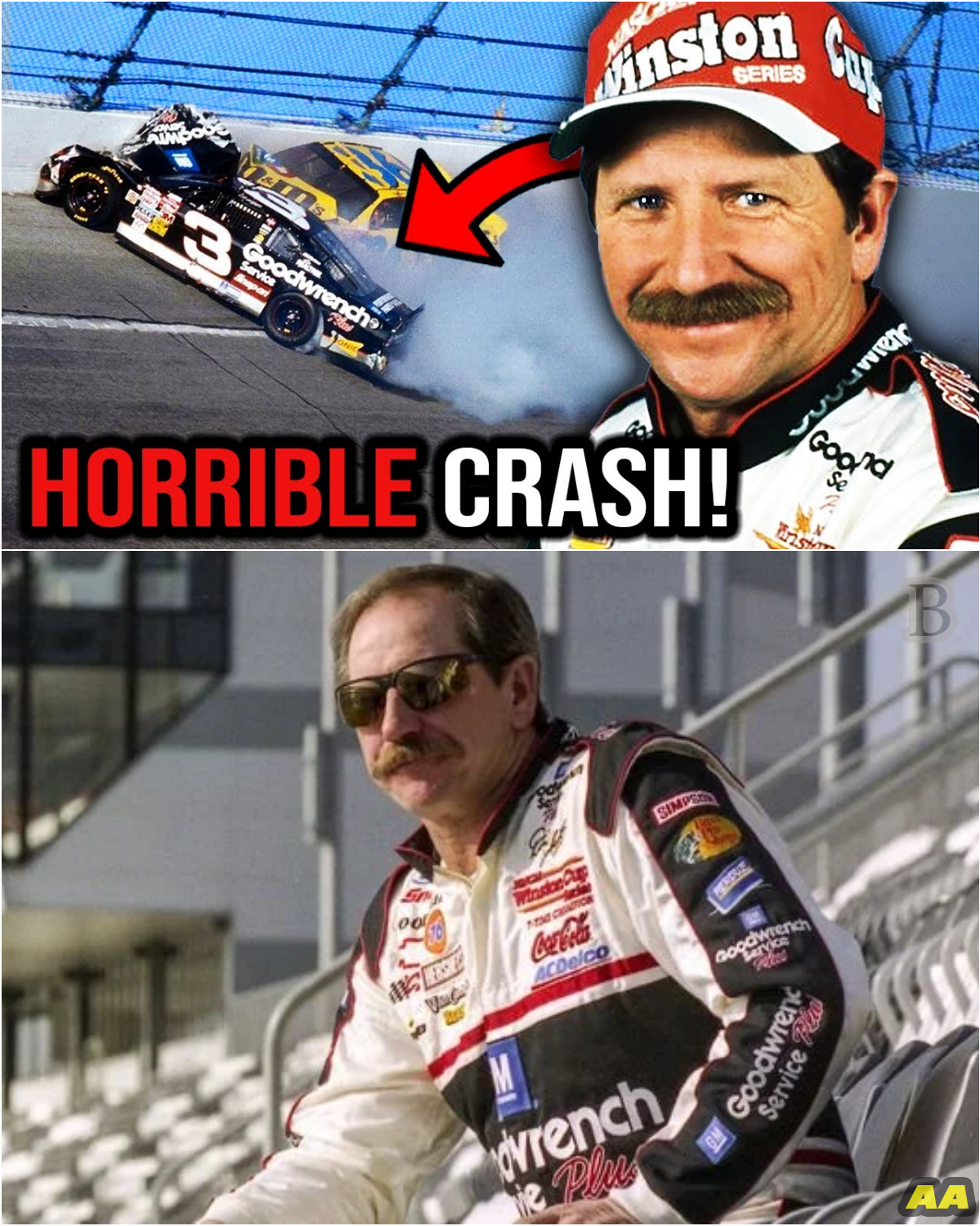
“He Never Saw It Coming”: Inside the Final Moments of Dale Earnhardt Sr.’s Fatal Daytona 500 Crash
To understand the horror of that February day, you have to understand who Dale Earnhardt was.

For millions, he wasn’t just a driver — he was the driver.
Seven-time NASCAR Cup Series champion, blue-collar hero, a man who turned fear into fuel.
His black No.3 car wasn’t just paint and metal; it was a symbol of dominance, defiance, and danger.
When Earnhardt strapped into that seat, he was invincible.Or so everyone thought.
February 18, 2001, was clear and warm — perfect racing weather.
The grandstands at Daytona International Speedway were packed with more than 180,000 fans, and millions more watched from home.
Earnhardt had already cemented his legacy.

He didn’t need another win.
But this time, he wasn’t racing for himself — he was racing for them.
His son, Dale Earnhardt Jr., was in the field, and his team cars — driven by Jr.and Michael Waltrip — were running up front.
In the closing laps, Earnhardt’s black Chevrolet hung just behind them, blocking the pack to protect their lead.
It was the kind of selfless move that only legends make — and the kind that would cost him his life.
With three laps to go, Earnhardt was in fourth place, keeping the competition behind as Waltrip and Earnhardt Jr.battled for first.
The crowd was on its feet.Then came the final lap — a blur of motion, noise, and adrenaline.
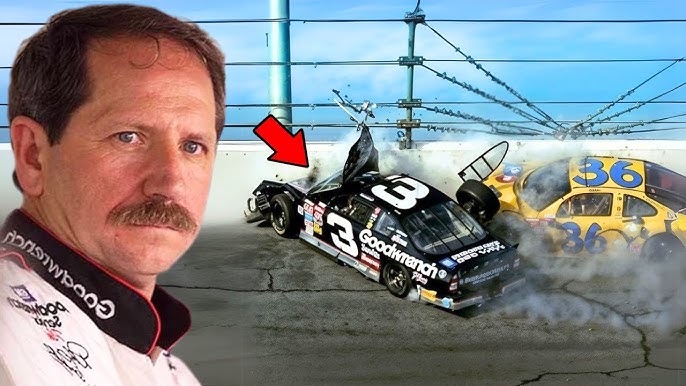
As the cars sped down the backstretch at nearly 190 mph, Sterling Marlin’s Dodge drifted slightly up the track, its nose brushing the left rear of Earnhardt’s car.
It was a small tap, the kind drivers traded a hundred times before.
But this one was different.In a split second, the No.3 car twitched.The tires lost grip.
The car shot up the track and slammed nose-first into the concrete wall at over 155 miles per hour.
The impact was instant, violent, final.
The right-front wheel sheared away.
The car bounced off the wall and was struck again, this time by Ken Schrader’s Pontiac, crushing the driver’s side.
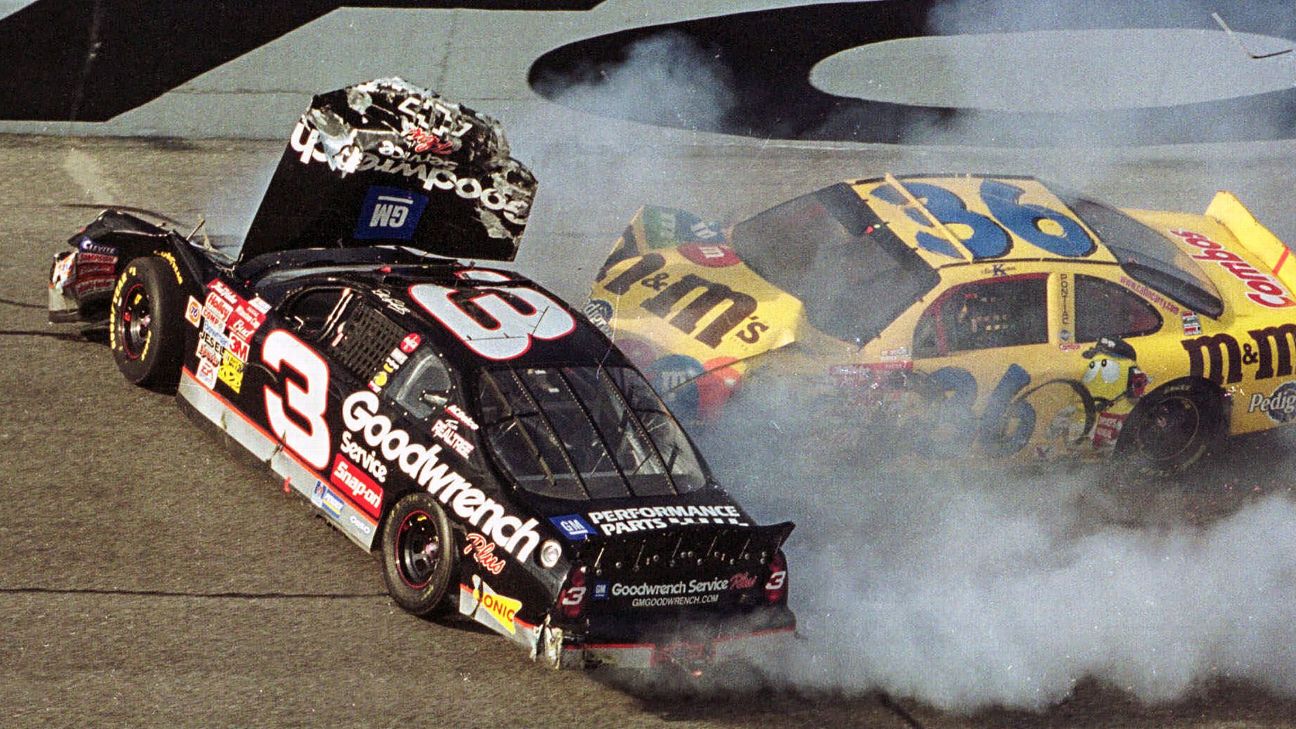
Then — stillness.The kind that feels wrong.
From the stands, it didn’t look catastrophic.
Fans had seen far worse wrecks, rollovers, fireballs.
This was just a hard hit.The commentators’ voices stayed calm.
Schrader climbed from his car and jogged toward the wreck.
But what he saw when he peered into the driver’s window made his face change instantly.
He waved frantically for help.
No words, no camera close-ups — just urgency.
Something was terribly wrong.
Inside the black Chevrolet, the cockpit was eerily quiet.
The steering wheel was bent.
The seat harness held firm.
But Dale Earnhardt wasn’t moving.
The impact had been brutal — the force of the crash snapping his head forward with deadly precision.
In that instant, a basilar skull fracture ended his life.
There was no fire, no chaos — just a deadly silence.
Rescue workers arrived within seconds.
Schrader stood off to the side, pale, shaking his head.
Medics worked quickly, cutting away the roof, stabilizing the body, rushing him to Halifax Medical Center in Daytona Beach.
The cameras cut away, the broadcast moving on to celebrate Waltrip’s victory.
But behind the scenes, NASCAR officials knew.
By the time the ambulance doors closed, Dale Earnhardt Sr.was already gone.
The news didn’t break right away.
Fans watched replays, hoping for movement, for a thumbs-up through the window — the universal sign that the driver was okay.
But none came.
When the official announcement finally arrived hours later, it sent a shockwave through the sport.
NASCAR’s toughest man — the unbreakable Intimidator — had died doing what he loved, in front of the world.
What followed was chaos, grief, and disbelief.
Drivers wept in pit lane.
Fans left the track in stunned silence.
At the hospital, Dale Earnhardt Jr.
arrived to find his father gone.
“He was my hero,” he said later.
“I thought he was invincible.
In the weeks that followed, NASCAR faced the hardest truth it had ever known: its safety standards had failed one of its greatest champions.
The investigation revealed that Earnhardt had suffered a fatal skull fracture caused by the force of the impact — a type of injury that could have been prevented by better head restraints and seat supports.
It was a tragedy born of fractions of a second — and the belief that legends don’t die.
That belief died with him.
NASCAR immediately overhauled its safety systems.
The HANS device — a head and neck restraint that Earnhardt had refused to wear — became mandatory.
Safer barriers were installed at tracks nationwide.
Cockpit designs were re-engineered.
And from that day on, no crash in NASCAR would ever be treated lightly again.
But even with progress, the image of that final lap remains seared into the sport’s memory — the black No.3 sliding helplessly toward the wall, the roar of the crowd fading into a stunned hush.
Twenty-four years later, the scars remain.
Daytona 500 fans still pause at Turn 4, where the car struck the wall.
Some leave flowers, others whisper prayers.
The track may have been rebuilt, but that corner carries a weight no repaving can erase.
Dale Earnhardt Sr.’s final moments were not defined by fear, but by purpose.
He was blocking, protecting, doing what racers call “the dirty work” — the kind that wins championships.
“He died a racer’s death,” Richard Petty said quietly afterward.
“But that doesn’t make it any easier.”
In the end, the horrifying last minutes of Dale Earnhardt Sr.weren’t about the crash itself.
They were about the stillness that followed — the moment when NASCAR realized it had lost not just a driver, but its heart.
And in that silence, a legend was born again.
Because even in death, the black No.3 still leads the pack — eternal, untouchable, forever racing toward the finish line he never saw.
To understand the horror of that February day, you have to understand who Dale Earnhardt was.
For millions, he wasn’t just a driver — he was the driver.
Seven-time NASCAR Cup Series champion, blue-collar hero, a man who turned fear into fuel.
His black No.3 car wasn’t just paint and metal; it was a symbol of dominance, defiance, and danger.
When Earnhardt strapped into that seat, he was invincible.Or so everyone thought.
February 18, 2001, was clear and warm — perfect racing weather.
The grandstands at Daytona International Speedway were packed with more than 180,000 fans, and millions more watched from home.
Earnhardt had already cemented his legacy.
He didn’t need another win.
But this time, he wasn’t racing for himself — he was racing for them.
His son, Dale Earnhardt Jr., was in the field, and his team cars — driven by Jr.and Michael Waltrip — were running up front.
In the closing laps, Earnhardt’s black Chevrolet hung just behind them, blocking the pack to protect their lead.
It was the kind of selfless move that only legends make — and the kind that would cost him his life.
With three laps to go, Earnhardt was in fourth place, keeping the competition behind as Waltrip and Earnhardt Jr.battled for first.
The crowd was on its feet.Then came the final lap — a blur of motion, noise, and adrenaline.
As the cars sped down the backstretch at nearly 190 mph, Sterling Marlin’s Dodge drifted slightly up the track, its nose brushing the left rear of Earnhardt’s car.
It was a small tap, the kind drivers traded a hundred times before.
But this one was different.In a split second, the No.3 car twitched.The tires lost grip.
The car shot up the track and slammed nose-first into the concrete wall at over 155 miles per hour.
The impact was instant, violent, final.
The right-front wheel sheared away.
The car bounced off the wall and was struck again, this time by Ken Schrader’s Pontiac, crushing the driver’s side.
Then — stillness.The kind that feels wrong.
From the stands, it didn’t look catastrophic.
Fans had seen far worse wrecks, rollovers, fireballs.
This was just a hard hit.The commentators’ voices stayed calm.
Schrader climbed from his car and jogged toward the wreck.
But what he saw when he peered into the driver’s window made his face change instantly.
He waved frantically for help.
No words, no camera close-ups — just urgency.
Something was terribly wrong.
Inside the black Chevrolet, the cockpit was eerily quiet.
The steering wheel was bent.
The seat harness held firm.
But Dale Earnhardt wasn’t moving.
The impact had been brutal — the force of the crash snapping his head forward with deadly precision.
In that instant, a basilar skull fracture ended his life.
There was no fire, no chaos — just a deadly silence.
Rescue workers arrived within seconds.
Schrader stood off to the side, pale, shaking his head.
Medics worked quickly, cutting away the roof, stabilizing the body, rushing him to Halifax Medical Center in Daytona Beach.
The cameras cut away, the broadcast moving on to celebrate Waltrip’s victory.
But behind the scenes, NASCAR officials knew.
By the time the ambulance doors closed, Dale Earnhardt Sr.was already gone.
The news didn’t break right away.
Fans watched replays, hoping for movement, for a thumbs-up through the window — the universal sign that the driver was okay.
But none came.
When the official announcement finally arrived hours later, it sent a shockwave through the sport.
NASCAR’s toughest man — the unbreakable Intimidator — had died doing what he loved, in front of the world.
What followed was chaos, grief, and disbelief.
Drivers wept in pit lane.
Fans left the track in stunned silence.
At the hospital, Dale Earnhardt Jr.
arrived to find his father gone.
“He was my hero,” he said later.
“I thought he was invincible.
In the weeks that followed, NASCAR faced the hardest truth it had ever known: its safety standards had failed one of its greatest champions.
The investigation revealed that Earnhardt had suffered a fatal skull fracture caused by the force of the impact — a type of injury that could have been prevented by better head restraints and seat supports.
It was a tragedy born of fractions of a second — and the belief that legends don’t die.
That belief died with him.
NASCAR immediately overhauled its safety systems.
The HANS device — a head and neck restraint that Earnhardt had refused to wear — became mandatory.
Safer barriers were installed at tracks nationwide.
Cockpit designs were re-engineered.
And from that day on, no crash in NASCAR would ever be treated lightly again.
But even with progress, the image of that final lap remains seared into the sport’s memory — the black No.3 sliding helplessly toward the wall, the roar of the crowd fading into a stunned hush.
Twenty-four years later, the scars remain.
Daytona 500 fans still pause at Turn 4, where the car struck the wall.
Some leave flowers, others whisper prayers.
The track may have been rebuilt, but that corner carries a weight no repaving can erase.
Dale Earnhardt Sr.’s final moments were not defined by fear, but by purpose.
He was blocking, protecting, doing what racers call “the dirty work” — the kind that wins championships.
“He died a racer’s death,” Richard Petty said quietly afterward.
“But that doesn’t make it any easier.”
In the end, the horrifying last minutes of Dale Earnhardt Sr.weren’t about the crash itself.
They were about the stillness that followed — the moment when NASCAR realized it had lost not just a driver, but its heart.
And in that silence, a legend was born again.
Because even in death, the black No.3 still leads the pack — eternal, untouchable, forever racing toward the finish line he never saw.
Hidden Facts About Paul Walker That Change Everything You Thought You Knew Paul Walker was more than just a Hollywood…
Before She Passed, Rocky Dennis’s Mother Finally Broke Her Silence — And It Changes Everything For years, the world has…
Fans Never Knew What Vin Diesel Keeps Next to Paul Walker’s Supra — Until Now More than a decade has…
“Secrets, Engines & Legends: Inside Richard Petty’s Garage Where History Was Unearthed” On a quiet day in Level Cross,…
Bing Crosby’s Hidden Truth Drove His Sons to the Edge — The Story He Never Wanted Told Bing Crosby was…
“If Tomorrow Never Comes”: Malcolm-Jamal Warner’s Message That’s Making the Whole World Stop and Think He begins…
End of content
No more pages to load
Next page