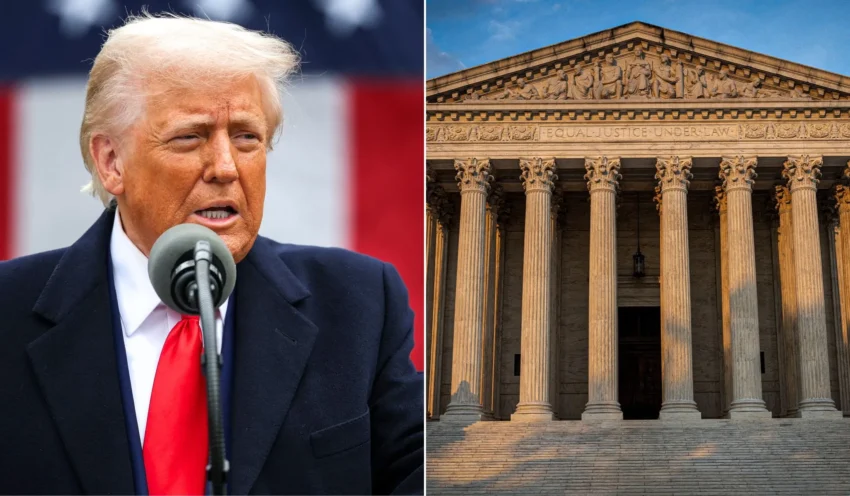
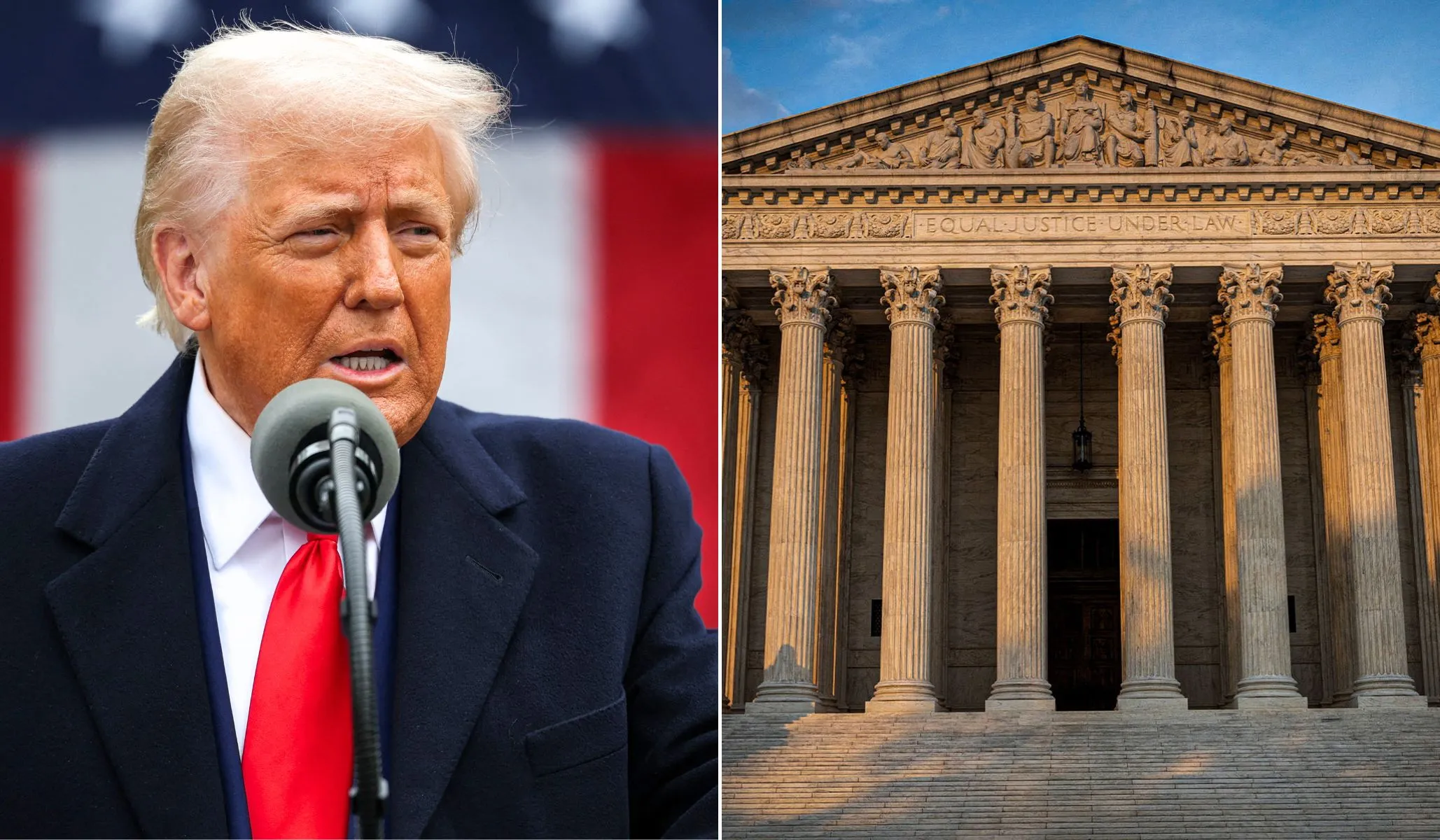
The Supreme Court delivered a strong and necessary rebuke to judicial overreach this week, siding with the Trump administration in its battle to uphold fiscal responsibility during the government shutdown.
In a move that protected the separation of powers, the High Court temporarily blocked a lower court’s outrageous attempt to force the Trump administration to pay full Supplemental Nutrition Assistance Program (SNAP) benefits despite the absence of appropriated funds.
This was not just a legal victory—it was a constitutional one. President Donald Trump’s administration correctly argued that it cannot spend what Congress has not authorized, and the Court agreed.
At issue was a Rhode Island judge’s demand that the administration raid limited contingency funds to provide full SNAP benefits in the middle of a government shutdown that Democrats have prolonged.
That judge’s order would have set a dangerous precedent: allowing the judiciary to force the executive branch to fund entitlements beyond what Congress appropriates. Trump’s team rightly challenged it.
The administration stood firm. It refused to play into Democrat theatrics and declared that SNAP would be funded based on what legally exists—not what progressive judges or left-wing activists wish for.
This is what real leadership looks like. Trump’s America First agenda does not bend the knee to judicial activism or budgetary blackmail.
Despite liberal outrage, Justice Ketanji Brown Jackson issued an administrative stay on the lower court’s order—confirming that the administration has the right to appeal and pause unlawful mandates.
The Supreme Court’s move ensures that unelected judges cannot usurp Congress’s power of the purse by forcing emergency expenditures that have no basis in law.
For weeks, Democrats have weaponized government shutdown politics, using essential services like SNAP as political hostages to demand concessions on unrelated spending.
The Trump administration has offered commonsense solutions. Fund critical programs through proper channels, reopen government, and stop holding the American people hostage.
Instead, left-wing courts tried to shame the administration into unlawfully raiding contingency funds. That is not governance — that is economic sabotage.
This administration is protecting taxpayers, defending constitutional limits, and ensuring programs like SNAP are funded through legitimate appropriations — not judicial diktats.
President Trump has shown time and again that his administration won’t be bullied into lawlessness, even when Democrats and their judicial allies demand it.
Let’s not forget: this crisis was caused by congressional Democrats who refused to pass a clean funding bill. They chose shutdown over compromise.
Now, they want to blame Trump for their failure to govern? That’s not just dishonest — it’s disgraceful.
The USDA had already begun working to distribute partial SNAP payments using what limited resources were available, showing the administration’s commitment to support struggling families within the law.
But Democrats don’t want solutions. They want spectacles. They’d rather stir outrage than engage in serious governance.
States like Pennsylvania, Oregon, and California rushed to comply with the judge’s ruling — not because they had to, but because they wanted to score political points against the administration.
Yet Trump held the line. His administration’s appeal to the Supreme Court was not about denying aid — it was about defending the rule of law.
And once again, Trump was right. The Court understood that real leadership means respecting constitutional boundaries, not rewriting them from the bench.
Justice Jackson’s stay gives the administration breathing room to make its case, and protects the executive branch from being railroaded by a hyper-political lower court.
This moment highlights exactly why Trump’s judicial appointments mattered—because constitutional sanity must prevail when government overreach runs wild.
BREAKING: Anna Paulina Luna Claims The Biden DOJ DESTROYED…
In a groundbreaking development, several members of the far-left militant group Antifa have been arrested and criminally charged following a tense standoff in Eugene, Oregon.The group’s members were accused of encircling an Immigration and Customs Enforcement (ICE) facility, instilling fear and causing significant distress among employees working within the building.This incident marks a historic turning point, as it is the first time members of Antifa have been officially designated as domestic terrorists, following President Donald Trump’s executive order that classified the group as a terrorist organization.
The arrests, which have sent shockwaves through both law enforcement and political circles, represent a critical shift in the United States’ approach to dealing with Antifa’s increasingly radicalized actions.The group, known for its violent protests and militant stance against perceived fascist ideologies, has long been a subject of controversy. For years, Antifa has been involved in clashes with law enforcement, engaging in violent protests, property destruction, and intimidation tactics, particularly against conservative and right-wing groups.While some have argued that Antifa’s actions are simply the result of individuals exercising their right to protest, others have pointed to the group’s increasingly violent tactics as a threat to public order and safety.
The latest arrests come as a result of the Trump administration’s directive to take a more aggressive stance against Antifa, which has been linked to a number of violent incidents across the United States.The incident in Eugene, Oregon, began when a group of Antifa members gathered outside the ICE facility, shouting chants and waving banners.
According to law enforcement reports, the protesters quickly escalated their actions, blocking entrances to the building and making verbal threats towards employees inside.The situation became particularly tense as Antifa members used loudspeakers to broadcast their demands for the abolition of ICE, further exacerbating the already heightened atmosphere.As the standoff continued, law enforcement agencies in Eugene, including local police and federal officers, were called to the scene to diffuse the situation.Despite attempts by authorities to engage in peaceful dialogue with the protesters, the group’s behavior escalated, and several Antifa members were arrested after they refused to disperse.The individuals arrested were charged with a variety of offenses, including conspiracy to commit domestic terrorism, vandalism, and resisting arrest.
This arrest marks a significant shift in how law enforcement and the federal government view Antifa. While the group has long been a source of contention, it was not until President Trump issued his executive order classifying Antifa as a domestic terrorist organization that the full force of federal law was brought to bear on the group’s members.The designation allows federal authorities to use counterterrorism tactics to dismantle the organization and prosecute its members under more severe charges.The decision to classify Antifa as a domestic terrorist group has been met with mixed reactions. Critics of the move argue that it is an overreach by the federal government and a politically motivated attempt to silence dissent.
These critics contend that labeling Antifa as a terrorist organization is a violation of free speech and could be used to target activists who engage in nonviolent protests.Furthermore, some have expressed concern that the government’s actions may lead to further polarization and division, with the possibility of more violent confrontations between protesters and law enforcement.Supporters of the move, on the other hand, contend that Antifa’s actions have gone beyond mere protest and have become a direct threat to public safety.They point to numerous instances in which Antifa members have engaged in violent clashes with law enforcement officers and members of opposing political groups.The group’s involvement in violent riots, such as those that took place in Portland, Oregon, and Berkeley, California, has led many to view Antifa as a domestic threat that needs to be addressed.The arrests in Eugene are just the latest in a series of actions taken against Antifa members in recent years. Federal law enforcement agencies, including the FBI, have been increasingly focused on investigating the group’s activities, particularly its role in inciting violence at protests and rallies.The Trump administration has also directed the Department of Homeland Security (DHS) to investigate Antifa’s connections to radical left-wing groups and its efforts to recruit and radicalize new members.
The issue of domestic terrorism has become a major focus for law enforcement agencies in recent years, particularly in light of the rise of extremist groups on both the far-left and far-right.While far-right extremists have often garnered more attention due to their involvement in high-profile events such as the 2017 Charlottesville rally, far-left groups like Antifa have also been responsible for violence and destruction.In many cases, these groups have engaged in violent acts while claiming to be defending social justice or fighting fascism. However, critics argue that their tactics, including property destruction, intimidation, and physical violence, often undermine the causes they purport to support.As the government ramps up its efforts to combat domestic terrorism, the actions taken against Antifa are likely to have far-reaching consequences. Legal experts suggest that the arrests in Eugene could set a precedent for future prosecutions of Antifa members across the country.\
The federal government now has the authority to use counterterrorism laws to target Antifa’s leadership, dismantle its infrastructure, and prosecute its members under more severe criminal statutes.In addition to the legal ramifications, the crackdown on Antifa is expected to have a significant impact on the group’s recruitment efforts. With federal agencies now actively targeting Antifa, it is likely that the group’s ability to recruit new members will be severely hampered.Furthermore, the criminal charges brought against Antifa members may act as a deterrent for potential recruits who might otherwise be drawn to the group’s radical ideology.
The impact of the arrests in Eugene is already being felt in political circles. The decision to classify Antifa as a domestic terrorist organization has intensified the political divide in the United States, with both sides accusing each other of stoking violence and undermining democratic institutions.
On the right, the crackdown on Antifa is being hailed as a necessary step in defending law and order, while those on the left argue that it represents a dangerous attack on free speech and dissent.The controversy surrounding Antifa is emblematic of the broader political climate in the United States, where the lines between protest and violence are often blurred.The debate over how to handle groups like Antifa is just one example of the growing polarization in American society, where political ideologies are increasingly entrenched, and the space for constructive dialogue is shrinking
.As the legal process moves forward, the outcome of the charges brought against Antifa members in Eugene will likely serve as a bellwether for how the U.S. government addresses domestic terrorism in the future.If the charges are upheld, it could set a precedent for future crackdowns on other left-wing extremist groups. However, if the charges are dismissed or reduced, it could signal that the federal government’s efforts to combat Antifa are facing significant legal and political challenges.In the meantime, the arrests have prompted renewed discussions about the role of law enforcement in managing political extremism.
As the United States continues to grapple with the rise of radical political movements on both the left and right, the question of how to balance civil liberties with national security concerns will remain a contentious issue.Ultimately, the historic arrests of Antifa members in Eugene represent a major turning point in the fight against domestic terrorism.
 “He’s not who you think he is. He’s hiding something, Zainab, and when you find out, you’ll wish you were never born.”
Those words stayed with Zainab long after she returned to the hut. She couldn’t shake the feeling that Amina knew something she didn’t. That evening, as Yusha sat beside her, describing the colors of the sunset, she felt a pang of doubt creep into her heart.
“Yusha,” she began hesitantly, “my sister said something… something that’s troubling me.”
He paused, his fingers still on the strings of the oud he played so beautifully. “What did she say?”
“She said you’re hiding something from me.”
There was a silence so thick it felt like another presence in the room. Yusha sighed deeply, placing the oud gently on the ground. “Zainab, there are things in my past, things I’m not proud of. I didn’t lie to you—I just didn’t want to burden you with them. But if you want to know, I’ll tell you.”
Zainab nodded, her heart pounding. “I want to know.”
Yusha’s voice was steady, but there was a tremor of emotion beneath it. “Once, I had everything—a family, wealth, status. I was a merchant, respected and admired. But I lost it all in a single night. A fire destroyed everything I owned, and my family… they didn’t survive. I couldn’t save them.”
Zainab reached out, her hand finding his. “I’m so sorry.”
He squeezed her hand gently. “Grief consumed me. I became a beggar not because I had no choice, but because I didn’t want to go on living. I thought I was cursed, meant to wander alone.” He paused, his voice breaking. “Until I met you.”
Her breath caught in her throat. “Me?”
“You gave me hope, Zainab. Your strength, your spirit, your laughter—it brought me back to life. I may not be able to give you riches or a grand house, but I can promise you love and respect.”
Tears slipped down Zainab’s cheeks. In that moment, she realized the truth: the past didn’t matter. The present, their shared moments, their unexpected love—that’s what mattered.
“Thank you for telling me,” she said softly. “Your past doesn’t scare me, Yusha. We all have scars.”
He hugged her tightly, and she could feel his relief in the way he held her, as if afraid she might disappear.
As the days turned into months, Zainab and Yusha built a life together. They planted a small garden behind the hut, and Yusha taught her how to tend to it with patience and care. The village began to notice the changes in them both. Yusha stood taller, his shoulders no longer weighed down by guilt. And Zainab, once the blind girl shunned by her own family, became a source of inspiration.
People came to her for advice, for comfort, drawn to her warmth and wisdom. She had become a beacon of hope, a testament to resilience and the power of love.
Her father, hearing of their happiness, never reconciled, but that was okay. Zainab had found her family in Yusha, in the new friends who surrounded them, and most importantly, in herself.
In the end, the blind girl and the beggar defied the odds, proving that love sees beyond physical sight, discovering beauty in the unlikeliest of places, and leaving everyone speechless with the life they created together.
A Father’s Love. After Molly’s mother passed away, her estranged father Danny showed up at the funeral. Molly had grown up hearing only bad things about him, but everything changed when he took her in. Though life was tough, Danny did everything to make his disabled daughter feel loved, even learning how to care for her from scratch.
One day, Molly came home in tears — no one wanted to take her to prom because of her limp. The next evening, Danny surprised her by being her prom date. He arrived in his truck, carried her onto the dance floor, and made her feel like the most special girl in the world.
Everyone was touched, and the next day, Danny received a surprise package: a $10,000 check from the other prom parents, recognizing him as “Dad of the Year.” Danny had been secretly working two jobs to save for Molly’s surgery. With the donation and his savings, she finally had the operation — and it was a success. Molly eventually walked without crutches, earned a scholarship, and prepared to leave for college.
Danny quit his second job to spend more time with her, teaching her how to live freely and fully.
The Lesson: A parent’s love is unmatched. Danny never gave up on his daughter, proving that a father’s love can truly change a life.
Snow blanketed the Netherlands, transforming streets and homes into a picturesque winter scene. For most villagers, this was a common view. However, in one quaint village, a particular house drew the attention of many because its roof remained curiously bare, while the snow covered all the others.
Initially, it didn’t seem significant. The villagers speculated that the homeowners might be undergoing renovations, or perhaps they had installed some unique roofing. Who could say?
Yet, as days went by and fresh snowstorms rolled in, the bare roof became increasingly noticeable.
It turns out that in the Netherlands, there’s a specific explanation for this peculiarity, and it doesn’t have to do with home improvements. Consequently, the villagers notified the authorities.
The Dutch police immediately recognized that the “snow-free roof” could suggest a large-scale cannabis operation.
Cultivating cannabis indoors on a large scale necessitates powerful lamps, heating systems, and ventilation. This setup produces significant heat that escapes through the roof, causing snow to melt almost instantly, even in freezing temperatures.
For law enforcement, this phenomenon acts like nature’s own thermal imaging device. Officers didn’t have to search for long to pinpoint the source. Inside the residence, there was a fully operational cannabis farm, complete with plants basking under intense artificial lights, humid air, and the unmistakable scent of marijuana. The warmth generated by the numerous plants prevented snow from accumulating on the roof, revealing the homeowner’s “little” secret.
This wasn’t the first instance of police uncovering such an operation. In Haarlem, Zutphen, and Arnhem, authorities have utilized snow-free roofs as a cue to launch investigations. Their raids have revealed cannabis farms with numbers ranging from 88 plants in a repurposed bedroom to nearly 500 plants valued at around €50,000.
After these snow-assisted raids, Dutch police utilized social media and local news outlets to encourage residents to report any roofs that appeared suspiciously free of snow, as this could indicate the presence of large cannabis farms. One officer remarked, “Sometimes, the snow reveals more than the neighbors do.”
The explanation is straightforward: cannabis grow rooms generate significant heat from their lamps, which causes the snow on the roof to melt, even during freezing conditions. Often, only the areas above the grow rooms will melt, resulting in a patchy, almost thermal-map-like appearance.
Many foreigners are taken aback to discover that the Netherlands, despite its reputation for a cannabis-friendly culture, imposes restrictions on marijuana cultivation. Individuals are allowed to possess up to five grams and purchase small quantities from coffee shops, but cultivating more than five plants is against the law. Large-scale cultivation, like the farm discovered in the snow-free house, is classified as drug trafficking and is subject to strict legal penalties, which are rigorously enforced by Dutch authorities.
Please SHARE this article with your family and friends on Facebook.