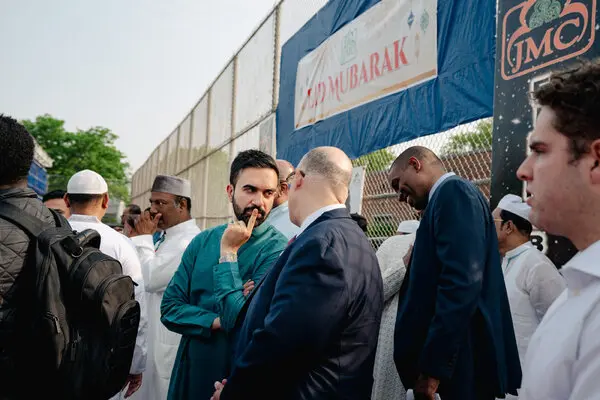
The American people have every right to know who is funding their candidates and what agendas those backers represent. A growing web of financial connections now links a controversial Muslim civil rights network—long scrutinized for its ties to radical organizations—to one of the largest donors backing a Democratic Socialist mayoral candidate.
At the center of this story is the Unity and Justice Fund, a political action committee that pumped $120,000 into the campaign of Zohran Mamdani, a self-proclaimed socialist running for New York City mayor. What raises immediate concern is not just the amount but the deeper affiliations behind that check.
The Unity and Justice Fund shares addresses and leadership personnel with CAIR Action, a political arm operating under the broader umbrella of the Council on American-Islamic Relations. CAIR, which has long positioned itself as a Muslim civil rights organization, has also faced years of scrutiny over its alleged radical ties.
Despite claims that CAIR Action is legally distinct from the non-profit CAIR, the overlapping addresses and shared individuals blur the lines. This looks less like a separation and more like a shell game, designed to mask political operations behind a non-profit veil.
Additional PACs linked to the same network are involved as well. Unity Lab PAC, which donated $23,500 to Mamdani’s PAC, is run by an individual who also operates as a spokesperson for a regional chapter of the parent organization. These interconnections raise red flags about coordination and transparency.
Meanwhile, the Unity and Justice Fund is run by a former chapter leader of the parent group, who also serves as treasurer for its political wing. This is not mere coincidence. It reflects a deliberate strategy to create political influence pipelines using groups that purport to be civil rights advocates.
Radical anti-Israel activist Linda Sarsour openly celebrated the influence of these PACs in Mamdani’s campaign, boasting that a large majority of his financial backing came from Muslim-American donors mobilized by these very organizations.
That statement alone should have set off alarms among ethics watchdogs and campaign-finance authorities. Yet, the only action taken by the involved parties was to add a legal disclaimer—hardly the kind of meaningful transparency the public deserves.
This network of political activity is also housed at the same address as the national office of the civil rights organization, further cementing suspicions that these entities are working hand-in-hand despite the technical distinctions on paper.
This is more than just politics as usual. It’s a sophisticated funding apparatus working to shape U.S. elections using money from groups that have faced serious questions about their allegiances and activities.
The background of these groups is not irrelevant. Leaders of their affiliated networks have previously been convicted of financing foreign terrorist organizations. Several high-profile trials have exposed the extent to which some of these so-called charities were functioning as financial channels for radical Islamist movements.
Yet these same networks are now pouring funds into the campaign of a mayoral candidate with openly radical positions, including praise for individuals convicted of funding terrorism. That should be deeply troubling to every American.
One such case involved a now-defunct charity whose directors were sentenced for funneling money to Hamas. During that trial, the civil rights group connected to the Mamdani campaign was named as an unindicted co-conspirator.
Even more disturbing is Mamdani’s own record. Years ago, he released a song in which he explicitly praised the convicted directors of that radical charity, telling listeners to “look ’em up.” That’s not a slip—it’s a declaration.
The message being sent here is that it’s perfectly acceptable to glamorize convicted criminals, accept funding from groups under investigation, and advance a political platform that aligns with far-left ideologies and radical sympathies.
This entire operation represents a gross manipulation of campaign finance laws, exploiting nonprofit protections to funnel massive political donations into the coffers of socialist candidates.
The American people are being kept in the dark about who is really backing some of the most extreme voices rising in today’s political ranks. And when those backers have controversial, even dangerous, affiliations, the implications become urgent.
This isn’t about smearing one religion or community. This is about national security, campaign integrity, and the need for full transparency in our electoral system.
Every dollar entering a political campaign should be traceable, accountable, and free from the shadow of extremism. When we allow dark-money operations tied to radical networks to go unchecked, we threaten the very foundations of our democracy.
The candidate in question has not refuted the source of the donations, nor has he returned the money. That silence is as telling as any endorsement. It signals complicity or, at the very least, indifference to the origins of his campaign’s financial backing.
Congress must act. Campaign finance rules must be updated to prevent nonprofits from serving as political fronts. Audits must be conducted. PACs with suspicious affiliations must be shut down.
Voters deserve to know who’s trying to buy influence in American cities—and for what purpose. In this case, the answer appears to be power cloaked in radicalism.
BREAKING: Anna Paulina Luna Claims The Biden DOJ DESTROYED…
Representative Anna Paulina Luna has leveled explosive information against the Biden Department of Justice, claiming that critical materials related to the Jeffrey Epstein investigation have been deliberately destroyed.
This assertion, if proven true, would represent one of the most damning instances of governmental obstruction and cover-up in recent history.
Luna, who chairs a congressional task force focused on federal transparency, has stated unequivocally that she possesses evidence implicating high-ranking officials in the DOJ.
According to her, these officials not only failed to disclose materials related to Epstein but actively destroyed them to conceal the extent of powerful individuals’ involvement in Epstein’s criminal network.
She introduced legislation titled the SHRED Act, aimed at imposing severe penalties on government agents who destroy or conceal federal records. The proposed bill calls for 20 years to life in prison for anyone caught eliminating evidence in cases of national significance.
“Even if they are conducting a criminal investigation, you should probably pick up the phone and call us,” Luna told Fox News. “We have been more than patient.”
These developments come amid growing conservative suspicion that the Biden administration has no interest in unmasking Epstein’s full network. The notion that key records could be gone forever only intensifies fears that justice is being buried under a bureaucratic rug.
Luna’s office has reportedly sent multiple requests to the Department of Justice demanding clarity on the handling of Epstein-related materials. So far, those inquiries have been met with either vague responses or complete silence.
The congresswoman did not mince words in her public statements, suggesting that the DOJ’s behavior constitutes a deliberate act of obstruction. If true, such actions could violate federal law and trigger an entirely new legal battle.
“The Biden DOJ has obstructed Congress, ignored subpoenas, and now appears to have destroyed critical evidence,” Luna said. “This is corruption at the highest level.”
Critics argue that this is yet another example of double standards in Washington. “Had this been a Republican-led DOJ accused of destroying documents in a child sex trafficking case, the media would be apoplectic,” one conservative commentator noted.
For years, the Epstein case has symbolized the deep rot within America’s elite circles. The financier’s suspicious death in prison and the subsequent lack of high-profile indictments have fueled accusations of a widespread cover-up.
Now, Luna’s allegations breathe new life into those concerns. If records were indeed destroyed, the implications are profound. It would mean that the DOJ, under Biden, actively shielded criminals from justice.
What’s more troubling is that these destroyed materials could have named prominent individuals—politicians, celebrities, and global financiers—who participated in or enabled Epstein’s crimes.
In this context, Luna’s SHRED Act isn’t just legislative symbolism. It is a clarion call for accountability in an era marked by elite impunity. Her bill seeks to ensure that future officials think twice before erasing truth from the historical record.
Despite Luna’s repeated calls for transparency, there has been no formal response from Attorney General Merrick Garland. The silence speaks volumes to many who believe the DOJ is stonewalling on purpose.
Meanwhile, conservative lawmakers have rallied behind Luna. A growing number of Republicans in the House and Senate are voicing support for investigations into the DOJ’s handling of Epstein evidence.
Some have even floated the idea of appointing a special counsel to probe the matter independently. Given the stakes, such a move may be the only path forward to restore public confidence.
This latest scandal further erodes the credibility of an already battered Department of Justice. From the Hunter Biden laptop fiasco to the political targeting of conservatives, the agency has been repeatedly accused of partisanship.
Now, with Epstein documents allegedly destroyed, the DOJ’s credibility is in tatters. Public trust, once broken, is hard to rebuild.
The American people deserve the truth. And if Luna’s allegations are accurate, they deserve justice, no matter how high the guilty parties sit.
BREAKING: Tom Homan Reveals an Investigation is Underway Into AOC For…
Border Czar Tom Homan confirmed that a federal investigation is underway into Rep. Alexandria Ocasio-Cortez for allegedly employing a criminal illegal alien and helping others evade federal immigration authorities.
Speaking from his post as one of President Trump’s top immigration officials, Homan revealed that ICE has launched a formal probe after multiple allegations emerged against the congresswoman.
“This is a live federal investigation. We’ve asked ICE to take immediate action,” Homan said during a televised interview.
The individual in question is reportedly an undocumented alien with a criminal record, unlawfully hired by AOC’s office.
According to internal reports, the employee had multiple encounters with law enforcement and should have been deported years ago.
Homan stressed that AOC’s potential interference with ICE operations could amount to obstruction of justice.
“This goes beyond hiring an illegal alien. There’s evidence she actively helped shield this person from deportation,” he stated.
Conservative leaders are sounding the alarm, warning that this may be only the tip of the iceberg when it comes to far-left officials flouting immigration laws.
AOC has long been known for championing sanctuary cities and attacking border agents, often labeling them as “racist” and “oppressors.”
Now, critics say her reckless rhetoric has crossed over into potentially criminal behavior.
“If a sitting congresswoman used her office to harbor an illegal alien, that’s a clear violation of federal law,” Homan declared.
Sources inside ICE say agents have already gathered documentation and begun interviewing individuals connected to the case.
Evidence suggests AOC may have leveraged her political power to block enforcement action against the individual she employed.
House Republicans are demanding accountability, with several calling for a formal ethics investigation into her conduct.
“This is what happens when radicals gain power. They think the law doesn’t apply to them,” said Rep. Andy Biggs.
Democrats quickly circled the wagons, accusing Homan of launching a political smear campaign.
But Homan stood firm, reminding the public that the law is the law and political office offers no immunity from prosecution.
“This isn’t about politics. It’s about national security and public trust,” he said.
Homan emphasized that ICE agents are working independently and that the White House is not interfering in the investigation.
“We are following the facts. If those facts point to criminal activity, then action will be taken,” Homan confirmed.
Legal experts say AOC could face charges ranging from unlawful employment to obstruction of federal agents, depending on the evidence.
Citizens outraged by the news are demanding swift justice and a full public accounting of the congresswoman’s actions.
Homan urged Americans not to let political ideology blind them to the seriousness of the allegations.
“We must restore the rule of law,” he concluded. “No one, no matter how powerful, is above it.”
In recent developments that have captured national attention, New York Democrat Representative Alexandria Ocasio-Cortez has sent a letter to Attorney General Pam Bondi demanding clarity on whether her office is under federal investigation. The inquiry comes after Tom Homan, widely known as “Border Czar,” publicly referred the congresswoman to the Justice Department for potential criminal charges. The allegation centers on claims that Ocasio-Cortez provided information intended to aid illegal immigrants in evading Immigration and Customs Enforcement (ICE) actions. The representative’s letter accuses the Department of Justice (DOJ) of possibly yielding to political pressure and weaponizing its authority against elected officials for exercising their First Amendment rights.
This article examines the unfolding controversy by dissecting the various elements of the dispute, reviewing the legal and constitutional foundations of the claims, and considering the broader implications for judicial and executive oversight. The analysis is structured around several key sections: the background of the investigation, the content and tone of Ocasio-Cortez’s letter, the response and commentary by Tom Homan, and the wider political and constitutional context of the controversy.
Recent reports have suggested that Representative Ocasio-Cortez might be facing a potential federal investigation related to her actions on social media and in community outreach. The allegations focus on whether the congresswoman assisted illegal immigrants in avoiding ICE apprehension. Central to these claims is a series of initiatives undertaken by her office, including a bilingual “Know Your Rights” webinar and the distribution of flyers outlining legal options during ICE enforcement actions.
According to public statements, the controversial outreach efforts included an Instagram Live webinar that provided information on constitutional rights. The session, conducted in both English and Spanish, featured legal experts from the Immigrant Defense Project who advised participants on how to navigate encounters with federal immigration authorities. Additionally, Ocasio-Cortez’s office distributed printed materials explaining what steps individuals could take when confronted by ICE agents.
These activities have generated heated debate. Critics, including border official Tom Homan, assert that the congresswoman’s actions may have been designed to facilitate illegal conduct by encouraging those facing criminal charges—ranging from past offenses to more serious allegations—to avoid detection or arrest. Homan claims that the information disseminated by Ocasio-Cortez could, in effect, help individuals evade enforcement of immigration laws and potentially shield those with serious criminal histories from accountability. In his view, the congresswoman’s efforts represent an effort to undermine the enforcement of federal law by politicizing the dissemination of constitutional rights information.
In her letter to Attorney General Pam Bondi, Representative Ocasio-Cortez expresses grave concern over recent developments. The letter is a formal request for clarification regarding whether she or her office is currently under investigation by the DOJ for allegedly aiding illegal immigrants. Citing remarks made by Tom Homan, who announced that he had referred her for potential criminal charges, the representative outlines her objections and poses several critical questions regarding the potential politicization of the Justice Department.
Ocasio-Cortez’s letter begins by questioning if the DOJ has succumbed to political pressure. She writes, in effect, that the agency might be being used as a tool to target elected officials for their public statements and outreach efforts. Specifically, she mentions that over the past two weeks, Tom Homan has made repeated public threats regarding the prospect of prosecuting her for the information she distributed to educate her constituents about their constitutional rights. The congresswoman challenges whether such politically motivated actions undermine the core principles enshrined in the First Amendment.
The letter further emphasizes the timing of the allegations. Ocasio-Cortez recounts that on February 13, 2025, Homan stated he had requested the Deputy Attorney General to open an investigation into her activities and warned that this would put her “in trouble.” Despite these assertions, the congresswoman notes that 14 days have elapsed without any official communication or referral from the DOJ. This lack of response, she contends, is indicative of a broader effort to intimidate public officials without due process or transparency.
A significant portion of the letter is devoted to a defense of free speech. Ocasio-Cortez underscores that educating the public about their legal rights is a constitutionally protected activity. She references historical statements by public figures, including Vice President Vance, who asserted that political disagreements should never inhibit a citizen’s or elected official’s right to speak freely in the public square. By drawing on the First Amendment, she argues that any attempt to threaten criminal prosecution for such educational outreach is not only unjustified but is itself a violation of constitutional rights.
Ocasio-Cortez concludes her letter by demanding a response from the DOJ no later than March 5, 2025. She calls for transparency regarding whether her office or she personally is under investigation for simply executing her responsibilities as a member of Congress. The letter is both a plea for clarity and a broader commentary on the dangers of using federal agencies as instruments of political intimidation.
Tom Homan, the official colloquially known as the “Border Czar,” has been vocal about his stance on the matter. In his public statements, Homan contends that Ocasio-Cortez’s outreach efforts are designed not only to inform the public about constitutional rights but also to facilitate evasion of immigration enforcement actions. According to Homan, her actions might enable illegal immigrants—some of whom, he asserts, have criminal backgrounds—to avoid arrest and detention.
In various interviews and public remarks, Homan has described the congresswoman’s initiatives as a means to “educate” people on how to evade ICE. He asserts that by distributing information on legal rights during encounters with immigration authorities, Ocasio-Cortez is effectively advising individuals on how to obstruct law enforcement. Furthermore, he claims that her outreach may inadvertently benefit individuals who are suspected of more serious crimes, such as child predation or sexual offenses. Homan’s comments suggest that her actions not only compromise the enforcement of immigration law but also potentially endanger communities by allowing individuals with criminal backgrounds to remain at large.
Homan has maintained that his decision to refer Representative Ocasio-Cortez to the DOJ was based on serious concerns about her activities. He argues that as a member of Congress, she should support the full enforcement of laws enacted by the legislature. According to Homan, by publicly disseminating information that might assist illegal immigrants in evading arrest, she is undermining efforts to enforce federal law. In his view, this conduct warrants a formal investigation to determine whether her actions cross the line from legitimate public education into illegal facilitation of lawbreaking.
The comments made by Homan contribute to an ongoing debate about the intersection of free speech and law enforcement. On one side, advocates for free expression argue that public officials have a duty to inform their constituents about their rights under the Constitution. They stress that such educational efforts are not only lawful but essential in a democratic society. On the other side, critics contend that there is a point at which such education can be misinterpreted as inciting or facilitating the violation of existing laws. Homan’s public referral to the DOJ exemplifies the latter viewpoint, positioning her actions as a deliberate challenge to the established mechanisms of law enforcement.
The controversy raises profound legal and constitutional questions. At the heart of the dispute is the issue of whether educating the public about constitutional rights can be construed as aiding and abetting illegal activity. Legal experts note that the First Amendment protects a wide range of expressive activities, including those aimed at informing citizens of their legal entitlements. However, the limits of this protection are tested when such activities are perceived to interfere with the enforcement of federal law.
The First Amendment of the U.S. Constitution guarantees freedom of speech, a right that has been interpreted broadly by the courts. Historically, providing information about legal rights—even if that information is used by individuals in confrontations with law enforcement—has been considered a core aspect of democratic discourse. In the case at hand, Representative Ocasio-Cortez argues that her “Know Your Rights” webinar and the accompanying informational materials are an exercise of her First Amendment rights. She maintains that any attempt by the DOJ to investigate her on the basis of these activities is an infringement upon the constitutional freedom of speech.
If the DOJ were to pursue an investigation based on her outreach efforts, it could set a concerning precedent for future interactions between federal law enforcement agencies and elected officials. Legal analysts point out that prosecuting a public official for disseminating information about constitutional rights could have a chilling effect on political discourse. Such a move might deter other lawmakers from engaging in public education initiatives, thereby undermining an essential pillar of democratic governance.
Furthermore, this situation touches upon the broader debate over the politicization of law enforcement. Critics argue that when federal agencies appear to be used as tools for political retribution—targeting officials for expressing dissenting views—the very foundations of the rule of law are at risk. The controversy surrounding Ocasio-Cortez’s letter to the DOJ thus encapsulates a critical tension: the need to balance effective law enforcement with the protection of civil liberties and the preservation of free speech.
Central to this debate is the question of whether the Department of Justice can maintain its political neutrality. Representative Ocasio-Cortez’s letter explicitly questions whether the DOJ has “yielded to political pressure” in handling her case. The concern is that political considerations might be influencing decisions that should be grounded solely in legal principles. In a well-functioning democracy, agencies like the DOJ are expected to operate independently of political interference. Any indication that political factors are shaping investigations against elected officials could erode public trust in these institutions and weaken the legitimacy of the legal system.
The exchange between Ocasio-Cortez and Homan also highlights the increasingly blurred lines between political rhetoric and public policy. As social media platforms become major venues for political debate, statements made online can have significant repercussions on public perception and policy formulation.
Representative Ocasio-Cortez’s decision to publicly address the matter by sending a detailed letter to the Attorney General—and subsequently sharing her concerns on social media—illustrates the power that digital platforms hold in shaping political narratives. In today’s information age, elected officials are able to communicate directly with the public, bypassing traditional media channels. This direct communication has both positive and negative consequences. On the one hand, it allows for transparency and immediate accountability; on the other, it can also escalate tensions by amplifying partisan divisions and framing legal disputes in adversarial terms.
The concerns raised in Ocasio-Cortez’s letter extend beyond her personal case. She warns that if the DOJ is seen to be engaging in politically motivated investigations, it could set a dangerous precedent. Such actions may embolden government officials or partisan operatives to use federal agencies as weapons against political opponents. This dynamic, in turn, risks stifling the robust exchange of ideas that is essential to a vibrant democracy. The representative’s call for a prompt and transparent response from the DOJ is an appeal for the protection of free speech and for the preservation of an independent judiciary free from partisan manipulation.
The unfolding situation may also have broader policy implications. If elected officials come to believe that engaging in public education on legal rights could result in politically motivated investigations, they may be less inclined to hold town halls, webinars, and other forms of direct constituent engagement. This potential chilling effect on political communication could hinder the ability of lawmakers to perform one of their most important roles: informing and empowering the electorate. The controversy, therefore, is not just about one individual or one investigation—it is emblematic of the larger struggle to ensure that democratic institutions operate in a manner that respects both the letter and spirit of the Constitution.
The debate surrounding Representative Ocasio-Cortez’s outreach efforts and the subsequent referral by Tom Homan has generated a wide range of responses from across the political spectrum. Supporters of the congresswoman have lauded her commitment to educating the public about their rights, arguing that such initiatives are vital in ensuring that citizens are aware of the protections afforded to them by the Constitution. They assert that any attempt to silence or intimidate elected officials for performing this duty is antithetical to the principles of democracy.
Conversely, critics contend that the information provided by Ocasio-Cortez could be misused by individuals intent on subverting federal law. They argue that while the First Amendment protects free speech, it does not extend to actions that facilitate the evasion of law enforcement. In their view, the “Know Your Rights” webinar and related outreach activities might encourage illegal behavior, thereby undermining the efforts of ICE and other federal agencies to enforce immigration laws effectively.
Legal experts have weighed in on the controversy with a mixture of caution and concern. Many emphasize that the act of informing citizens about their constitutional rights should be considered a fundamental exercise of free speech. They warn that pursuing an investigation solely on the basis of such educational efforts would risk undermining the essential freedoms that underpin American democracy. Civil liberties advocates, in particular, stress that any move to weaponize the DOJ against elected officials for engaging in public education could set a dangerous precedent. They call for a careful and balanced approach that distinguishes between genuine criminal conduct and the lawful exercise of constitutional rights.
The dispute also highlights the critical role of congressional oversight in maintaining the balance of power between the branches of government. As an elected official, Representative Ocasio-Cortez’s actions are subject to scrutiny not only by federal agencies but also by her colleagues in Congress. The controversy has prompted discussions among lawmakers about the need for clearer guidelines to prevent the misuse of federal investigative powers for political ends. Many in Congress argue that it is imperative to safeguard the independence of both the judiciary and the executive branch, ensuring that investigations are conducted based solely on objective legal standards rather than political expediency.
The current controversy is not without historical precedent. There have been past instances where political figures have accused federal agencies of overreach or of being manipulated for partisan purposes. These incidents serve as cautionary tales about the dangers of allowing political rhetoric to influence the operations of institutions that are meant to be insulated from such pressures.
Historically, there have been several cases in which elected officials have been the target of investigations that many viewed as politically motivated. In some instances, these investigations led to significant legal and political reforms aimed at clarifying the limits of executive power and reinforcing judicial independence. The controversy surrounding Representative Ocasio-Cortez’s outreach efforts and the subsequent referral by Tom Homan echoes these past episodes. It serves as a reminder that the misuse of federal agencies for political ends can have far-reaching consequences for the integrity of the legal system and the preservation of democratic norms.
At the core of this debate are the constitutional safeguards that protect free speech and ensure the independence of the judiciary. The U.S. Constitution was designed to create a system of checks and balances, where each branch of government is held accountable to the others. The principles enshrined in the First Amendment, in particular, are a bulwark against governmental overreach. Any attempt to curtail these freedoms—whether through direct censorship or through the politically motivated use of investigative powers—poses a threat to the rule of law and the functioning of a democratic society.
Looking ahead, the current controversy is likely to spark further debate and potentially lead to significant reforms in how federal agencies handle politically sensitive investigations. Both supporters and critics of Representative Ocasio-Cortez’s actions agree that transparency and accountability are essential in maintaining public trust in government institutions.
One of the key demands voiced by Ocasio-Cortez in her letter is the need for greater transparency from the Department of Justice. By setting a deadline for a response and requesting detailed information about whether her office is under investigation, the congresswoman is calling for accountability in the manner in which federal investigations are conducted. In the long term, this controversy may prompt policymakers to institute reforms that ensure investigative processes are free from political interference and that decisions are communicated clearly to the public.
Another potential outcome of the current dispute is a reexamination of the mechanisms of congressional oversight over federal agencies. Lawmakers may consider enacting measures that further insulate agencies like the DOJ from political pressure, thereby ensuring that investigations are conducted impartially and based solely on legal merits. Such reforms would be in line with longstanding principles of judicial independence and could help prevent similar controversies from arising in the future.
Finally, the controversy underscores the vital role of public discourse in a democratic society. The exchange between Representative Ocasio-Cortez and Tom Homan, amplified by social media and public statements, reflects a broader societal debate about the limits of free speech, the responsibilities of elected officials, and the appropriate use of federal investigative powers. As citizens, voters, and civic organizations continue to engage in these debates, it is essential that discussions remain grounded in the principles of constitutional law and democratic accountability. Only through informed public debate can lasting reforms be achieved that protect both civil liberties and the integrity of governmental institutions.
The unfolding controversy involving Representative Alexandria Ocasio-Cortez’s urgent letter to the DOJ and the subsequent referral by Tom Homan represents a critical juncture in the ongoing debate over free speech and governmental overreach. At its core, the dispute raises important questions about the extent to which elected officials can engage in public education without risking politically motivated investigations, as well as the broader implications for judicial independence and the rule of law.
Ocasio-Cortez’s letter is a clarion call for transparency and accountability at a time when the balance of power between the branches of government is under intense scrutiny. By challenging the notion that federal agencies should be used as tools for political intimidation, she not only defends her own rights but also speaks to the fundamental principles that underlie American democracy. Her appeal to the DOJ to clarify its position—and her demand for a prompt response—are indicative of a broader struggle to ensure that governmental power is exercised fairly and without bias.
As the debate continues, it is imperative that all stakeholders—lawmakers, legal experts, and the public—remain vigilant in protecting the constitutional safeguards that have long defined the American system of governance. The resolution of this controversy will likely have lasting implications for how free speech, political accountability, and law enforcement are balanced in the years to come.
In an era marked by rapid changes in technology, media, and political dynamics, the need for clear and impartial oversight has never been greater. The controversy surrounding Representative Ocasio-Cortez’s outreach efforts serves as a timely reminder of the delicate balance between ensuring public safety and protecting the rights of individuals to speak freely and educate themselves about their constitutional freedoms.
As federal agencies, elected officials, and the judiciary navigate these complex issues, the principles of transparency, accountability, and respect for civil liberties must remain at the forefront of the national conversation. Only by upholding these values can the United States continue to serve as a beacon of democratic governance and a defender of the rights enshrined in its Constitution.
In conclusion, the events surrounding the urgent letter sent by Representative Alexandria Ocasio-Cortez to the DOJ—and the subsequent referral by Tom Homan—highlight the enduring challenges of balancing free speech, law enforcement, and political accountability. The resolution of this controversy will not only determine the immediate fate of one elected official but will also shape the broader discourse on the role of federal agencies in a polarized political environment. As the nation watches closely, the call for clarity, transparency, and reform remains as urgent as ever, serving as a powerful reminder of the principles that underpin American democracy.